AI & ML
Any Channel Count, One Token Stream: Incorporating Spatial Audio Understanding and Reasoning into Large Audio-Language Models
arXiv cs.SD0 views
arXiv:2611.18112v1 Announce Type: new Abstract: Audio phase relations encode source locations, yet existing large audio-language models (LALM) reduce audio to single-channel content to stabilise general audio understanding, leaving spatial information for direction, distance, and source-relation questions unused. We present SpheraAudio, which accepts recordings with any channel count -- mono, stereo, First-Order Ambisonics (FOA), or higher -- and maps them into a single token stream. A spatial encoder turns complex multichannel spectra into spatial tokens interleaved with audio tokens at corresponding temporal positions. Spatial Multimodal RoPE (SMRoPE) makes each token's modality identity and temporal slot visible to rotary attention without altering the language model's original RoPE. Training runs in three stages -- spatial-encoder pretraining, projector alignment, and joint supervised-and-reinforcement learning -- progressing from geometric supervision to language-based spatial decisions, with answers trained as explicit spatial chain-of-thought: step-by-step geometric reasoning over the heard scene. Current benchmarks tie questions to a fixed channel-count format and score answers without spatial reasoning evidence. We introduce SpheraQA, which spans mono, stereo, and FOA recordings and organises questions hierarchically from single-attribute perception through cross-source relations to multi-step reasoning, scored programmatically against simulated scene geometry and real-recording annotations with step-by-step solution references. Across SpheraQA and public spatial-audio benchmarks, SpheraAudio sets a new performance standard for spatial audio understanding. It supports high-precision localisation, tracking, and reasoning over static and moving sound sources while preserving strong general-audio capabilities. We will release code, SpheraQA, and evaluation metrics to support reproducibility.
Source:https://arxiv.org/abs/2611.18112PreviousCoTTAGE: An Explainable Judge for Text-to-Audio GenerationNexteDIAR: Training-Free Open-Speaker Streaming Diarization for Long Meetings and Large Archives via e-means
Related posts
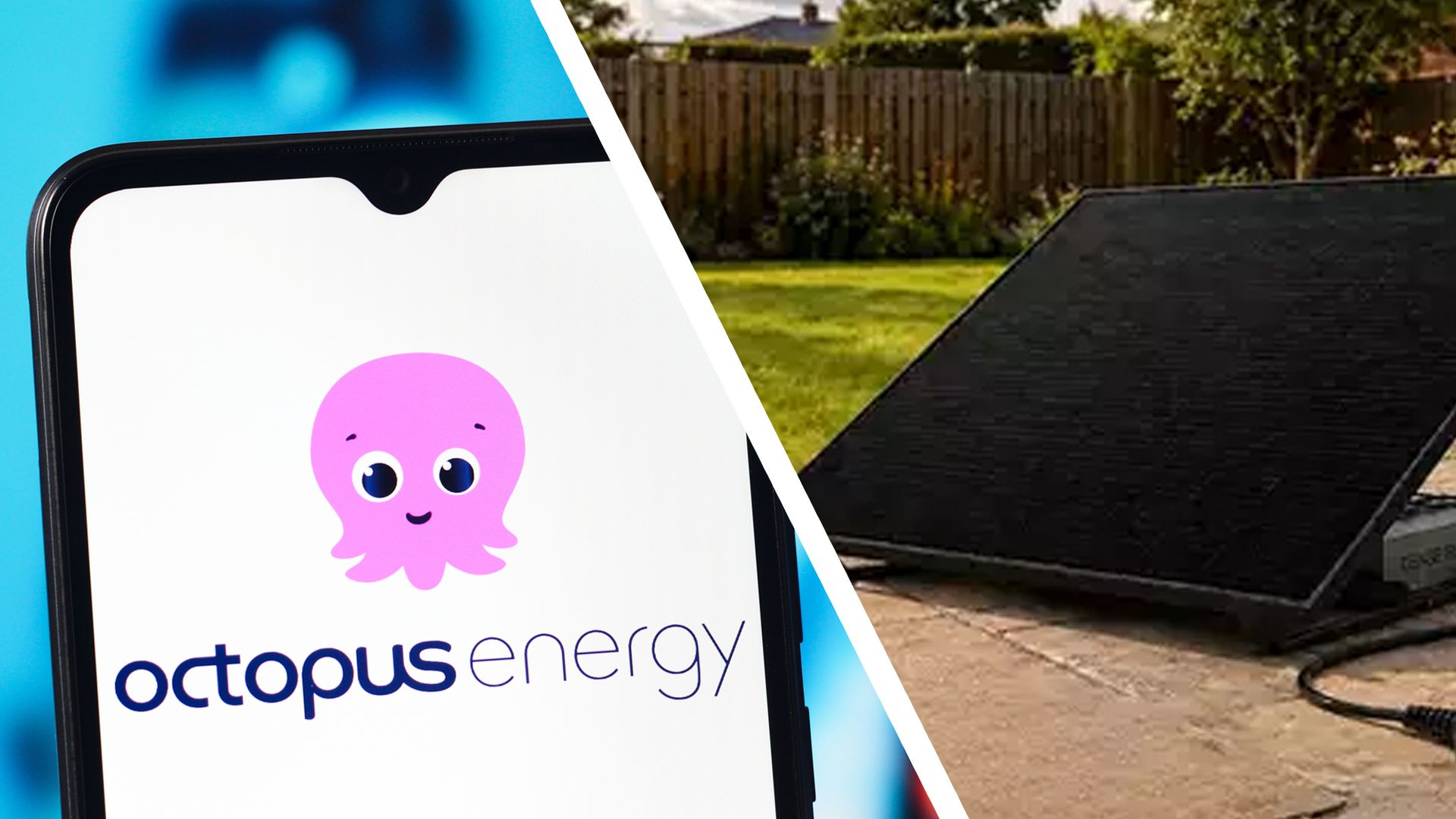
Octopus Energy is bringing its sold-out plug-in solar panels to UK small businesses, says move was a 'no-brainer' following huge demand
0TechRadar

LVMH’s Media Division announces strategic partnership with OpenAI
0OpenAI Blog

Bharat Semi Raises $24M for AI Sensors That Think Where They See
0dev.to

Android 热更新实战:XopHotFix SDK 集成与补丁生成、发布完整教程
0dev.to

WeeklyReview#202646
0dev.to

evgmrf: An R Package For Gaussian Markov Random Field Extreme Value Models
0arXiv stat.CO