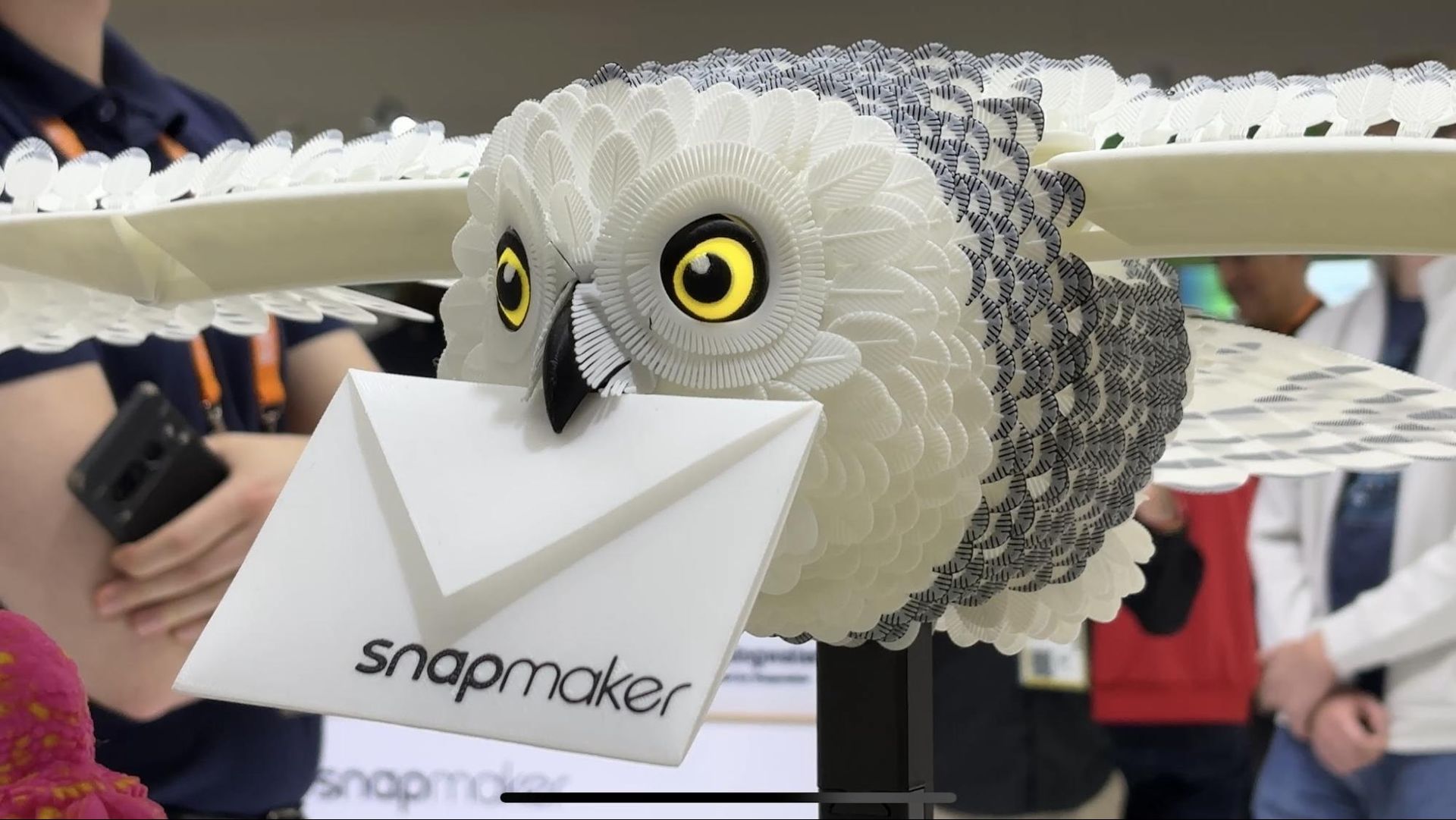
Once a year, all the world’s 3D printing manufacturers gather for Formnext in Frankfurt, Germany, to showcase new technologies, software, and ideas. This year’s show was more compact, with three halls instead of four, but consumer 3D printers had a larger presence. Spread across two halls, we found Bambu Lab, Prusa Research, Snapmaker, Creality, Elegoo, Anycubic, and Flashforge, plus a few newbies like Axiloop.
Startup SnowX was a popular booth, presenting the first consumer-grade desktop metal 3D printer coming soon to Kickstarter.
I counted ten tool-changing 3D printers on the show floor, five of which I’ve already reviewed. Elegoo surprised us all by launching its Centauri X Ultra four-color tool changer at the show, while Axiloop’s MC 8 arrived on my front porch that morning.
Only Anycubic is standing pat with a single-nozzle multicolor machine. Instead, it presented its new partnership with Thingiverse.
Full-color UV printers were on display as well, with Flashforge showing off its CJ270, which was teased last year.
Editor’s Note: Snapmaker provided travel accommodations for this trip. Coverage remains editorially independent.
Bambu Lab H3C: Nine tool heads
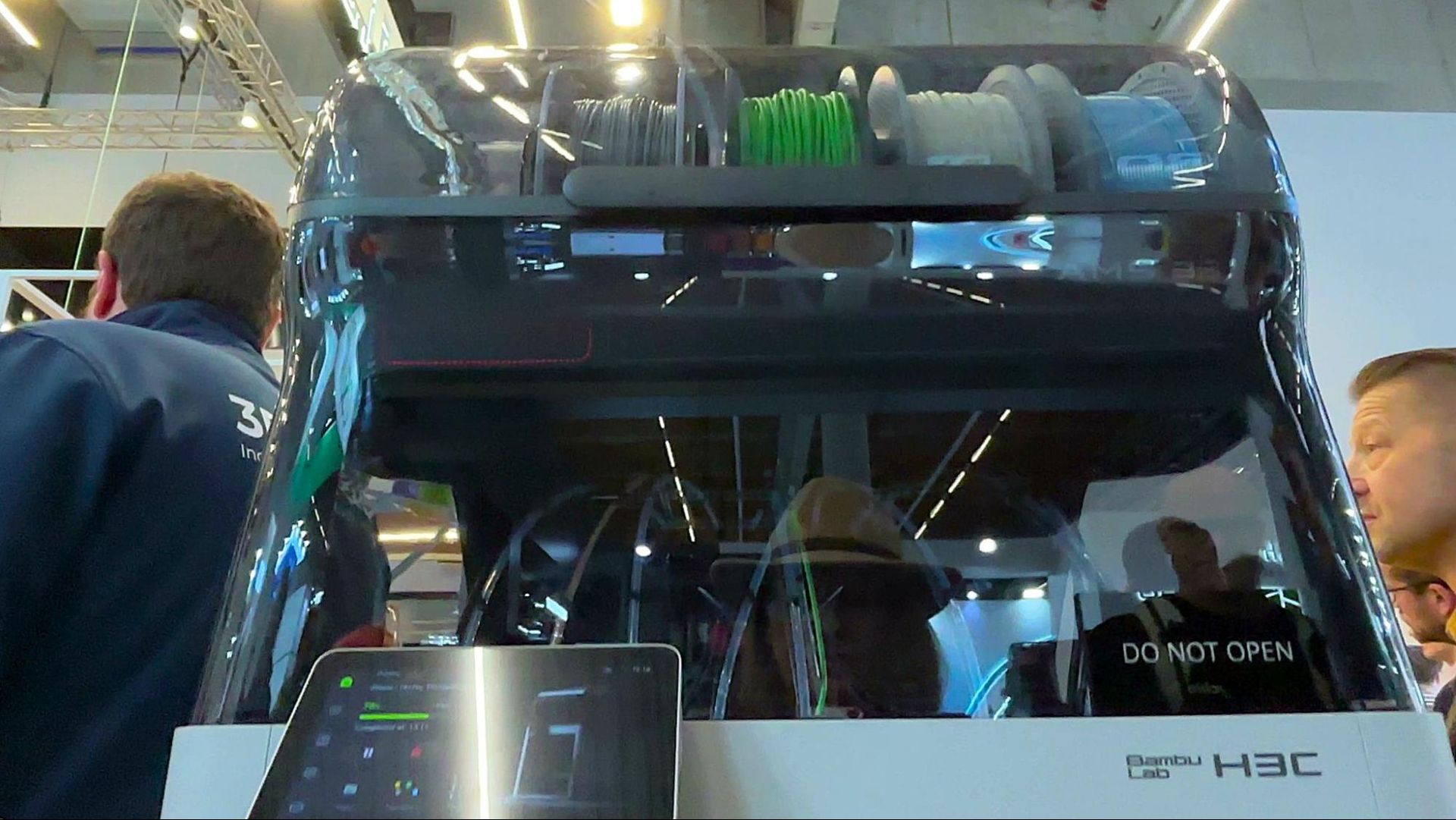
Bambu Lab showed off its latest printers, the H3C, a tool changer (starting at $2,499) with nine lightweight tools we reviewed earlier in the month, and its first laser, the R1, reviewed in September, which retails at $2,499.
More interesting is the launch of “Bambu Circle,” a pilot program that will start in the Netherlands and slowly expand across Europe. The goal is a network of local hubs to assist entrepreneurs with their 3D printing side hustle. Bambu Circle would enlist repair specialists and community ambassadors to provide a helping hand and an in-person retail shop with space for meetups. ,
At the moment, there is no plan to launch a similar program in the United States; however, we have many retailers here who offer official warranty support, parts, and tons of filament. A map on the Bambu Lab lists 31 US resellers, though that number is a bit skewed since there are also 31 MicroCenters in the US.
Prusa Research: Print Anywhere without the Cloud
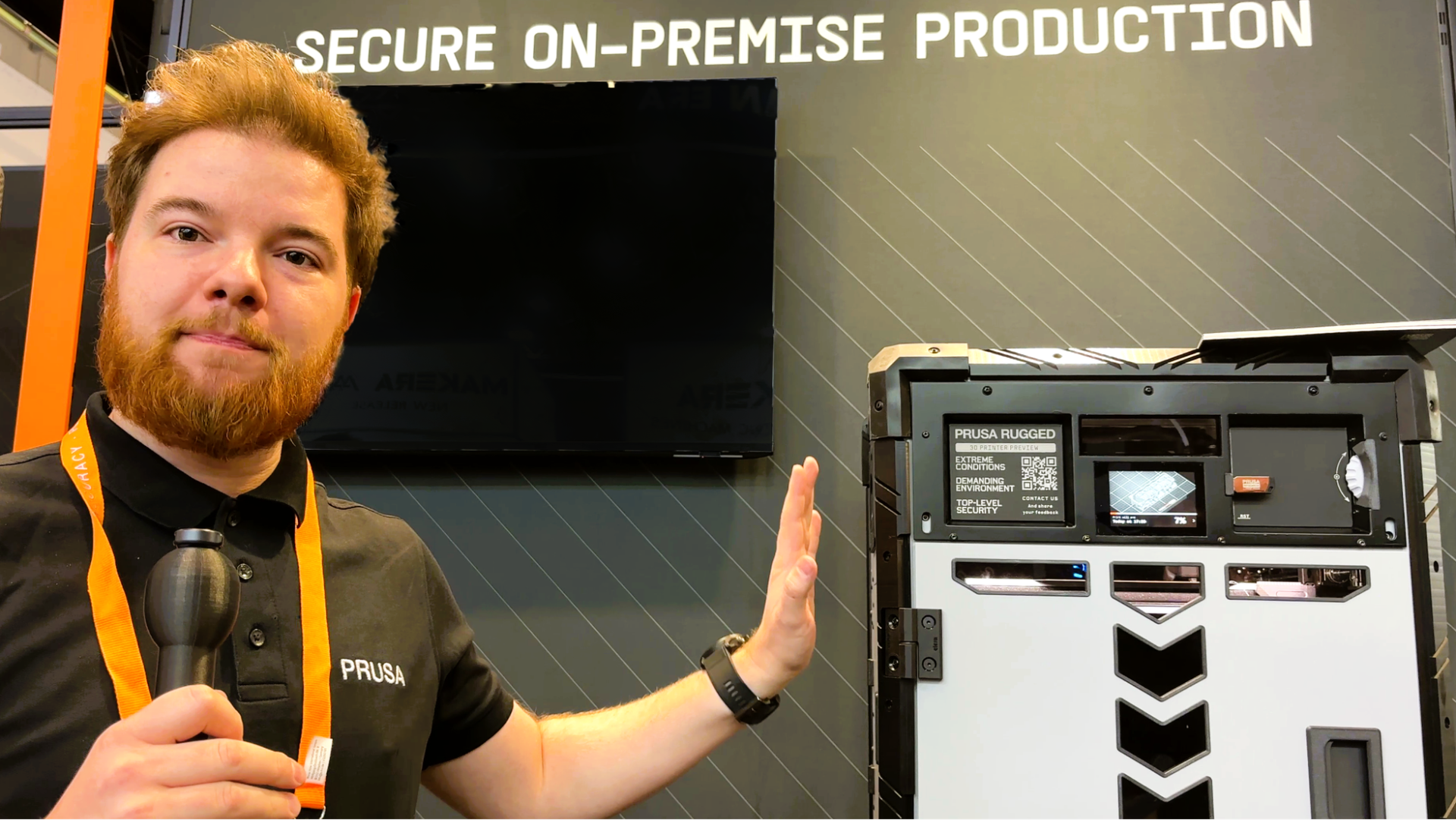
Prusa Research previewed the Rugged, a CORE One L+ adapted for printing in the harshest environments. The printer has a sealed case that keeps out both humidity and dust while providing extra protection during transport for machines used in the field. The CORE One L+ tucked inside is equipped with a high-temperature, hardened steel nozzle for printing advanced engineering filaments. It also comes with Prusa’s Zero-Trace system, which is an air-gapped machine with no flash drive storage, no USB slot, no Wi-Fi, and no camera. They can only accept files from your own cryptographically paired Prusa Connect server. These extremely secure, extremely tough machines are meant for classified and proprietary work environments.
However, you don’t need to have a security clearance to jump on board Prusa Connect Local, a free-to-use version of Prusa Connect for anyone who wishes to keep their 3D printers off the internet. The server can run on Linux, Windows, Mac, or a Raspberry Pi, and can handle a print farm of two to 400. It’s currently set up for any Prusa Printer, but it is open source, so you are free to tinker around with it and add your own extensions.
Snapmaker: Full Spectrum
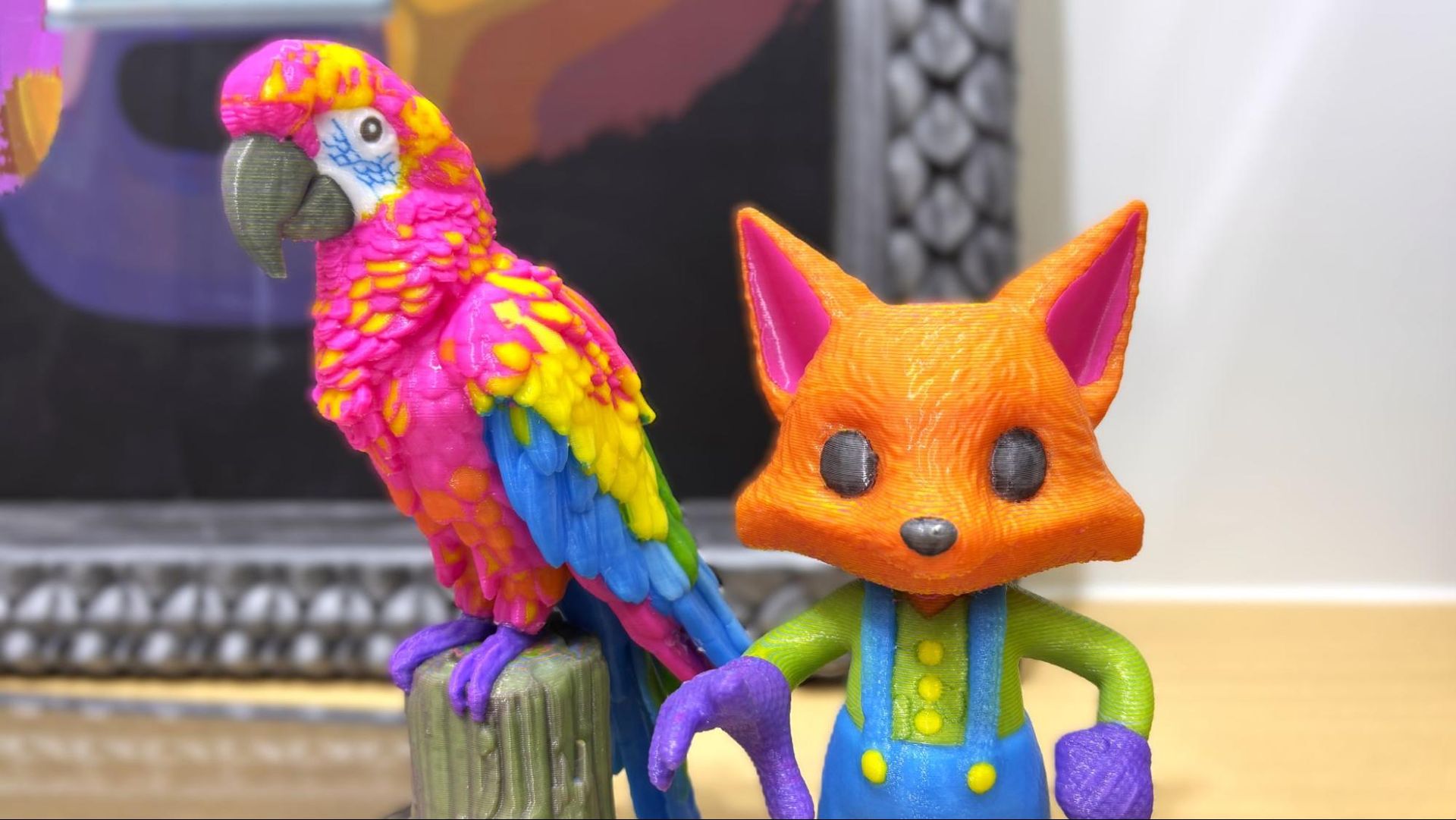
Snapmaker showed off what you can do with its four-color U1 tool changer. Ratdoux, the developer behind Full Spectrum, was on hand to chat with us. He devised a system of color-blending filaments that take thin layers of cyan, yellow, and magenta mixed with either gray or white, which can create nearly any other color. He said it was inspired by a conversation on Reddit where users were mixing colors in Blender, and he came up with a simpler way to do it in the slicer. Snapmaker immediately hired him to lead a development team for its fork of OrcaSlicer.
Amazingly, Full Spectrum went from an experimental slicer hack to a must-have for every tool changer in the space of nine months. Snapmaker’s Full Spectrum is tailored for the U1 on open-source OrcaSlicer, while Bambu Lab installed a “Color Mixing” tool in Bambu Studio and Prusa Research developed their own “ColorMix” technology based on hex codes.
Full Spectrum and similar tools can be used on any multimaterial 3D printer. However, because it looks best with super thin layers, tool changers are more efficient and less wasteful.
Snapmaker has since introduced a Full Spectrum filament bundle optimized for four-color machines: a CMYW for lighter, bright colors and a CMYG (gray edition) for darker shades. Ratdoux said the secret is in the filament’s light Transmission Distance (TD), which measures how translucent the material is. Colors that allow more light to pass through them create a better illusion of blending. The parrot and fox pictured above were printed using CMYG and a .08mm layer height. There was no orange, purple, green or black filament used in those prints.
Axiloop MC8 Pro : Eight Color Kickstarter
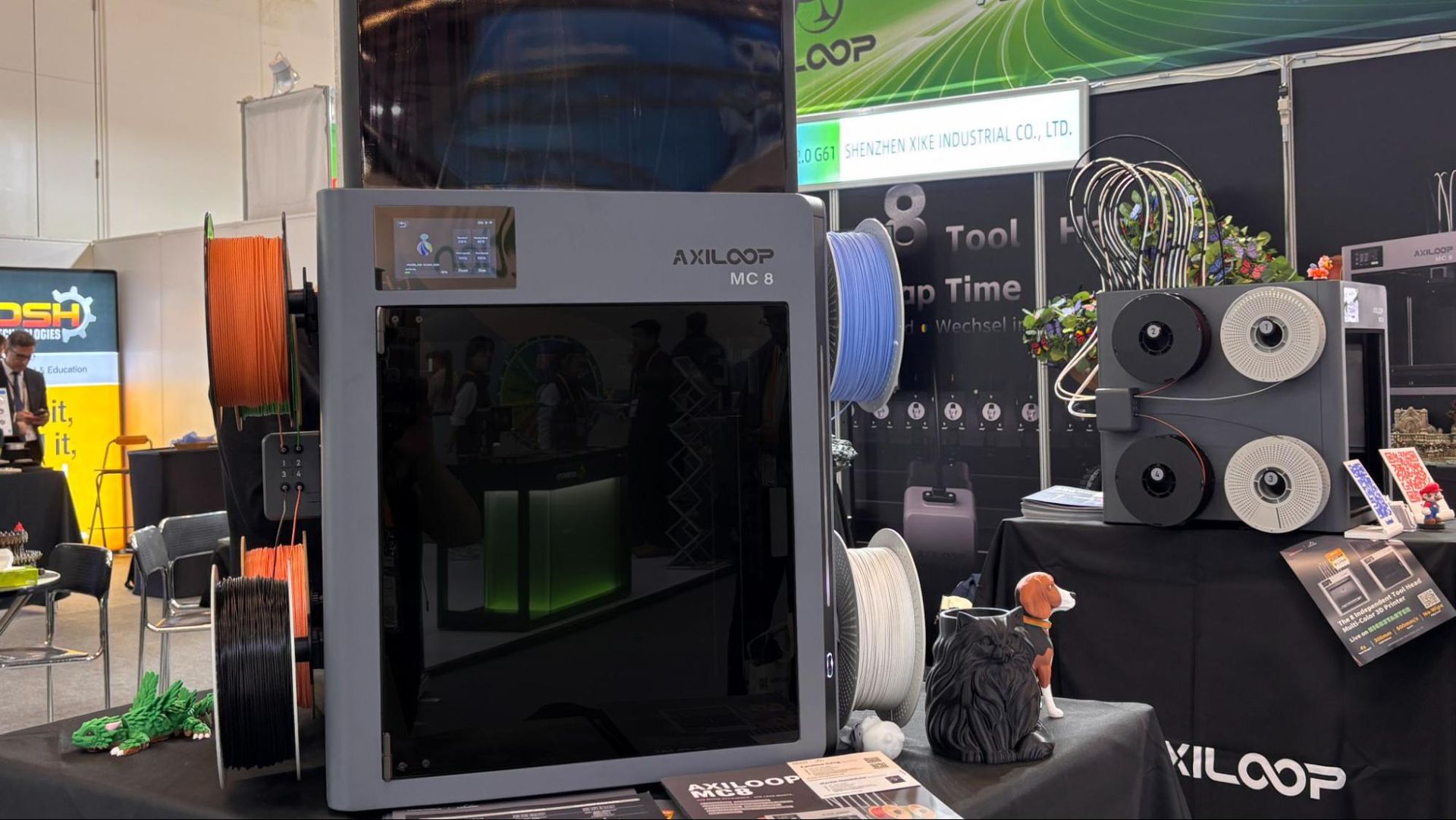
We also found Axiloop, an eight-color tool changer that’s already raised over $700,000 on Kickstarter. The fully enclosed CoreXY machine has a 300x300mm build plate, 4-second tool swaps, and claims to have “near-zero” wipe-free tool changes. Its price for the MC8 Pro is $1,499 for early backers, while the open frame MC8 is $1,099.
Our review unit arrived while I was at Formnext, so I’m excited to put it to the test soon.
Peopoly: Its a Big Boi
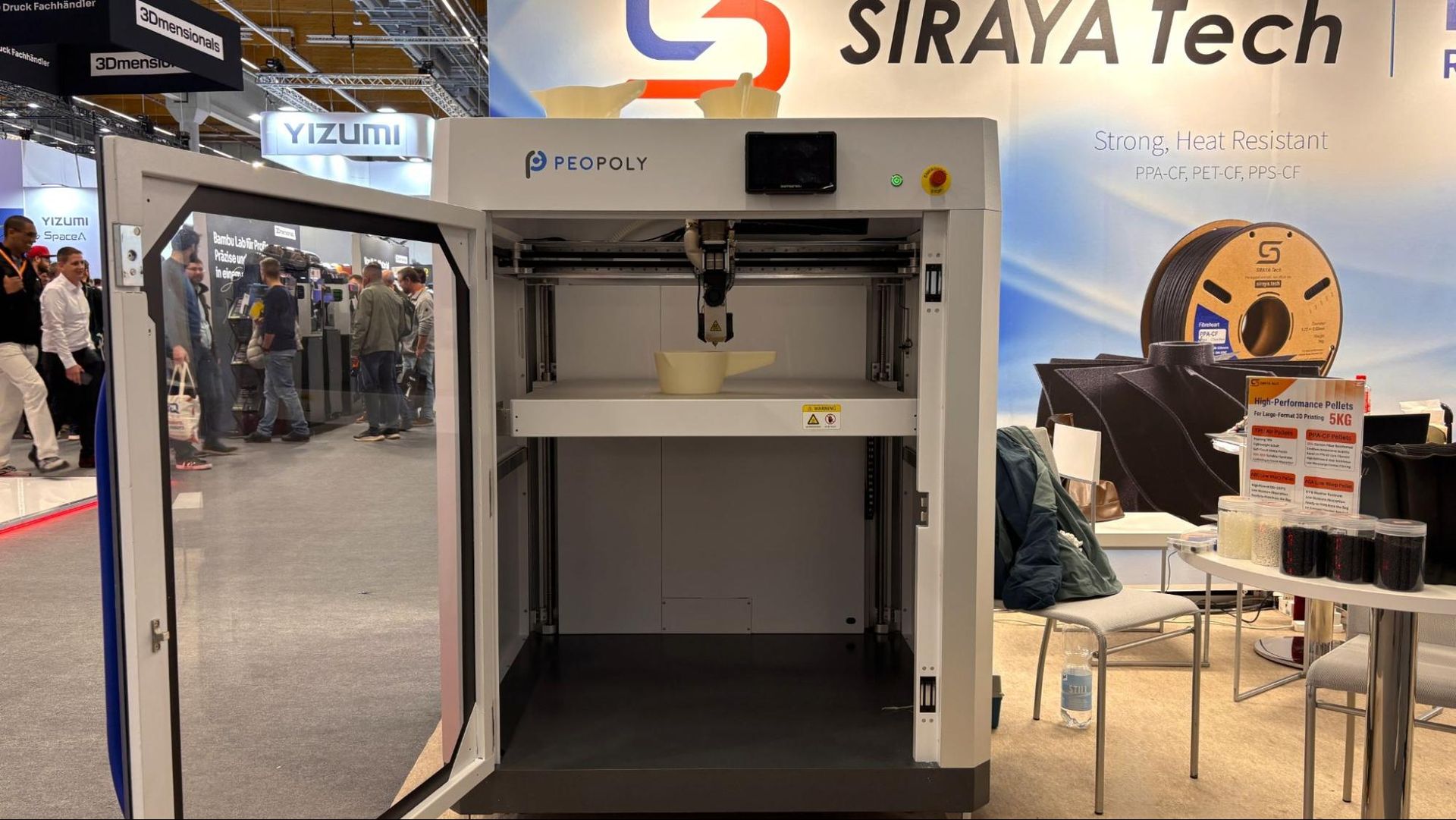
Peopoly’s Giga 800 is a large-scale pellet feeder that’s a bit north of our normal prosumer range at $15,000, but I felt it was worth mentioning because it's from our friends at Siraya Tech, who make superior filaments and resin. I noticed quite a few YouTubers happily climb into the machine to show how big it truly is.
The machine has an extrusion output of three kilos an HOUR, which would be equivalent to three spools of normal filament, and can use a 3mm nozzle for chonky prints. We’ve reviewed a similar-sized open-frame “giga” machine before, so I know that being hampered by a normal .4mm nozzle is not something you want with a print volume this large. The enclosed machine is capable of running everything from PLA and TPU to PET-CF and PPA-GF.
Creality Ender Lasers, Scanners and a Kid Printer
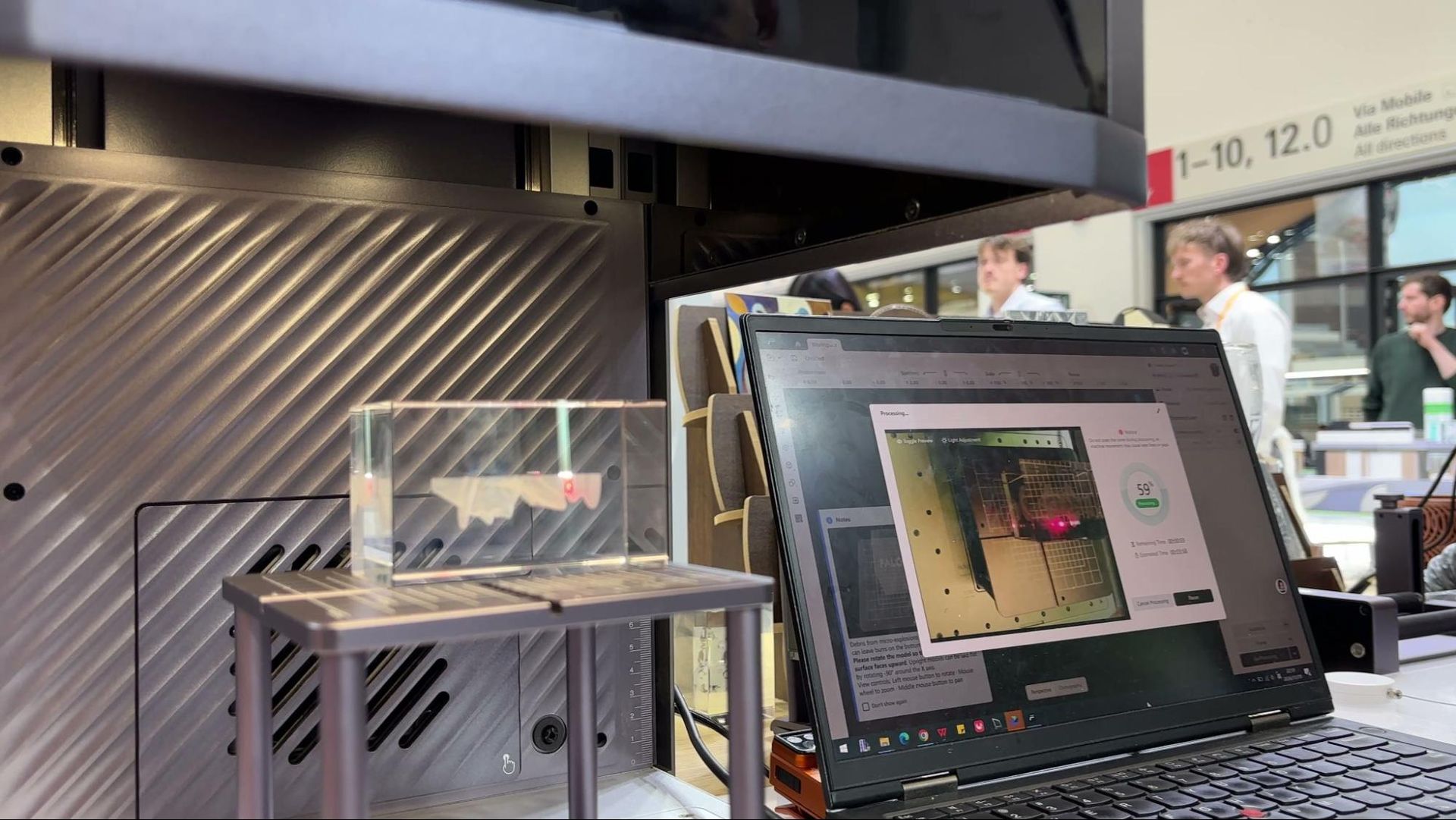
Creality had quite a few machines out, but the most interesting were the Creality Falcon T1 UV Laser we reviewed this summer and the new Falcon A1C portable laser we’ll be reviewing soon. The T1 is able to do inner engraving in glass in just a few minutes, and the team was happy to show me the workflow after I supplied them with a photo. They took my selfie, ran it through Creality’s AI to create a 3D bust, then zapped it into a 2 x 3 inch chunk of glass. It was an impressive demo.
They also showed off several handheld scanners, which Creality feels will enable makers to create more practical prints without needing a ton of CAD skills. My favorite is the Creality Pika we reviewed in October.
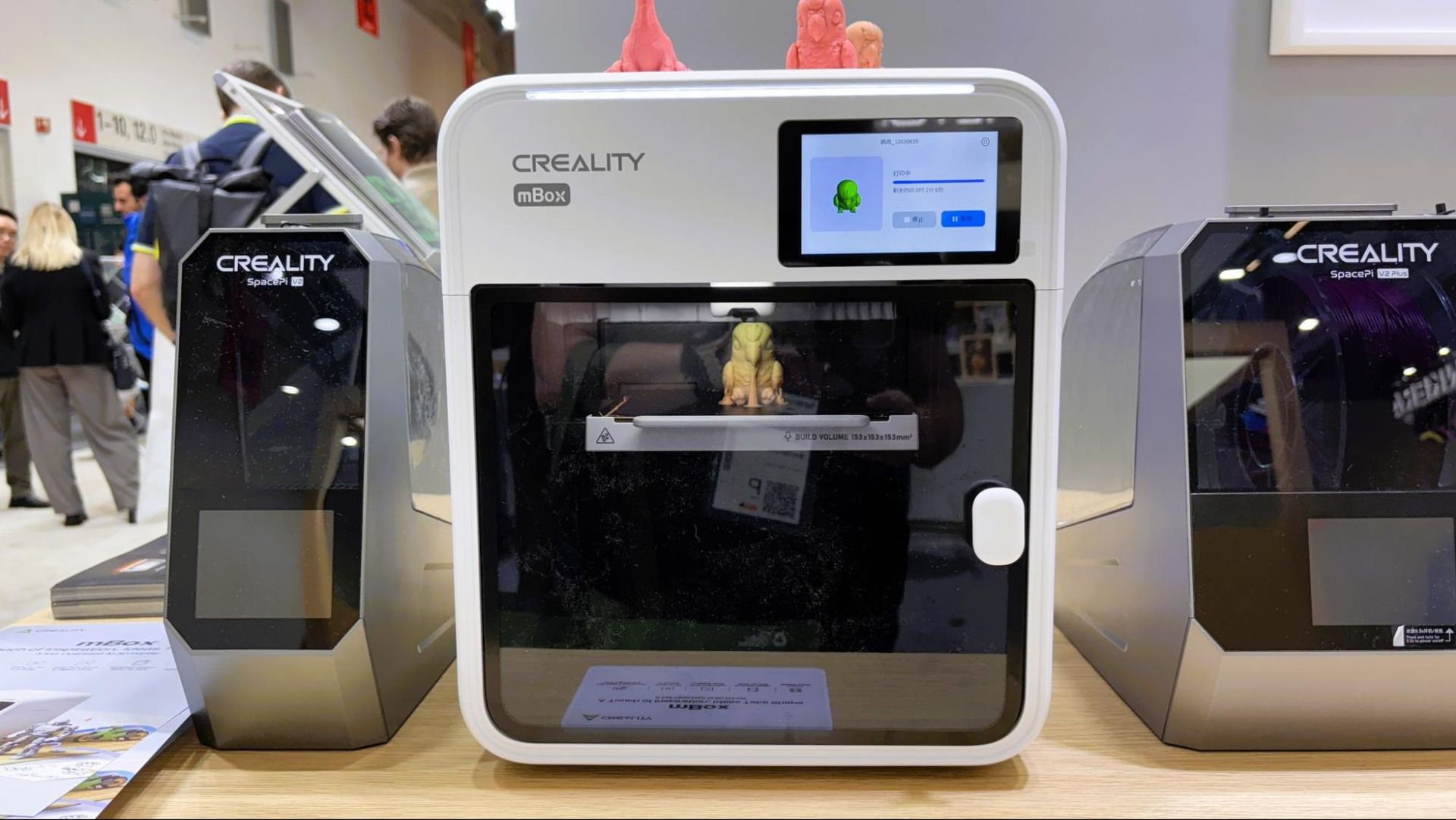
I’m also particularly intrigued by the mBox kid printer, with a small 153x153mm build plate but lots of safety features to make it child-friendly. The printer is priced at $329, which isn’t bad for a full-feature printer. However, good luck finding one to buy: this printer is only available on the TikTok Shop in the US until December 10.
Another disappointment was the Creality M1 filament maker with its companion R1 shredder. The unit was on display, but not running, which makes me believe they haven’t quite figured out how to make the dream of home filament making a reality.
Elegoo Centauri X Ultra: Four color tool changer
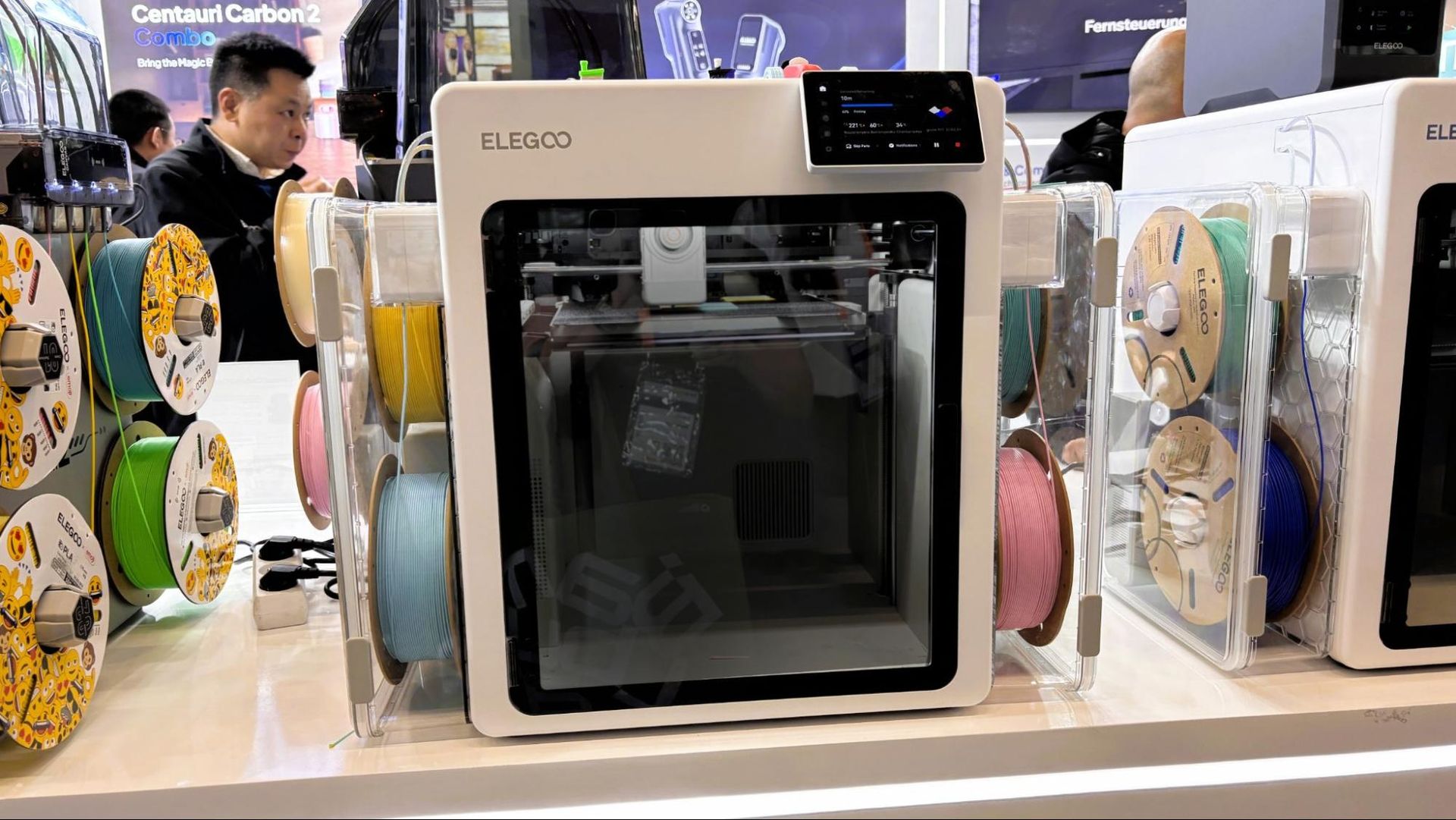
Elegoo surprised us all with the Centauri X Ultra, a four-color tool changer variation of the wildly successful Centauri Carbon. The Centauri X Ultra is scheduled to release early in 2027. It has a 256x256mm bed, making it the same size as its siblings. The machine is completely enclosed and cleverly contains the side-mounted spools in a Tupperware-like sealed box. The machine has filament drying and a nozzle that can hit 350C, making it a good candidate for high-temperature filaments. It also claims to have 5-second color swaps without waste, but we’ll test that as soon as we get our hands on one.
BIQU: Even more Panda-Verse
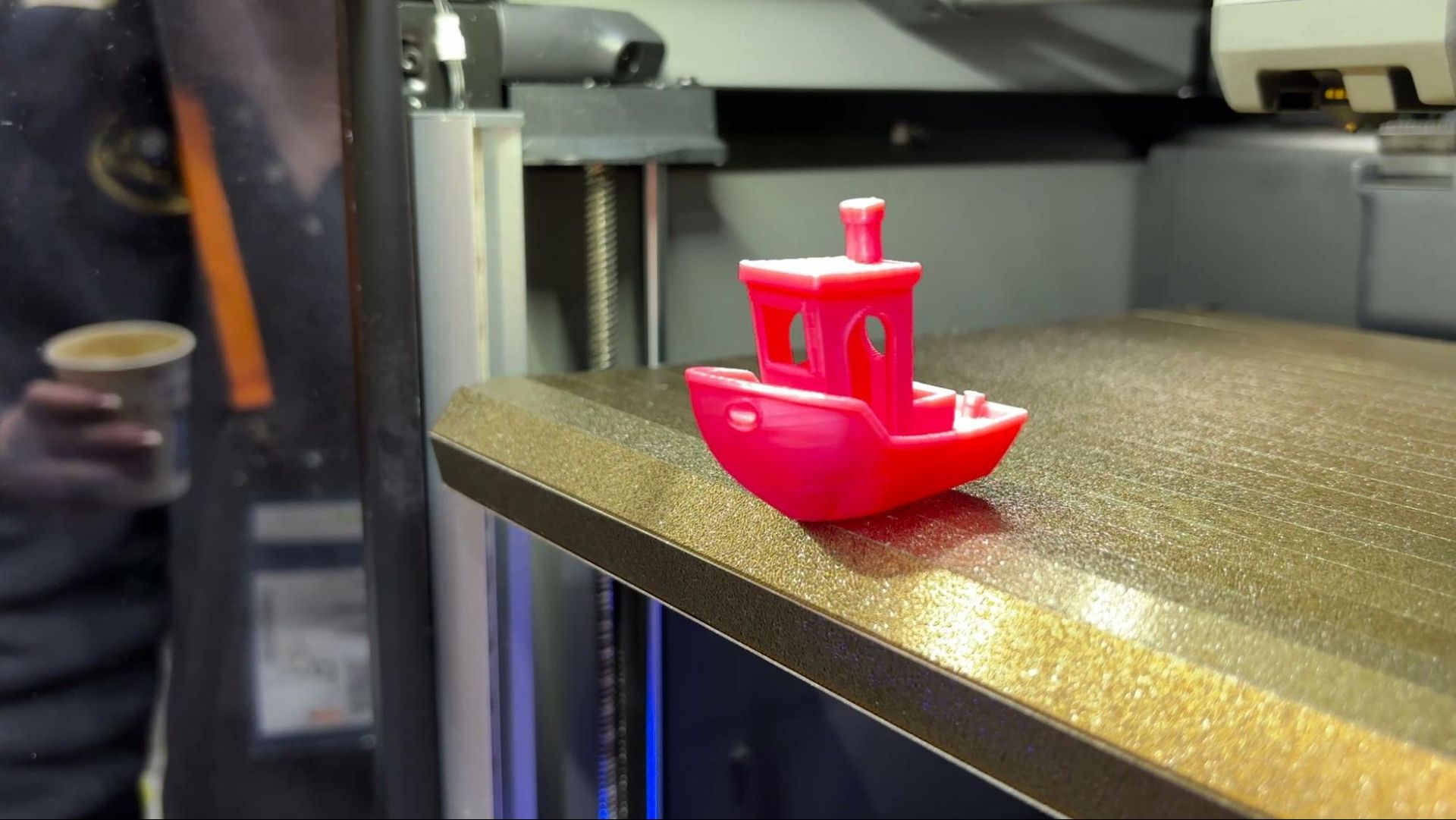
BIQU once again impressed us with their line of Panda-Verse accessories for your Bambu Lab machine. The Panda Treat ($159.99), which applies edible ink to cookies, cakes, and cups of frothy coffee, is out and ready for review. The BIQU x FOXLT Infinity Bed ($259) adds a tiny conveyor bed to your P1S or P2S printer for endless printing. But the most ambitious this year is the BIQU Vault, starting at $499. This is a filament storage system like no other, with an RFID tag tracking system that helps you catalog your filament and tell you where it is in your workshop.
FlashForge: CJ270 UV Printing
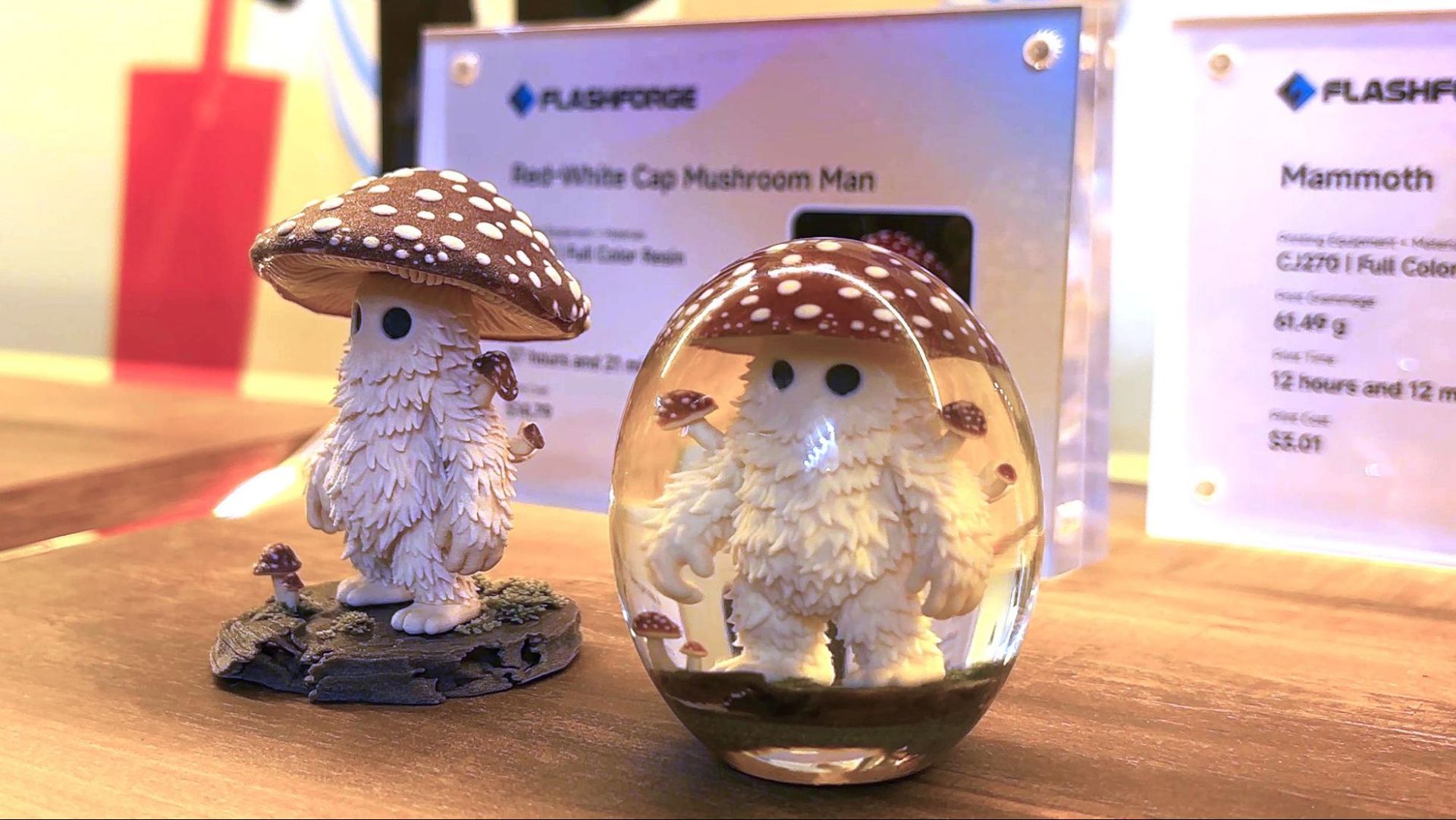
FlashForge revealed its CJ270 full-color 3D printer, priced at $ 3,999 and now shipping. It is listed as a MultiJet Printer, which uses UV ink to build up models, with a build size of 180 x 120 x 100 mm. Unlike other UV printers, the CJ270 has seven printheads (one for each ink channel), so if one gets clogged, you don’t need to replace the entire printhead. It uses CMYK ink, plus white, clear, and a water-washable support material. The sample models shown were impressive, with lots of detail and strong color.
Anycubic x Thingiverse
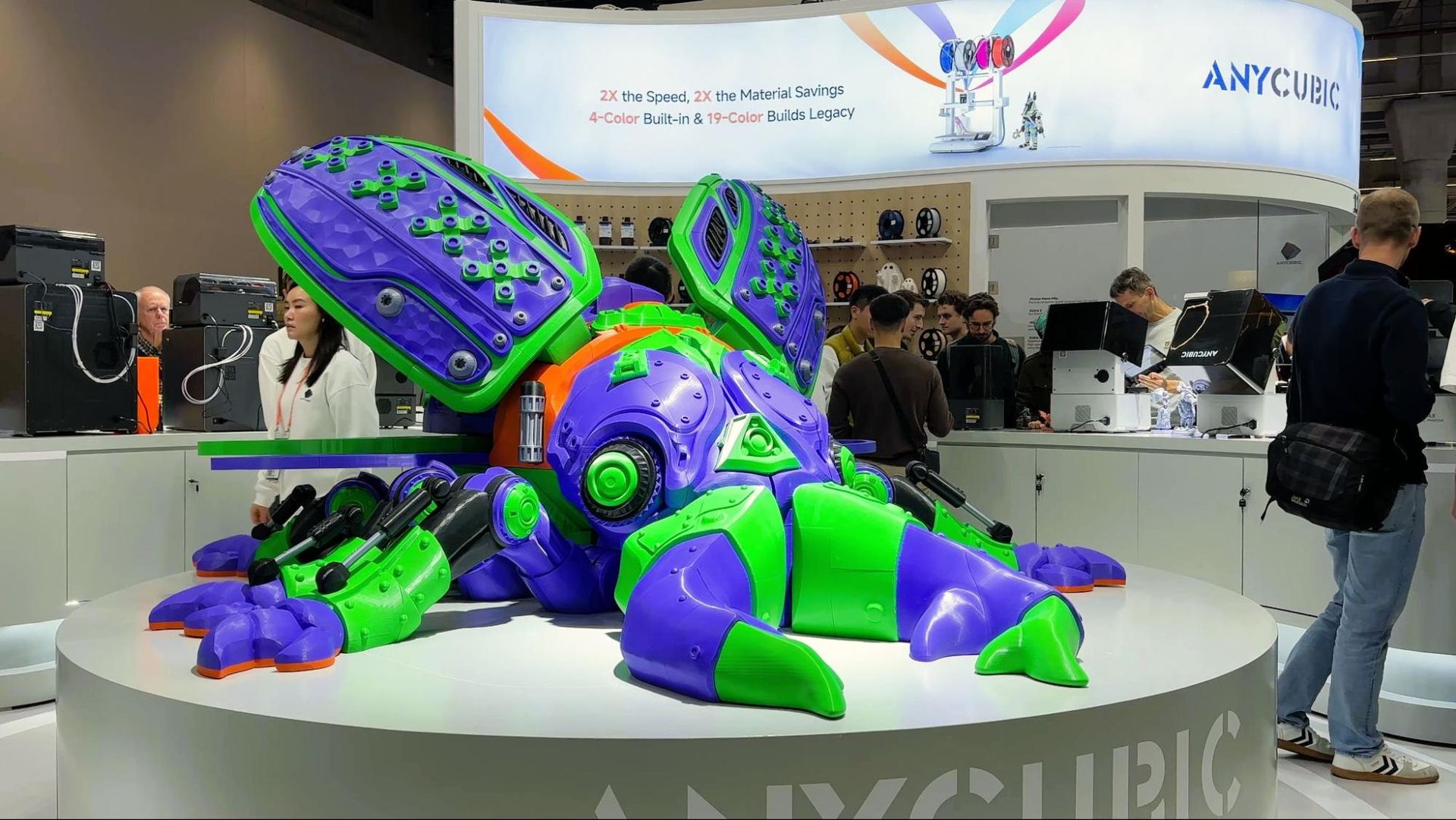
Anycubic didn’t have any new machines to show off, but they did have a huge announcement to make: they are collaborating with Thingiverse to bring millions of models into Anycubic’s file-sharing library, MakerOnline. Select designs will be converted into multicolor models for one-click printing from Anycubic’s mobile app.
The company is also looking into adding an AI tool dubbed AnyLab to its website to help users create their own designs.


