It's fair to say at this point, that PC gaming has been absolutely battered in recent years with the AI boom. Open AI, Anthropic and Google have a lot to answer for.
But, specifically for us PC enthusiasts, the biggest impact has been on the hardware we love, and just how dramatically those price spikes have been over the last 36 months.
• Browse all today's best Black Friday deals
This year in particular has seen a massive uptick in SSD and RAM pricing across the board, and there's wider reaching, more subtle changes driving pressure elsewhere in the market too.
It got me thinking, what exactly can we expect moving into Black Friday 2026, and how does it compare to 2025? Are we actually going to see any true Black Friday PC deals? What should you be looking to buy? And what does it say about the future?
What is and isn't affected?

The good news first: there are certain segments of the PC gaming platform that aren't quite as heavily impacted as the others. Mice and keyboards, headsets, monitors, cases and cooling, power supplies, and motherboards are all readily available and good to go right now without inflated prices.
If you see one of these deals live and out in the ether, chances are you're likely looking at something genuine. Just make sure you do your due diligence, either trusting reputable sources like the lovely guys and gals here at TechRadar, or do a quick dig into the data yourself using a service like camelcamelcamel.
You may have spotted a trend there, though, and it's that out of all of those products, bar maybe monitors, none of them directly impact your gaming experience in terms of pure performance, and that's where things come a little unstuck. So, from bad to worse let's go through the list.
CPUs might not be as heavily impacted as you think
Processors ironically, are actually in a strong position right now. AMD's Ryzen 7 9800X3D is currently sitting close to its lowest ever price, and most of the mainstream chips, similarly from both Intel and AMD, are close to their MSRP if not lower.
At least in the last month anyway. That means chips like the Intel Core Ultra 9 series, and AMD's Ryzen 9 line-up are genuinely good bargains, providing exceptional performance for the money, particularly if you already have the RAM to back it up.
There is an outlier in all of this however, and it's older processors that are running on the DDR4 platforms. Anything such as Intel's Core 13 and 14 series (which annoyingly actually outperform most of team blue's modern chips in gaming scenarios), and AMD's Ryzen 5000 series chips, are all seeing dramatic price increases.
That's mostly as demand is outstripping supply, particularly as, in-game these chips are still so dominant in contrast to their later successors. Intel's Core i5-13400F, for instance, costs 103% more today than its lowest ever price. The 14600K (my favorite gaming "value" proposition) is up 60% versus its lowest too.
Storage is a mixed bag right now, and high-end SSDs are a nightmare
Perhaps unsurprisingly, anything with a NAND flash chip is still struggling compared to pre 2025. The 990 Pro 2TB for instance peaked at $639 this year before falling down to $390, which is still significantly higher than its launch price.
More premium SSDs like SanDisk's WD Black SN8100 are struggling too. Although there is stock, the current price sits at $469 for the 2TB variant, compared to the $180 it was last Black Friday.
It has peaked higher than that in the last 12 months, hitting an eye watering $570 back in January, but it does seem to be running stable at around $400-$460 currently (today's $469 price seems to be an artificial precursor before it hits a "sale" this Black Friday). To be clear that's still well above its $280 launch price.
There is some good news on the horizon however; there are a few affordable PCIe 4.0 and 5.0 SSDs out there, albeit without some of the top spec hardware.
Both Kioxia and Team Group have a number of 2TB SSDs sub $250, for example. If you're looking for a good (but not the best) SSD, then anything with QLC NAND and a DRAMless controller is a good place to start. QLC drives do have limits, particularly on large file transfers once the SLC cache fills up (often only after 100-200GB of file saturation in a single run), but for day-to-day use, they're generally potent enough, and most have good warranties and endurance ratings now too.
It's also worth mentioning that you might want to avoid higher-capacity single-stick solutions, especially any design built off the back of a controller that leverages DRAM as a cache. As they're susceptible to DRAM prices, and as total volume of sales is much lower, it's likely these are still at their early January cost. Kingston's Fury Renegade G5 8TB currently retails for an outrageous $2,901. Ouch.
More immediately, NAND package prices have begun to fall in the B2B space, down 18-20% in the last two weeks alone. Although that doesn't mean much for us right now, there's a chance it could lead to cheaper SSDs in the next few months. But again, that is entirely dependent on manufacturers passing along those savings to the customer.
Graphics card shortages galore
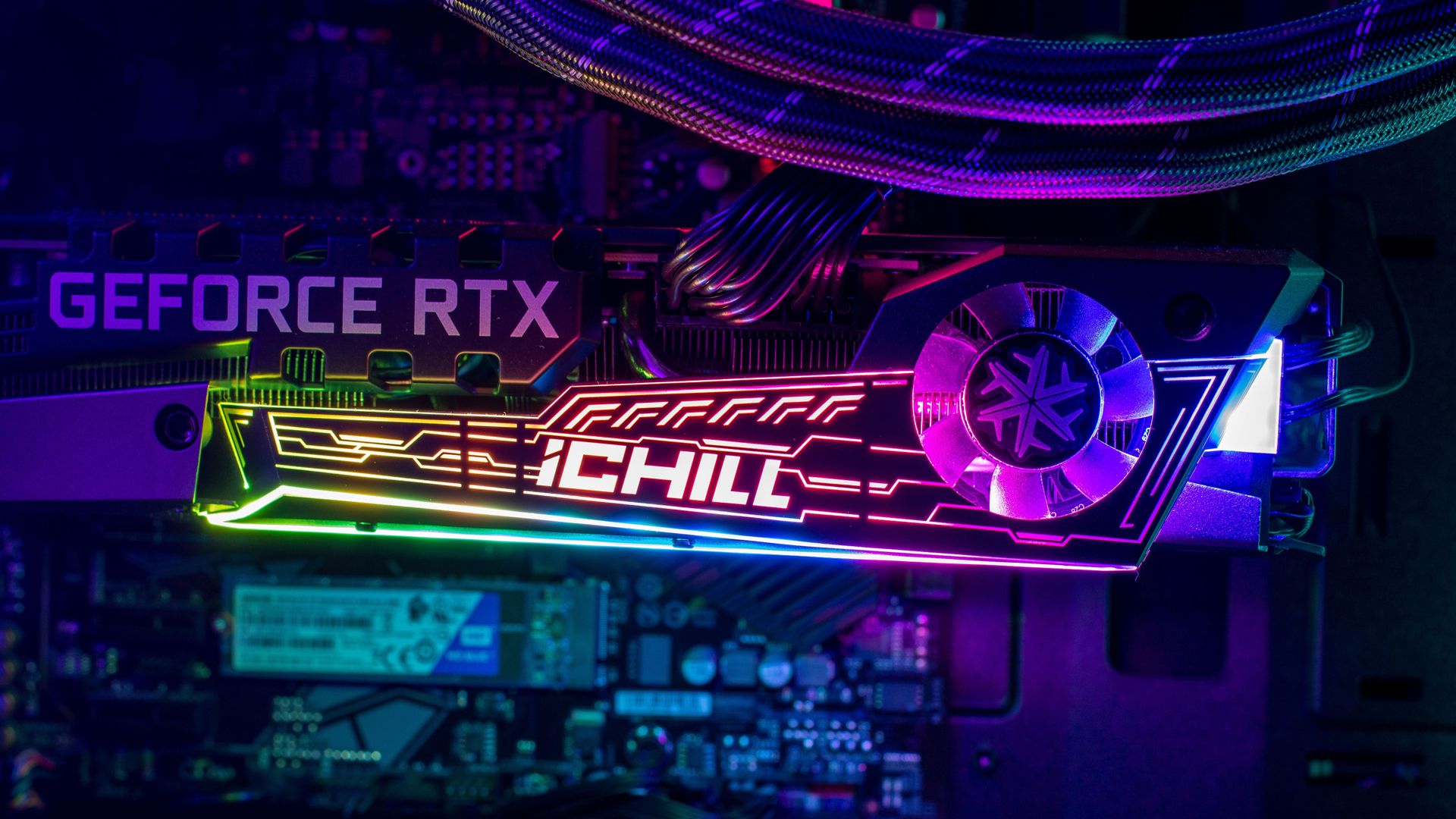
Arguably joint first on the category that's been most impacted recently. Nvidia's really hobbling the PC gamer market right now. We're seeing multiple unconfirmed reports of RTX 5090s and 5080s no longer being produced, production of the RTX 5070 and 5060 Ti falling dramatically, and no new cards at all in 2027, plus the Super series has been axed too in a double body blow to anyone who values a good GPU in the modern era.
As a result, stock is evaporating as soon as it makes contact with retailers. The 70 series cards (such as the RTX 5070) are selling on average $300+ higher than their MSRP (or about $370 more than during Black Friday 2025).
The biggest shockers are of course at the upper-end of the spectrum. Although Nvidia's RTX 5090 has rarely been at its $2,000 retail price, and any currently available are shipping on average for an absolutely ludicrous $6,550.
All of that is in turn dragging up the prices of everything else up, whether that's AMD, Intel or Nvidia.
The RAMpocalypse

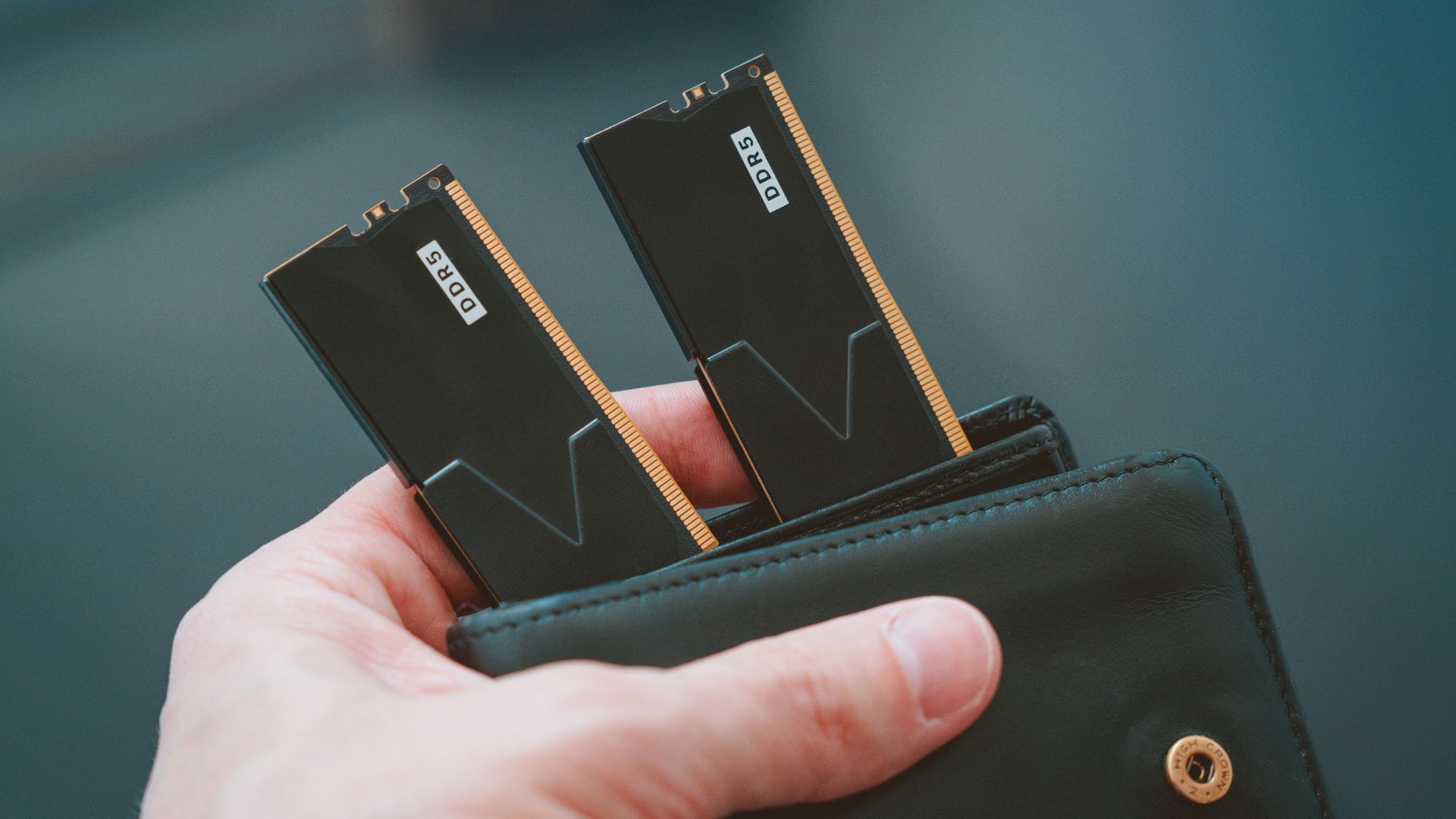
Sam Altman can say what he likes about DDR supply. He can keep his mediocre quips and jokes, but the reality is it still remains one of the most directly impacted markets in the PC gaming sphere because of the incessant hunger of AI data centers.
There's no two ways around it, and as DRAM manufacturers gorge themselves on the high prices that they can wring from those big commercial contracts, we're left with a paltry supply of scraps, which has dramatically increased everything else.
Don't expect any real discounts this year, as any that are labelled as such are coming off raised list prices anyway. Hell, even direct B2B DRAM contract prices are up 13 - 18% this quarter alone, and that's before that stuff hits market properly in packaged product.
To be brief, Black Friday 2024 saw a 32GB kit of DDR5-6000 sat at $85, in 2025, it hit on average $186 before selling out. Today, you're looking at an average sale price of $430 to $450 for that same spec. Just over five times more expensive in 24 months, with no advance in the tech or the performance. Outstanding.
Because DDR5 is now such a mess, DDR4 is similarly being impacted as well. Not only are compatible CPUs ballooning in price, and availability dropping due to high demand, but DDR4 pricing has nearly tripled as well.
A 32GB kit of DDR4-3200 will now set you back around $193 to $260, compared to $60 to $90 last October. A big part of the reason behind that is, amazingly, DDR4 is now EOL as well, so stock simply isn't being produced at the same volumes at all, and in fact is winding down entirely over the next year or so.
When will this end?
Well if we're lucky SSD prices should start coming down in the next few months. Particularly for any QLC drives or the like.
Sadly, RAM and GPU prices are likely to continue to climb for the foreseeable. We've had multiple predictions from a number of industry insiders and CEOs all pointing to anywhere between 2028 and 2030 for production to stabilize. And to be clear, from my read that's pricing stabilizing not guaranteed falling, given the current climate anyway, and that's why Black Friday could be our last chance for a while to get some of these components at semi-reasonable prices.
Black Friday deals in the US
- Amazon: up to 65% off tech & essentials
- Best Buy: up to 50% off TVs, laptops & appliances
- Dell: up to $700 off laptops
- Home Depot: 50% off appliances, grills & tools
- Lenovo: up to 50% off laptops
- Lowe's: up to 30% off appliances & holiday decor
- Samsung: up to $1,000 off TVs & phones
- T-Mobile: free iPhone or Galaxy with a plan
- Target: Christmas decor & gifts from $7.99
- Walmart: early access to deals for members
Black Friday deals in the UK
- Amazon: up to 60% off tech & essentials
- AO: up to 30% off appliances & TVs
- Argos: up to 50% off kitchen, tech & toys
- Boots: half-price beauty & gift sets
- Currys: £1,000s off TVs & laptops
- Dell: up to 25% off laptops
- EE: up to £400 off phones & GTA 6 bundles
- John Lewis: up to 25% off tech & fashion
- Nintendo: save on Switch 2 bundles
- O2: up to £1,300 off iPhone & Samsung
- PlayStation: up to £40 off games & controllers
- Samsung: up to £300 off TVs & phones
- Shark/Ninja: up to 30% off
- Sky: TV & broadband from £22/m
- Superdrug: up to 60% off
- Very: up to 50% off toys, tech & fashion
- Vodafone: phones & broadband from £16/m


