AI & ML
Can You Predict the Next Mind in the Symphony? Toward Multi-Turn Multi-Party Mental World Modeling
arXiv cs.HC0 views
arXiv:2611.02988v2 Announce Type: replace Abstract: Although multimodal foundation models have achieved remarkable progress in modeling, generation, and embodied reasoning in the physical world, their capacity for modeling the dynamic mental world remains underexplored. Existing benchmarks predominantly focus on static mental state perception or single-turn behavioral reasoning, overlooking the dynamic mental transitions of the observed individuals in multi-party, multi-turn interactions. To bridge this gap, we introduce M$^3$WME-Bench, a benchmark designed to evaluate mental world modeling conditioned on evolving actions of interactants. Specifically, models are tasked with forecasting a target subject's future mental states and behaviors over extended social interactions. In addition to the benchmark suite, we construct M$^3$WME-23K, a dedicated training dataset, and establish a competitive baseline named MindNext-7B. Extensive evaluations across four representative paradigms (general MLLMs, emotion-specialized MLLMs, agentic frameworks, and World Foundation Models) reveal that current systems consistently struggle to anticipate forward-looking mental states. Mechanistic analyses further reveal that existing architectures fundamentally lack forward mental state transition dynamics. Our findings highlight a pivotal challenge in advancing agents from physical to mental world modeling, charting new directions for socially adaptive AI.
Source:https://arxiv.org/abs/2611.02988PreviousBuildOcc: A Large Language Model Occupant Agent Platform for Building Energy ResearchNextBeyond Code and Pixels: Co-Generating Editable and Visually Rich Presentations
Related posts

Claude Code vs Codex: Which Is Better? I Use Both Every Day, and Here Is the Setup
0dev.to

Jobs AI Will Never Replace? We Tested 364 Jobs Against Chatbots and Robots
0dev.to

Here’s Everything You Can Do With With the New Gemini AI on Android Auto
0Wired
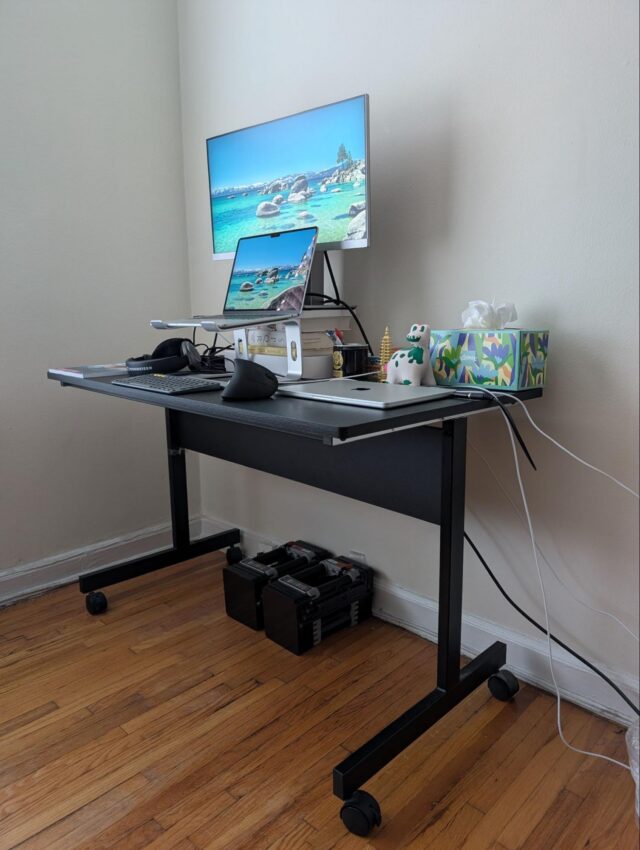
From minimalist to maximalist: Ars staffers show off their home offices
0Ars Technica

Draining peatlands is responsible for a few percent of our global warming
0Ars Technica

Waymo conquered city streets — why does it keep stumbling on freeways?
0The Verge