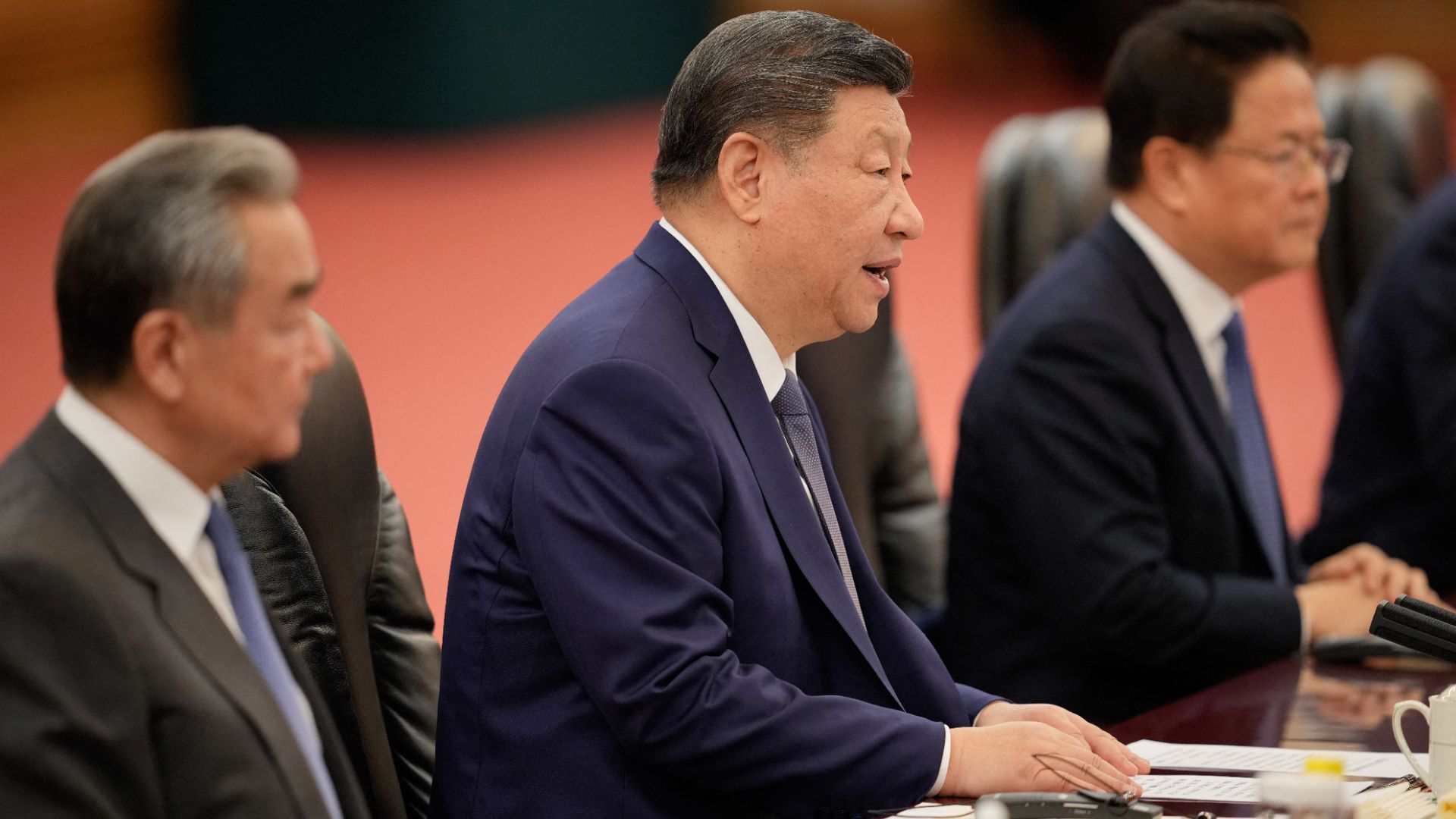
Yesterday, the Trump administration extended the reach of its existing export controls on high-end AI accelerator chips, namely, but not limited to, Nvidia's Blackwell lineup. The updated regulation now requires licenses for renting those chips in large quantities to the entirety of America's D:5 countries list (nations embargoed from arms sales). As expected, the news landed in Beijing like a lead dragon, and its Ministry of Commerce states that China "will take countermeasures to firmly safeguard national sovereignty, security, and development interests."
- While the U.S. flip-flops on chip sanctions, China is building its own chip supply market
- The state of China's decade-long semiconductor push
- Huawei Ascend NPU roadmap examined
- China's CXMT targets 30% DRAM memory market share by 2030 with sixth mega-fab
- China's latest round of rare-earth export controls explained
The bold move taken by the U.S. arrives at a peculiar time, as President Trump is currently visiting the nation for the APEC summit in Shenzhen. Trump is scheduled to meet President Xi Jinping on Thursday, Nov. 19, a tête-a-tête that's bound to be interesting. Both nations were recently embroiled in a bitter trade war, with ever-mounting tariffs and restrictions on both sides until a temporary truce was called in Oct. 2025. Only some restrictions were lifted, though; for example, Chinese semiconductors still face a 50% tariff when imported stateside.
A potential restart of tariff-slapping would all but guarantee an even larger amount of turmoil in U.S. stock markets. Those seas are already choppy enough thanks to Nvidia ex-CEO Jensen Huang's romantic involvement with purported Chinese spy Alice Huang — along with mounting suspicions that the soulmates may have connived to siphon billions' worth of Blackwell chips from her Singaporean outfit Megaspeed onto Chinese AI laboratories.
Nvidia cut off about half of its Asian buyers last July, seemingly in the purview of the export controls, and told data center operators that over 50% of their business must come from non-Chinese companies. Meanwhile, both Malaysia and Singapore have intensified their scrutiny of AI hardware shipments.
China's countermeasures ammo is as of yet unspecified. The nation had restricted the sale of gallium, germanium, and antimony to the U.S. previously, and the truce shelved that bullet until Nov. 2027. Beijing may well choose to simply not renew that agreement when that day comes. Although analysts believe that the nations will be cordial enough during this summit, Trump's perceived provocation may bring China's proverbial nuclear option of restricting rare earth exports back to the loading bay.
The truce on that particular matter only has a few weeks left, expiring on Jan. 10, 2027. Likewise, super-hard materials and high-density lithium batteries, crucial for the newest generations of EVs, solar power storage, and battery installations, all have white flags that will come down early next year. Analysts also expect that Chinese firms and their government will continue to heavily invest in domestic chip production, namely, but not only, by Huawei.
Broadly speaking, the U.S.' updated chip control regulation means that Chinese firms cannot sidestep the existing control on chip sales by renting them instead, closing one of the main existing loopholes around the export restrictions. Additionally, selling chips to Indonesia, Malaysia, Singapore, Thailand, or Brazil now also requires a license, as the U.S. Department of Commerce suspects that companies in these nations import Blackwell cards to sell to China.


