Enterprises often need to connect workloads across business units such as subsidiaries, divisions, or acquired companies. Each business unit typically runs its own AWS accounts with independent virtual private clouds (VPCs), IP addressing, and security policies. The challenge is connecting services between business units without overlapping IP conflicts, firewall rule explosion, or tightly coupled routing.
In this post, we discuss these requirements and challenges and explain how AWS Cloud WAN and Amazon VPC Lattice work together to address them. We then present three design patterns for different operational models. In the diagrams, each business unit is an organizational unit (OU) in AWS Organizations.
Common requirements and challenges in connecting business units
Enterprises that operate multiple business units typically share the following requirements:
- Network isolation: Each business unit requires its own isolation scope. A misconfiguration in business unit A must not impact business unit B.
- Service reachability: Despite isolation, business units must consume services from each other (shared platforms, APIs, data services).
- Overlapping IP ranges: Business units acquired through mergers often share RFC 1918 address space.
- Consistent security posture: You must be able to enforce and audit security policies across all business units, whether you manage them centrally or distribute them.
- Operational simplicity: Minimize the number of teams that must coordinate routine connectivity changes.
A common design connects all business units through one shared layer 3 network with a central firewall. Because this network routes by IP, it works against these requirements. Every new application needs firewall rule changes, every IP range update triggers cross-team reviews, and overlapping ranges force address translation. Security relies on source IP rather than identity, which makes isolation hard to enforce and audit as business units grow.
How AWS Cloud WAN and Amazon VPC Lattice work together
AWS Cloud WAN and Amazon VPC Lattice each own a distinct layer:
- AWS Cloud WAN (infrastructure network): Network segmentation, cross-Region routing, hybrid connectivity, and centralized internet egress. It routes traffic based on IP prefixes and segment policies.
- Amazon VPC Lattice (application network): Service-to-service communication that removes the IP network complexity, with zero-trust AWS Identity and Access Management (IAM)-based auth policies, overlapping IP support, and per-service observability. It identifies callers by IAM role and routes requests by DNS name.
The two services are complementary: AWS Cloud WAN provides the infrastructure backbone, whereas VPC Lattice provides application-level connectivity at scale. They are typically managed by different teams. We use AWS Cloud WAN in this post because it supports multi-Region routing and segment policies natively. If you operate in a single AWS Region or need a more straightforward setup, you can use AWS Transit Gateway for the infrastructure layer instead.
The patterns build on VPC Lattice service sharing through AWS Resource Access Manager (AWS RAM) and auth policies to connect services across business unit boundaries. For multi-account setup of each service see Build secure multi-account multi-VPC connectivity for your applications with Amazon VPC Lattice and Shared AWS Cloud WAN core network.
Understanding the three operational models
The architecture components, AWS Cloud WAN for infrastructure and VPC Lattice for service communication, remain consistent across all three patterns. What changes is the operational model: who owns, operates, and governs each layer. This determines team boundaries, approval workflows, and impact scope.
| Operational dimension | Pattern 1 (Federated) | Pattern 2 (Distributed) | Pattern 3 (Centralized) |
| AWS Cloud WAN ownership | Per business unit | Per business unit | Single shared instance |
| VPC Lattice service network | Central (Cloud Center of Excellence – CCoE) | Per business unit (bilateral) | Central (platform team) |
| Governance between business units | Two-layer: CCoE (perimeter) + publisher (per-service) | Peer-to-peer agreements | Single team controls all |
| Autonomy level | High (internal) / Governed (between business units) | Maximum | Low (tenant model) |
| Coordination overhead | Medium | Low (per agreement) | Minimal |
| Best for | Subsidiaries, regulated groups | Independent business units, joint ventures | Departments, cost centers |
Pattern 1 (federated): Business units own their networks and a central team connects them
In this pattern, each business unit runs its own network, and a central team brokers the services that business units share.
Use case
Imagine a multinational group whose business units are subsidiaries, each with its own networking and security team. Each business unit deploys workloads, manages routing, and enforces security policies independently. A central IT team, the Cloud Center of Excellence (CCoE), governs how business units communicate: which services are shared and who can consume them.
Description of the pattern
Each business unit owns its AWS Cloud WAN core network for internal routing, segmentation, and security. The CCoE owns a single VPC Lattice service network that acts as the broker for all communication between business units and shares it through AWS RAM. Business units self-associate their services and consumer VPCs with the shared service network.
Auditing is straightforward: AWS Cloud WAN segment policies show network segmentation, and the service network and service auth policies show who can access which service.
Figure 1 shows two business units, each with its own AWS Cloud WAN core network, connected through the service network that the CCoE shares in each Region.
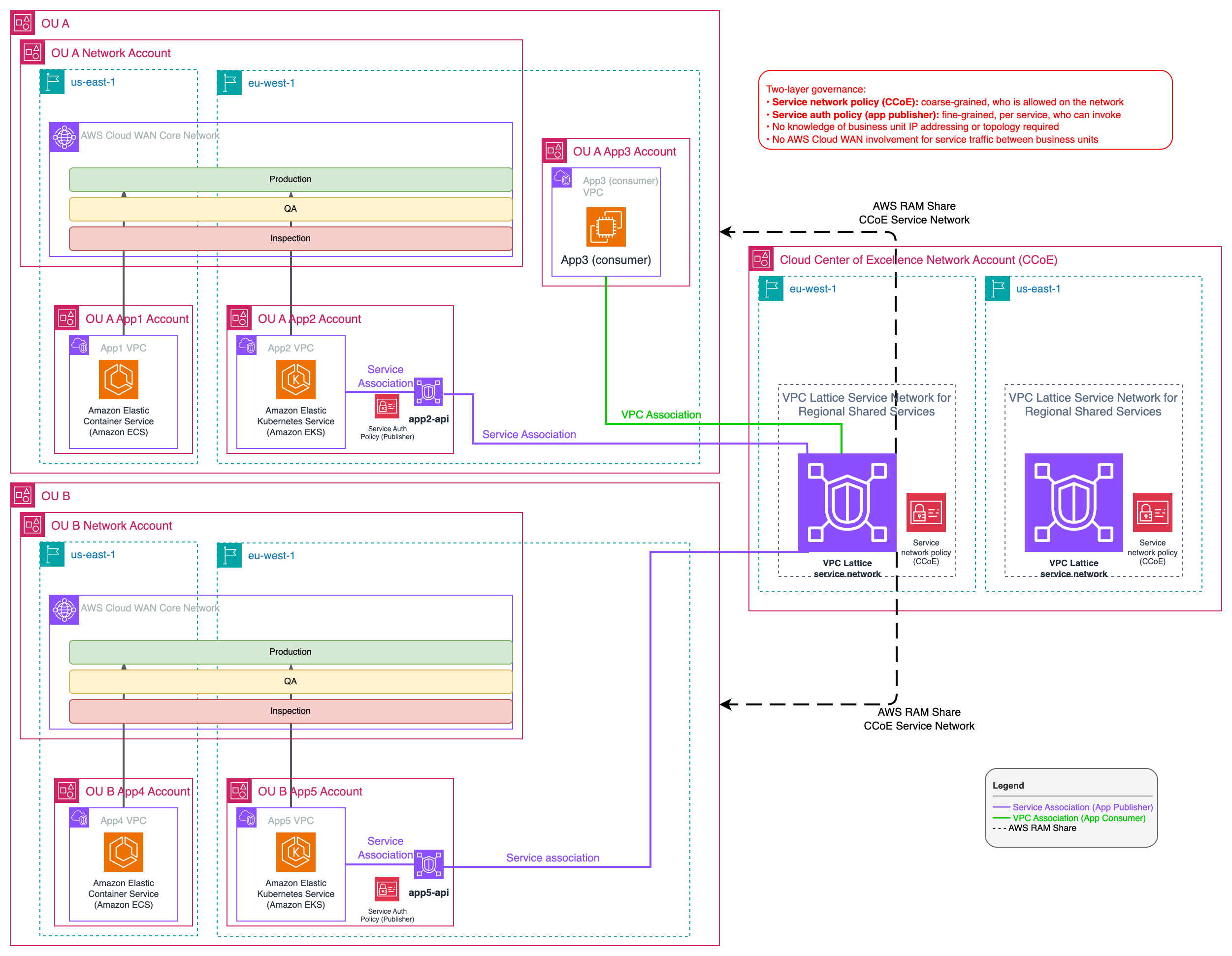
Figure 1: Federated model with a central VPC Lattice service network
In Figure 1, each business unit uses its AWS Cloud WAN independently with no CCoE dependency. Services shared between business units operate within a single Region. For cross-Region consumption, business units can reach a service network endpoint in the service network’s Region over their AWS Cloud WAN core network.
Two-layer governance model: VPC Lattice evaluates auth policies at two levels, in order: first the service network policy, then the service auth policy. A request must pass both:
- Service network policy (owned by CCoE): Coarse-grained perimeter control. The CCoE defines who is allowed onto the network (for example, only principals from business units A, B, and C). This gives the CCoE a central disconnection mechanism: one policy change denies access to an entire business unit.
- Service auth policy (owned by service publisher): Fine-grained per-service control. Each publisher decides which principals can call their service, and can evaluate additional request attributes such as source VPC, headers, or request path. Because these policies grant access to specific IAM roles, consumers must sign their requests with AWS Signature Version 4 (SigV4). VPC Lattice treats unsigned requests as anonymous, and the auth policies in this post deny them.
Adding a new consumer is a publisher-side change that requires no CCoE intervention.
Flexibility when business units change: To disconnect a business unit, the CCoE first updates the service network policy to deny it, then removes its active associations, and finally revokes the AWS RAM share. No other business units, services, or policies change. The architecture is loosely coupled by design.
Service consumption flow: The CCoE shares the service network with all business units through AWS RAM. Business unit B associates app5-api with the service network and grants specific IAM roles in business unit A access through a service auth policy. Business unit A associates its consumer VPC (App3) with the same service network. When App3 invokes app5-api, Amazon Route 53 resolves the service DNS name to VPC Lattice, which evaluates both policies and routes the request.
Pattern 2 (distributed): Business units own their networks and connect directly
In this pattern, each business unit runs its own network and shares services directly with other business units.
Use case
A conglomerate operates independent business units that occasionally consume each other’s services. Each has its own networking and security team, and there is no central IT team. Business units negotiate access directly through bilateral agreements.
Description of the pattern
Each business unit owns its AWS Cloud WAN core network and its own VPC Lattice service network. To make a service available to another business unit, the provider shares it once through AWS RAM with the consumer business unit’s OU. Any consumer account can then associate the service with its business unit’s service network without provider coordination. The consumer requests access from the provider, who grants that principal in the service auth policy.
Auditing is decentralized: each provider monitors access to its own services through VPC Lattice access logs. The trade-off is no central perimeter, no unified audit view, and no single action to cut off an entire business unit.
Figure 2 shows two business units, each with its own AWS Cloud WAN core network and VPC Lattice service network. Business unit B shares app5-api directly with business unit A.
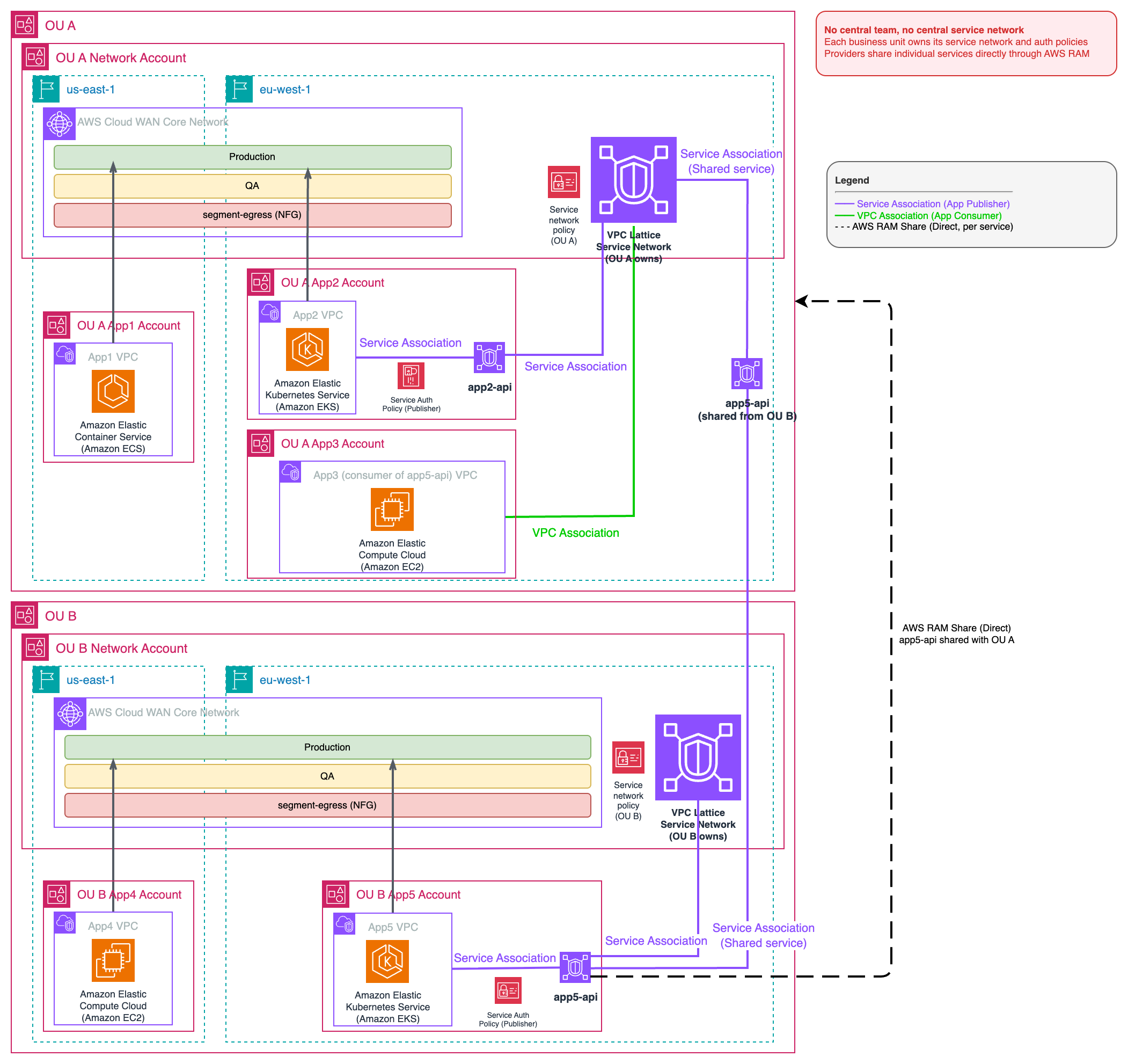
Figure 2: Distributed model with direct sharing between business units
In Figure 2, the architecture within each business unit matches Pattern 1. Business unit B shares app5-api with business unit A’s OU, so any account in business unit A can see the service. Visibility doesn’t grant access: business unit B’s service auth policy controls which IAM roles can invoke it.
Flexibility when business units change: To end a bilateral relationship, the provider first revokes the consumer’s access in the service auth policy, then removes the consumer’s service associations, and finally revokes the AWS RAM share. Only that service relationship is affected.
Service consumption flow: Business unit B shares app5-api with business unit A through AWS RAM. Business unit A associates app5-api with its own service network, where the App3 VPC is already associated. After business unit B grants App3’s IAM role in the service auth policy, App3 invokes app5-api. Route 53 resolves the service DNS name to VPC Lattice, which evaluates business unit B’s service auth policy and routes the request to business unit B’s target group.
Pattern 3 (centralized): A central team owns the network for all business units
In this pattern, one central team runs the network and service connectivity for every business unit.
Use case
Use this pattern when business units don’t have their own networking or security teams, and a single central team owns all network infrastructure and security policies. This is the most common case we see with customers, typically in enterprises where business units are departments or cost centers.
The key design shift is this: instead of one segment per business unit, segment by security model to reduce operational overhead. Group workloads by the security treatment they require: which VPCs must go through inspection, which need internet access, and which stay isolated. This also keeps you well within the per-core-network segment quota as you add business units (see AWS Cloud WAN quotas).
Description of the pattern
A single central team owns and operates AWS Cloud WAN and Amazon VPC Lattice for the whole enterprise. Every business unit connects to the network in the same way. What differs is the type of flow, and each flow goes to a different network. Figure 3 shows this design for two business units across two Regions.
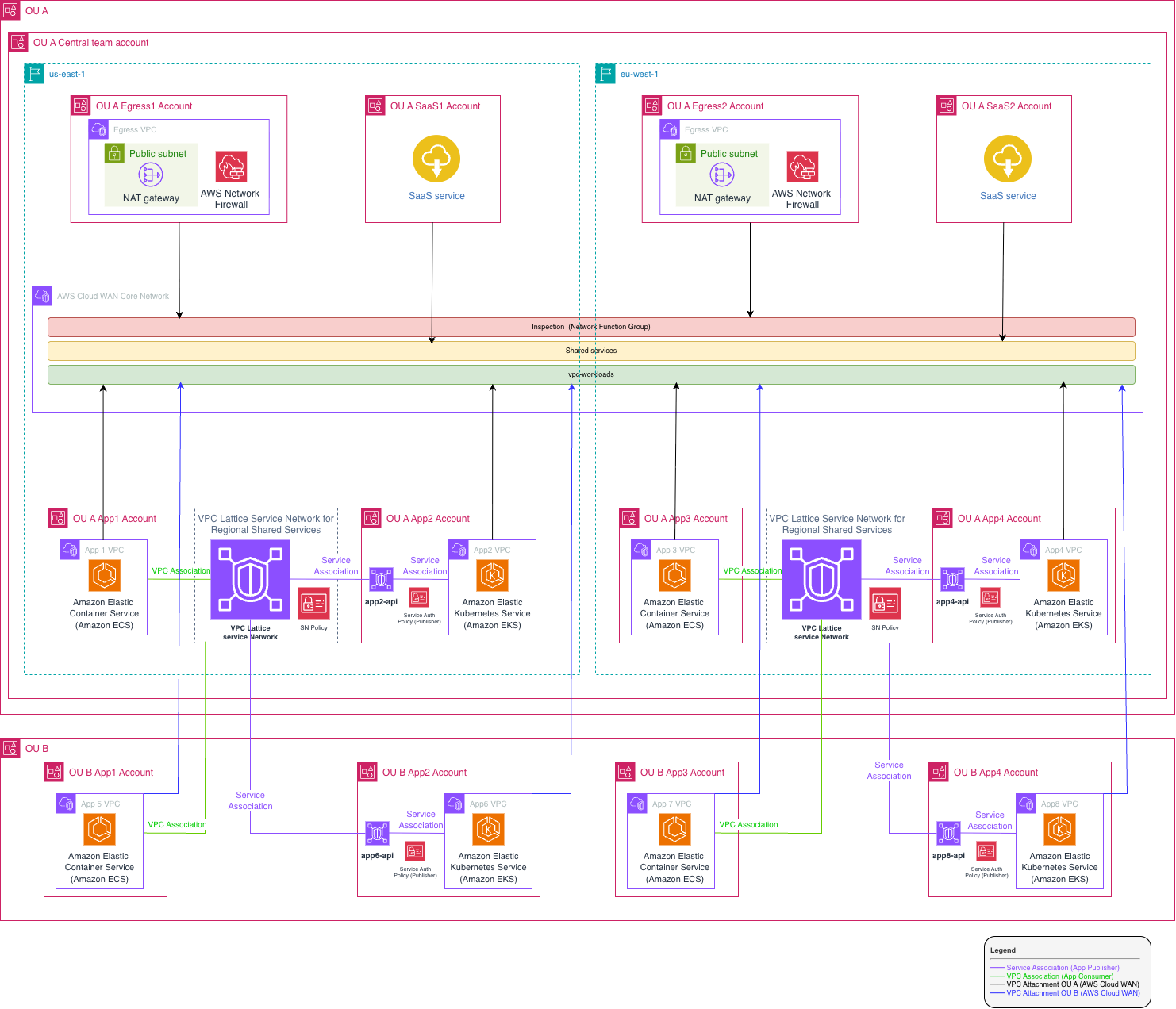
Figure 3: Centralized model with one central team for all business units
In Figure 3, the central team account in OU A owns the core network in us-east-1 and eu-west-1. In each Region, an egress account with a NAT gateway and AWS Network Firewall attaches to the Inspection network function group. A software as a service (SaaS) account attaches to the Shared services segment. Application accounts from OU A and OU B attach their VPCs to the vpc-workloads segment and associate with the Regional service network. Each business unit uses two types of flow:
- Amazon VPC Lattice flows (application layer): When a workload consumes a service published by another workload, traffic goes through VPC Lattice, which applies the policies and connects consumer to publisher directly.
- AWS Cloud WAN flows (network layer): Traffic that can’t go through VPC Lattice goes through AWS Cloud WAN. This covers shared services that aren’t onboarded to VPC Lattice or AWS PrivateLink, such as a SaaS application. It also covers internet egress through AWS Network Firewall in each Region. AWS Cloud WAN also carries traffic between Regions, including cross-Region VPC Lattice consumption through service network endpoints.
Service consumption flow: The central team shares each Region’s service network with the OUs of all business units through AWS RAM. App2 associates app2-api and defines a service auth policy that grants access to specific App1 IAM roles. App1 associates its consumer VPC with the same service network. When App1 invokes app2-api, Route 53 resolves the service DNS name to VPC Lattice, which evaluates both the service network policy and the service auth policy, and routes the request.
Conclusion
AWS Cloud WAN and Amazon VPC Lattice connect business units at complementary layers. AWS Cloud WAN provides segmentation, cross-Region routing, and hybrid access. Amazon VPC Lattice provides service-to-service connectivity with DNS-based discovery, zero-trust auth, and per-service observability. Together, they deliver isolation and service reachability without IP overlap management, firewall rule explosion, or routing complexity. To apply these patterns to your own environment, see the AWS Networking Best Practices Guide.