AI & ML
DeFT-RAG: Decomposing Multi-Hop Questions into Self-Contained Sub-Questions with Reusable Answers
arXiv cs.IR0 views
arXiv:2610.37826v2 Announce Type: replace-cross Abstract: Retrieval-augmented generation (RAG) lets a large language model (LLM) answer questions by retrieving relevant passages from a large corpus. However, RAG struggles with multi-hop questions, which require chaining facts spread across several documents through intermediate entities that the question never mentions. Graph-based RAG methods retrieve once from the entities a question names and so rarely recover the full evidence chain. Iterative RAG methods recover it step by step, but their accuracy is limited by the many tasks they ask the LLM to perform, such as planning the sub-questions, deciding their dependencies, rewriting them as answers arrive, and keeping track of what is known. We propose DeFT-RAG, a RAG framework built on three components. First, DeFT-RAG generates one self-contained sub-question at a time from the original question and the sub-questions answered so far with their answers (QA pairs). Each sub-question names every entity it asks about, which removes the need to plan, track dependencies or rewrite, and lets the LLM focus on a single fine-grained task at a time. Second, DeFT-RAG moves the remaining LLM work outside the LLM: rule-based updates to a QA table that keeps track of what is known, and yes/no decisions made by a fine-tuned lightweight decision model. Third, DeFT-RAG caches the QA pairs and reuses an answer when a later question asks a sub-question with the same meaning. On MuSiQue, 2WikiMultiHopQA and HotpotQA, DeFT-RAG achieves the best accuracy among thirteen baselines with both gpt-4o-mini and Qwen3.6 as the backbone, while giving the LLM fewer input tokens than any other iterative method. With a QA cache shared across 1,000 MuSiQue questions, 23.1% of sub-questions are answered from the cache, which reduces LLM calls by 12.9% without lowering accuracy.
Source:https://arxiv.org/abs/2610.37826PreviousTowards Reliable, Scalable, and Value-Aligned Generative Recommendation for Large-Scale AdvertisingNextFull-Duplex-Enabled Integrated Sensing and Communications: Opportunities and Challenges
Related posts

How to watch Wheelchair Rugby League World Cup 2026: live streams
0TechRadar
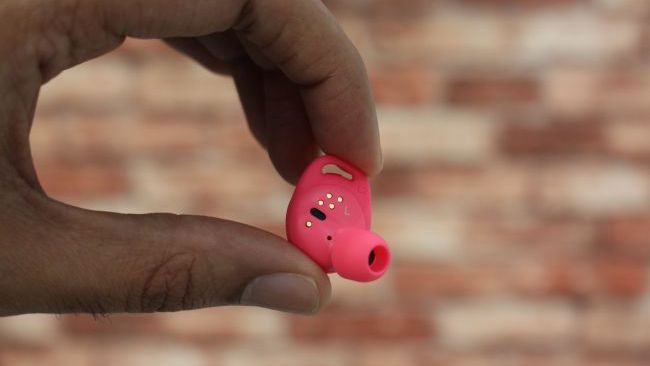
Samsung's new earbuds sound like a revival of its Gear line of exercise wearables, following on from the recent Galaxy On.
0TechRadar

Are AI skills more important than a degree? New report suggests UK firms are leading the push to hire workers with new abilities
0TechRadar

Setting a new standard for responsible AI infrastructure
0OpenAI Blog

I Stopped Writing Giant Prompts. This 3-Step Pattern Fixed My AI Output
0dev.to

GPT-Image-2.6 Flare vs Sunburst: ¿qué modelo deberías usar?
0dev.to