AI & ML
Imitation Policies Learn a Proprioceptive Anchor: A Predictive Law for Perception Noise and Its Closed Loop Cost
arXiv cs.RO0 views
arXiv:2611.17658v1 Announce Type: new Abstract: Imitation policies for robot manipulation are often trained on noisy object positions, and they learn to discount the noisy reading. We show how much they discount it, and why. Because demonstrators steer toward the object, the robot's own state carries information about where the object is. A trained policy combines this proprioceptive anchor with the reading and weights the reading by $\alpha = V/(V + s^2)$, where $s^2$ is the reading noise and $V$ the anchor's error variance. $V$ belongs to the learner and is far smaller than a linear model of the demonstrations implies, which is why classical errors-in-variables (EIV) regression overestimates $\alpha$. Measured once, $V$ predicted ten held-out sensitivities across two robomimic tasks, two learners and four new noise levels, with mean absolute error 0.025 against 0.37 for classical EIV, and a parameter-free bias test rules out the simpler explanation that the policies just overestimate the noise. The discount does not carry over to deployment, where the policy produces its own state: closed-loop sensitivity to a persistent reading offset exceeded $\alpha$ in all 15 policies that passed the registered gates, although the stricter registered prediction, that all would follow the offset fully, held for 8 of them. Post hoc, lower $\alpha$ went with lower success, steeply for diffusion, and a registered prospective test confirmed this for diffusion on Can at two new noise levels: the measured $\alpha$ predicted success before any rollout, within 0.03 (95% intervals $\pm 0.08$), although training noise predicts it equally well. Every test was registered before its data, including the classical benchmark that failed, and all other analyses are labelled post hoc; all results are in simulation with synthetic Gaussian noise.
Source:https://arxiv.org/abs/2611.17658PreviousAI-guided robotic in situ fabrication of curvature- and tissue-adaptive wireless bioelectronicsNextEViDS: An Environment--Vehicle Dynamics Integrated Simulation Platform for Intelligent Chassis Development
Related posts

An LLM confidence score isn’t correctness: the certainty trap
0dev.to

What a host-side layer for LLM agents is, in plain words (and what it is not)
0dev.to

OpenAI's Agents API Lets Any App Rent Codex, Here's How It Works
0dev.to
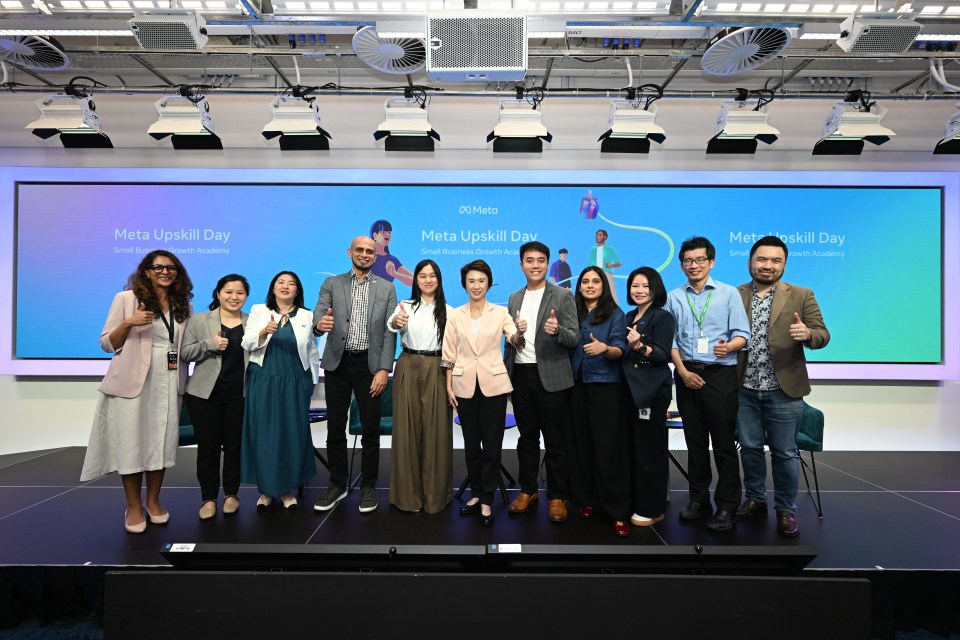
94% of Singapore Small Business Owners Surveyed Say More AI Guidance Is Needed
0Meta Newsroom

Nashville, Tennessee Real Estate Dataset: 7,436 Listings, Excel File (Nov 10, 2026)
0dev.to Data

A Hundred and Eighty Six Thousand Pounds of Stock Had Left One Branch and Never Arrived at Another
0dev.to Data