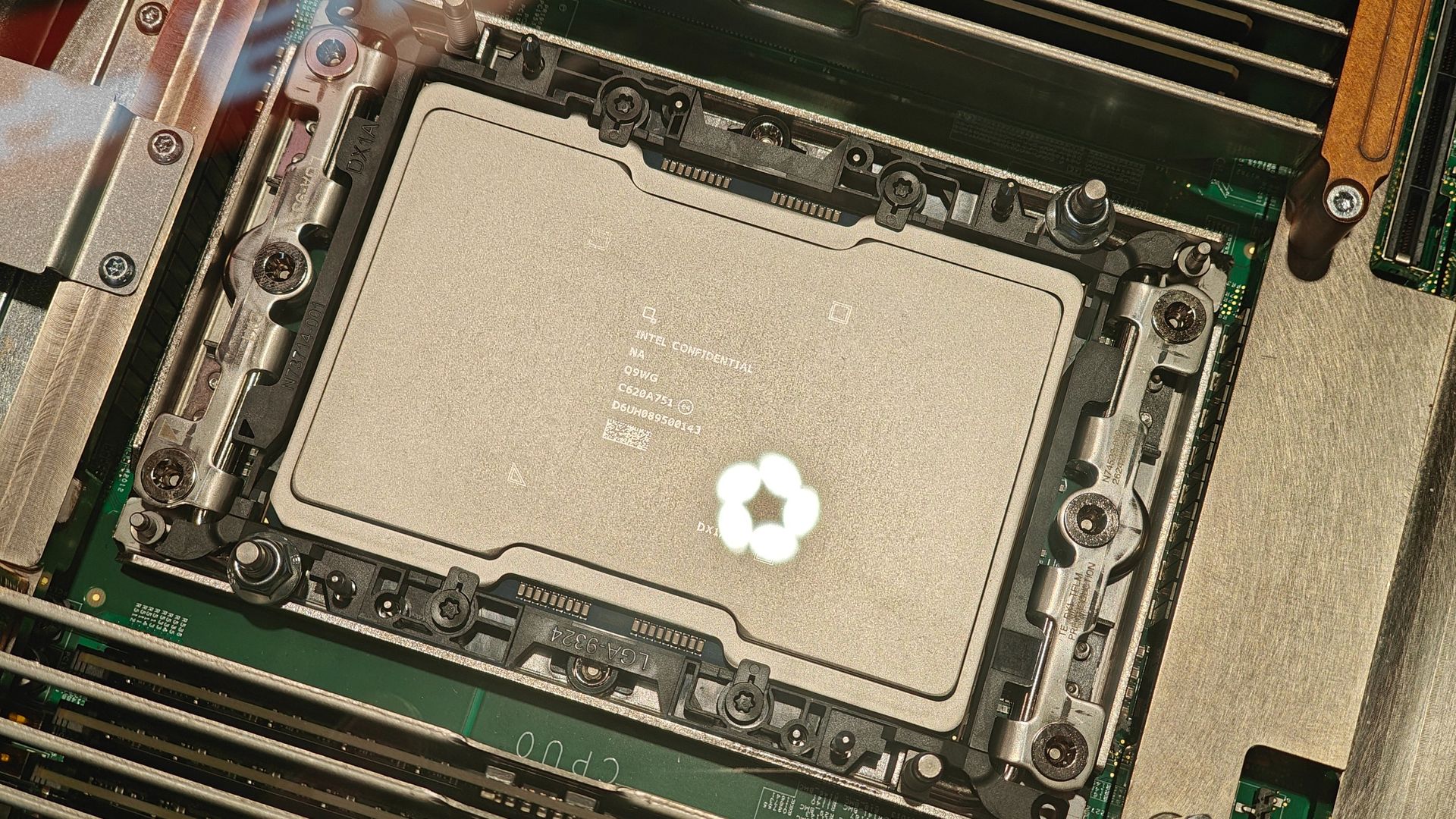
Intel’s next-gen Xeon Diamond Rapids CPUs appeared at Supercomputing 2026 (SC26) in two separate booths, but neither was from Intel directly. Most interesting was a running server at the CXL booth, showcasing a demo with a Diamond Rapids CPU. The server ran for the first day of the show, and upon returning to the booth, we were informed that it had been shut down due to noise complaints (it’s hard to mistake a running server). Elsewhere at Bull’s booth, a Diamond Rapids CPU was shown installed in a server behind a glass case. Notably, Intel didn’t have a Diamond Rapids demo, instead focusing most of its booth on Xeon 6+ and its new D270 GPU, otherwise known as Crescent Island.
The demo in question is for Montage’s CXL MXC, or Memory eXpander Controller. If you’re unfamiliar, memory expansion via CXL is an increasingly common tactic to give multi-host environments access to a large pool of memory, breaking free of an individual server’s capacity via CXL. In the demo, Montage is showing off its memory expansion controller running across a Xeon 6 and a Diamond Rapids server, each sharing a pool of memory over CXL. CXL is an open standard, built atop PCIe.
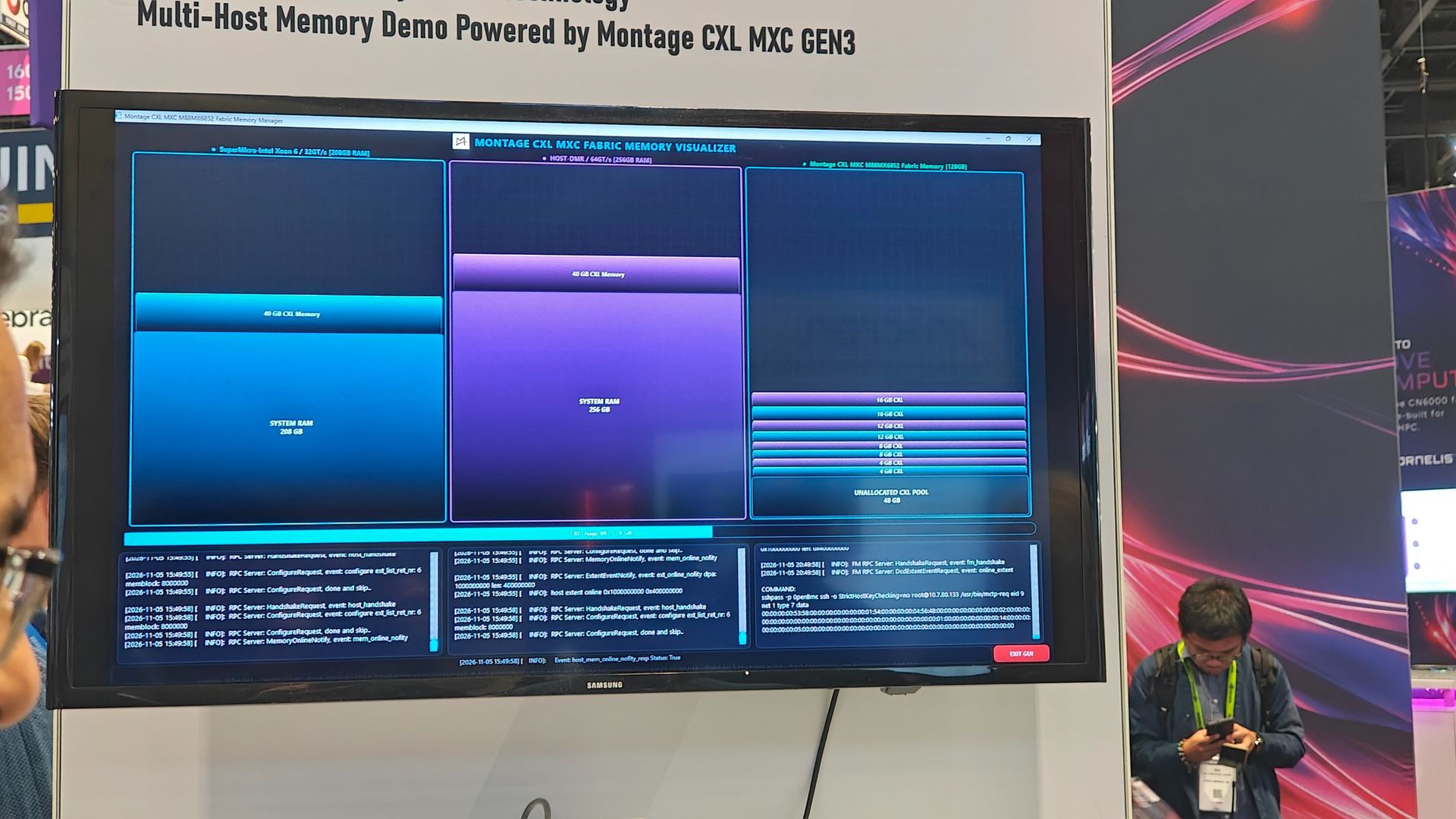
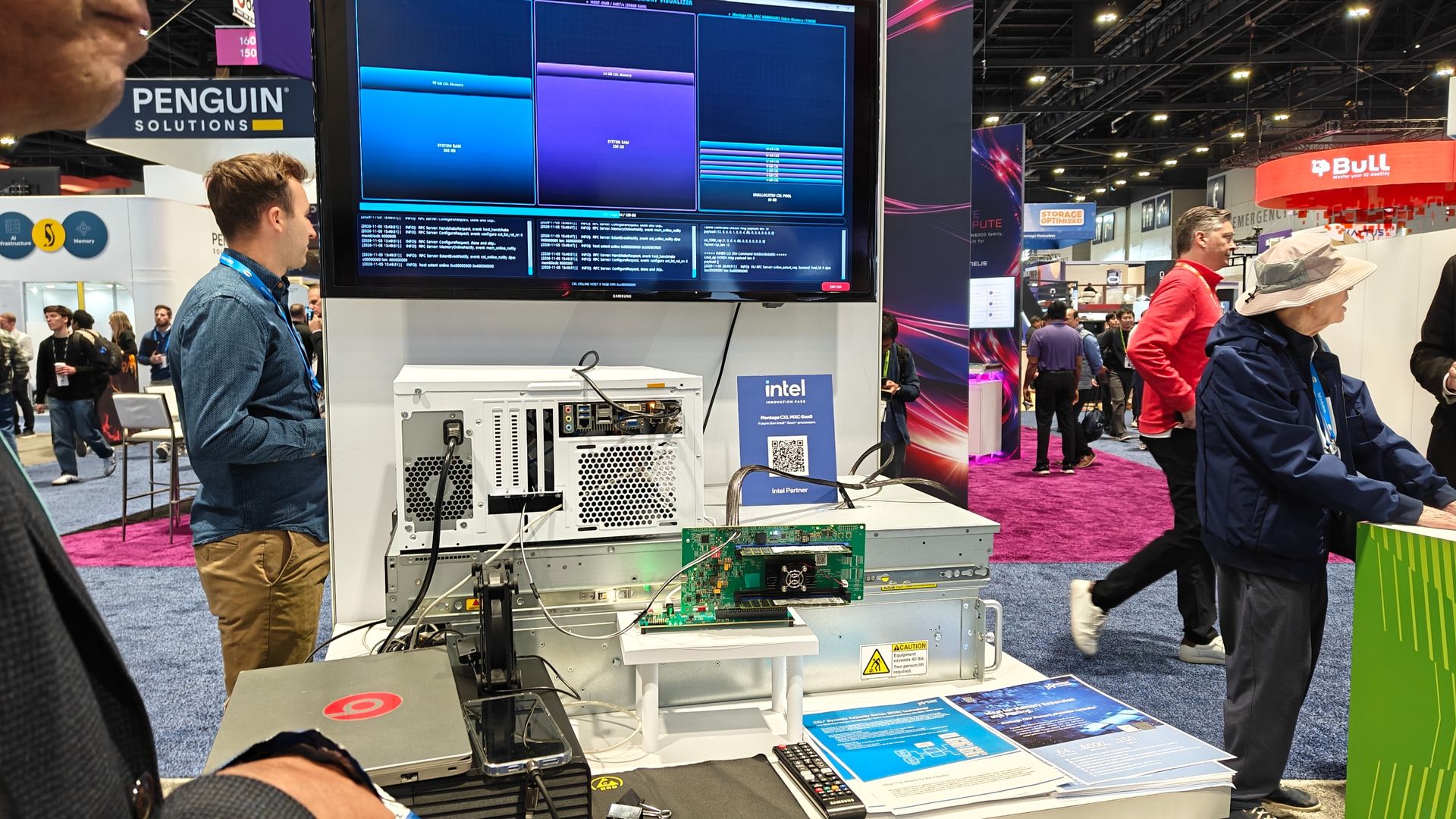
Of course, the demo doesn’t say much about Diamond Rapids performance, but it’s the first time we’ve seen a chip running in the wild. The 256 GB memory capacity shown doesn’t provide any hints, either. Intel has announced that Diamond Rapids will support 16-channel memory, with RDIMM support up to 8,000 MT/s and MRDIMM support up to 12,800 MT/s, matching AMD’s recent EPYC Venice CPUs. However, Intel hasn’t revealed capacity, though we anticipate the maximum capacity will be far above 256 GB – for context, last-gen Granite Rapids-AP supports up to 3 TB per socket.
Bull is a French server designer focused on HPC and AI infrastructure, and it showed off two Xeon 7 Diamond Rapids chips installed in the Bullsquana XH31600 server. As expected for a 2P Diamond Rapids server, it supports 32 channels of DDR5 memory, and it’s designed for a liquid-cooled deployment.
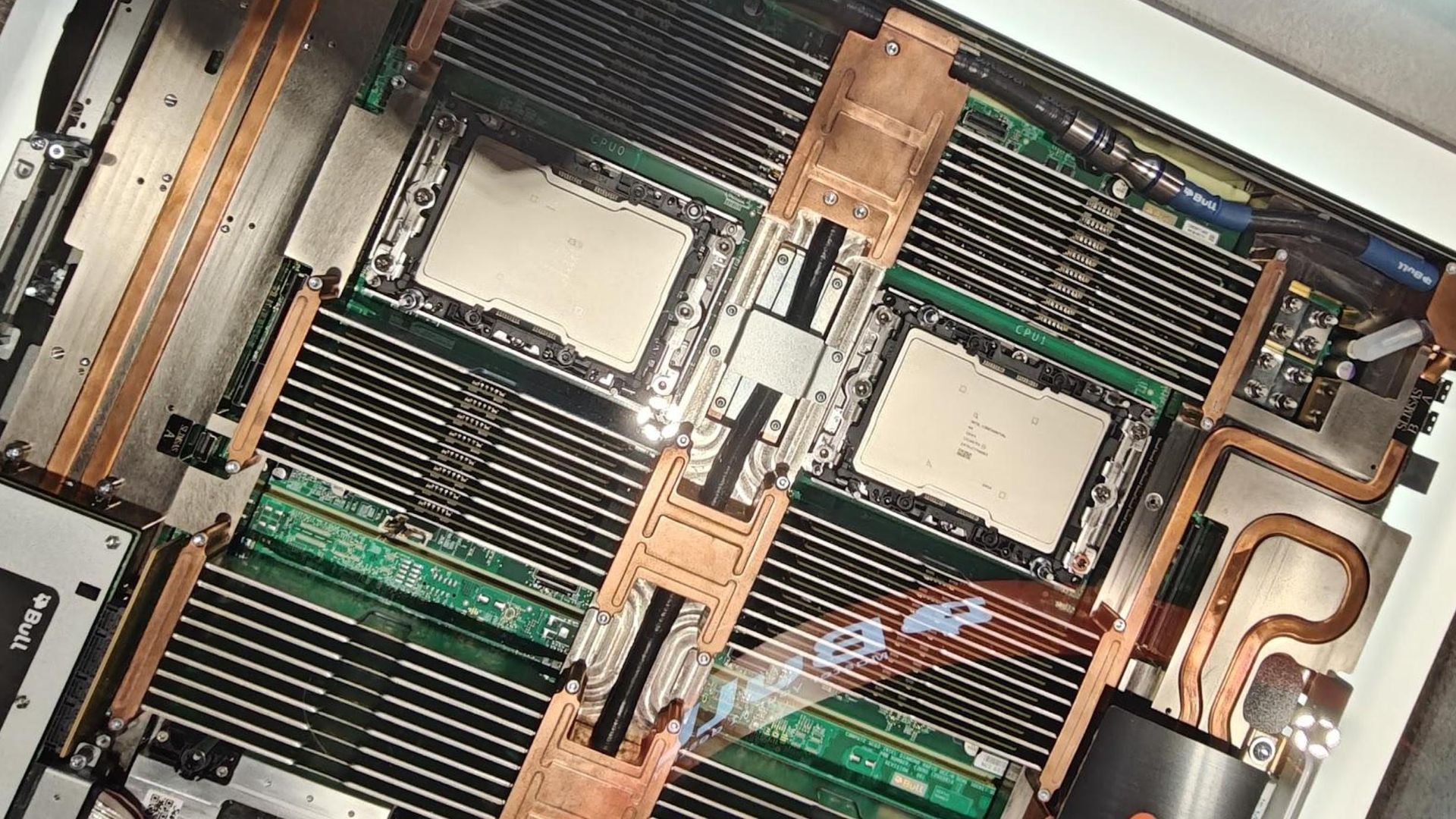
As you can see from the image, these aren’t production chips. They’re labeled with “Intel confidential,” and the code starts with “Q,” revealing that this is a sample. Originally, we expected to see Diamond Rapids in the second half of this year, perhaps around this time. However, in August, Intel revealed that Xeon 7 chips would launch in 2027.
Based on the various servers we saw and the live demo, it seems Intel is targeting a launch earlier in the year, likely in Q2; we expect a larger consumer focus in Q1. It could slip later into the year, though that seems very unlikely given that Diamond Rapids was already pushed back, and the insatiable demand for CPUs in AI data centers doesn’t appear to be drying up.
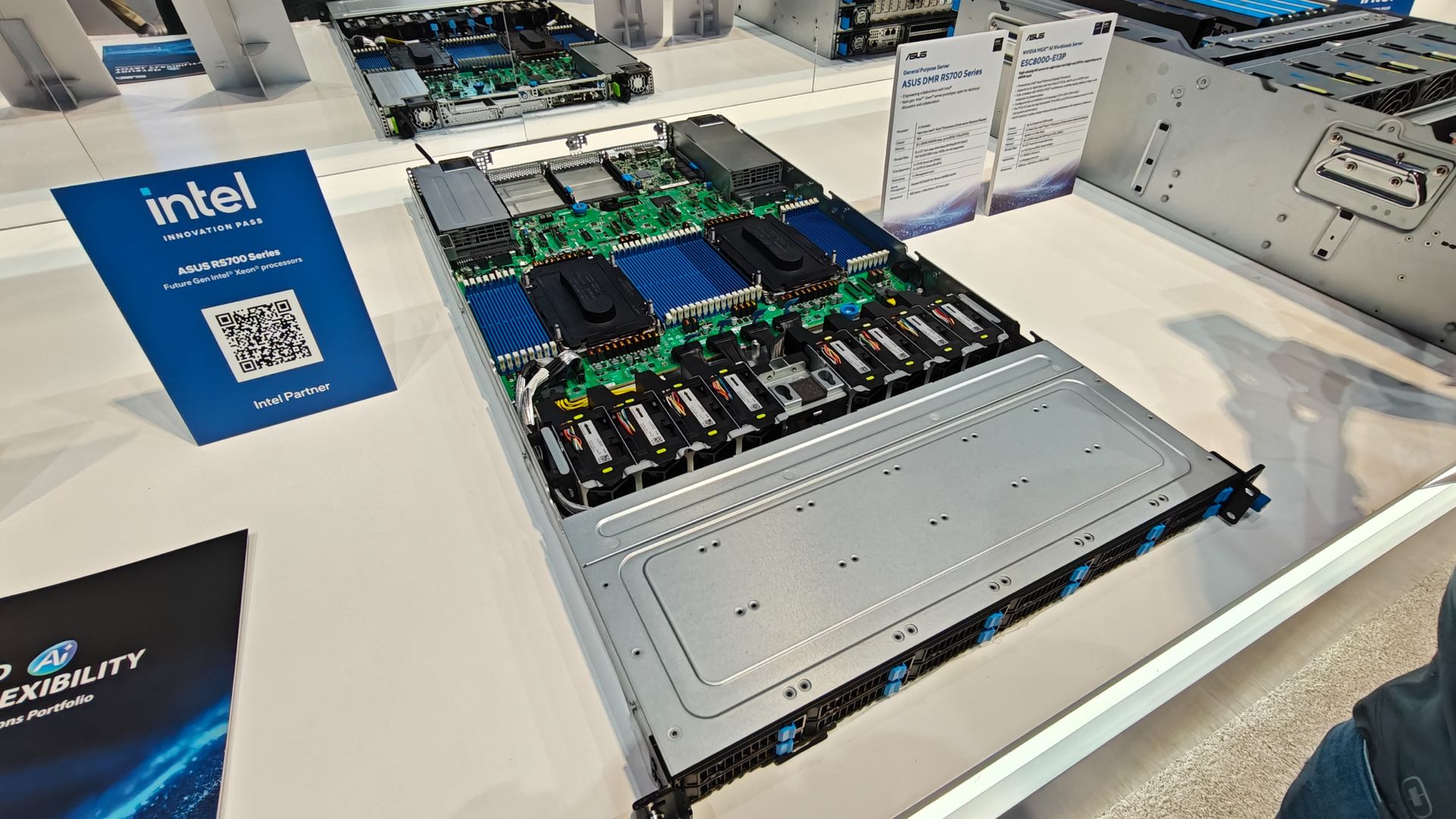
Also pointing to a relatively quick release are the various servers we saw on the floor at SC26. Several partners showed off their next-gen servers built for Diamond Rapids CPU, sporting the LGA 9324 socket, including Dell and Asus (pictured above). However, Bull was the only vendor we could find that had an actual chip on display.
Diamond Rapids is Intel’s true next-gen CPU, following up on the E-core-only Xeon 6+ range that launched earlier this year. Diamond Rapids packs up to 256 P-cores, and it’s built on Intel’s performance-enhanced 18A-P node. The most interesting aspect of the chip is its topology, with Intel breaking from its previous layout and building something much similar to an EPYC CPU. The package features centralized memory and I/O, which were pushed out to the edges of the package with Granite Rapids. You can read more about the design of the chip in our Diamond Rapids recap from Hot Chips on Tom’s Hardware Premium.


