While AI continues to reshape industries across science and mathematics, traditional supercomputing has seemingly taken a back seat. However, AMD's Scott Tease told Tom's Hardware Premium that most HPC sites “recognize that AI will never replace HPC,” and suggests that building a heterogeneous compute stack is the best path forward to tackle bleeding-edge research, despite Nvidia pushing performance on lower-precision data types higher for AI workloads at the cost of native performance for the important double-precision FP64 format that’s critical for HPC workloads.
A heterogeneous compute stack brings together quantum, HPC, and AI under one roof, a fleet that AMD is helping pilot at Oak Ridge National Laboratory alongside IBM. Tease is AMD’s corporate vice president of HPC and sovereign AI, who joined the company earlier this year after more than a decade at Lenovo (and, before that, another 13 years at IBM). We spoke with Tease ahead of SC26 to get a read on the state of HPC, how it intersects with AI, and what’s actually driving the research community in a time when computer chips are driving headlines about international espionage plots.
An awful lot of numbers

FP64 is important for HPC workloads because of its precision. FP64 is a hot-button issue, largely due to how Nvidia’s GPUs have progressed over the past two generations. Or rather, how they haven't progressed. Nvidia’s latest Rubin GPU has 33 TFLOPs of FP64 compute, which is lower than the four-year-old H100’s 34 TFLOPs of FP64. For context, AMD’s year-old Instinct MI355X peaks at 78.6 TFLOPs of FP64 compute, while its upcoming HPC-angled MI430X peaks at 288 TFLOPs.
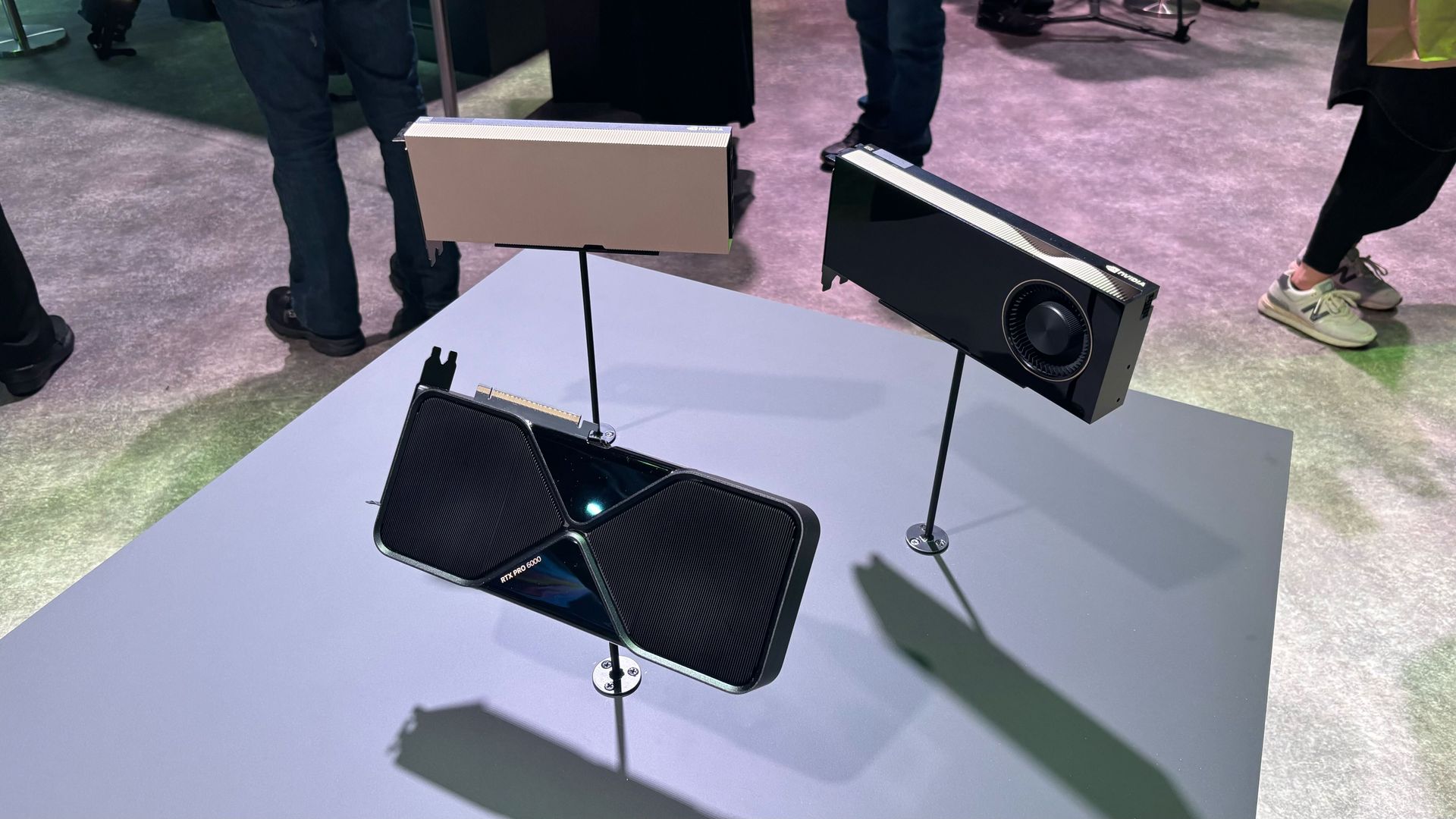
Nvidia has leaned on emulation to drive FP64 performance higher, a tactic that AMD is now pushing back on, but regardless, it’s easy to see why the HPC world could feel left behind in this new AI era. AI is defined by fuzzy, low-precision data formats, which is diametrically opposed to the accuracy of high-precision FP64. And, over the last generations of hardware from the big green giant that is Nvidia, FP64 performance has seemingly stalled in favor of driving low-precision data formats for AI workloads.
“Maybe a few years ago, people in HPC might have felt a little threatened by AI because it was taking some of the limelight,” Tease told Tom’s Hardware Premium. “But I think now they’ve come to realize that AI is an essential part of scientific discovery today. It’s just, how are you going to deploy it?”
That central question recontextualizes the apparent conflict between AI compute and HPC compute. Tease pointed to researchers spawning dozens of agents to explore viable paths for a given intent, while still leaving the complex simulations for a traditional FP64-driven HPC fleet. “...to try to do that with old approaches where you have islands of CPUs or islands of GPUs or something like that, and they're very different. They're not interconnected. It's just not going to be able to keep up,” Tease said.
Enter quantum
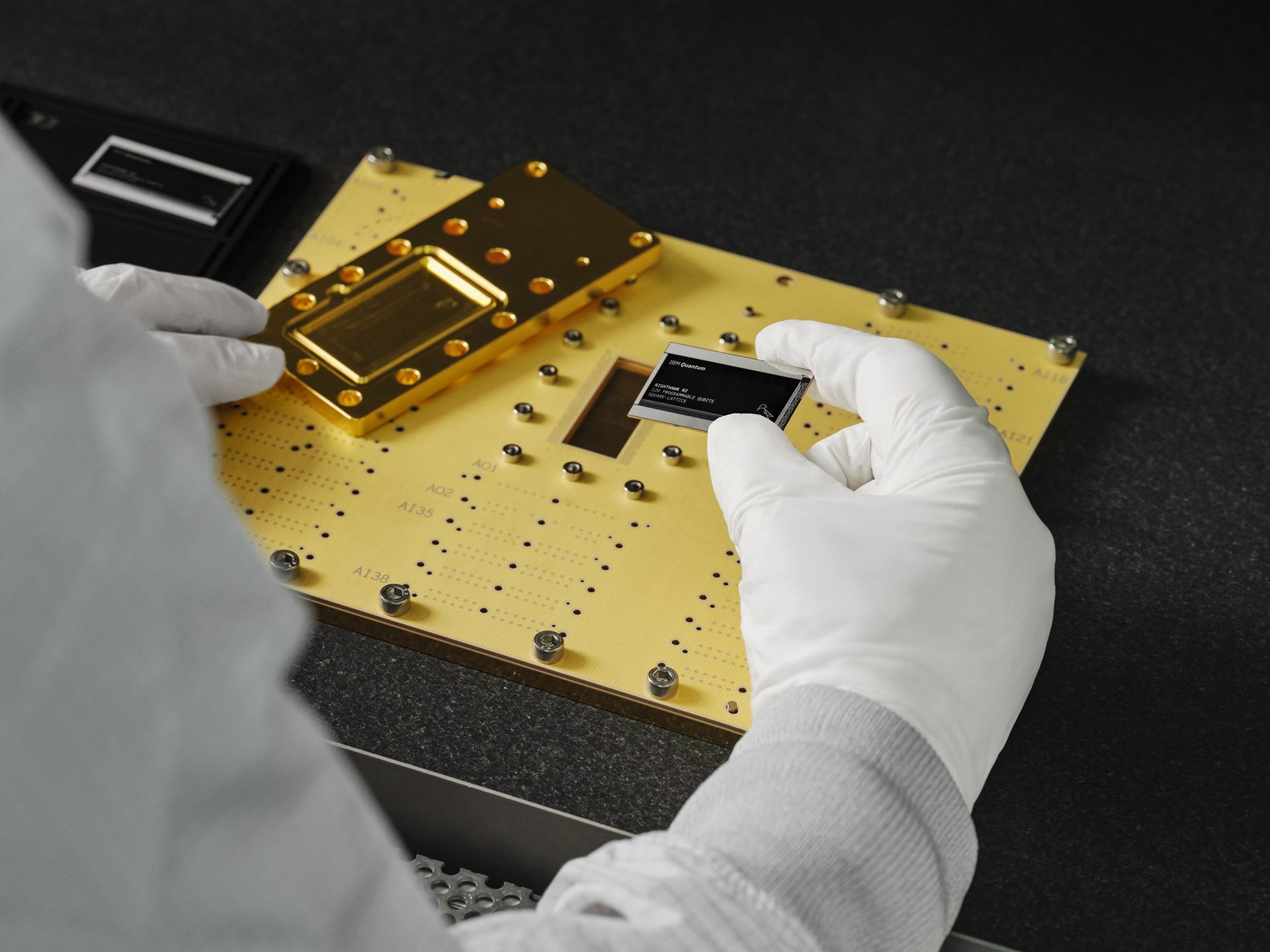
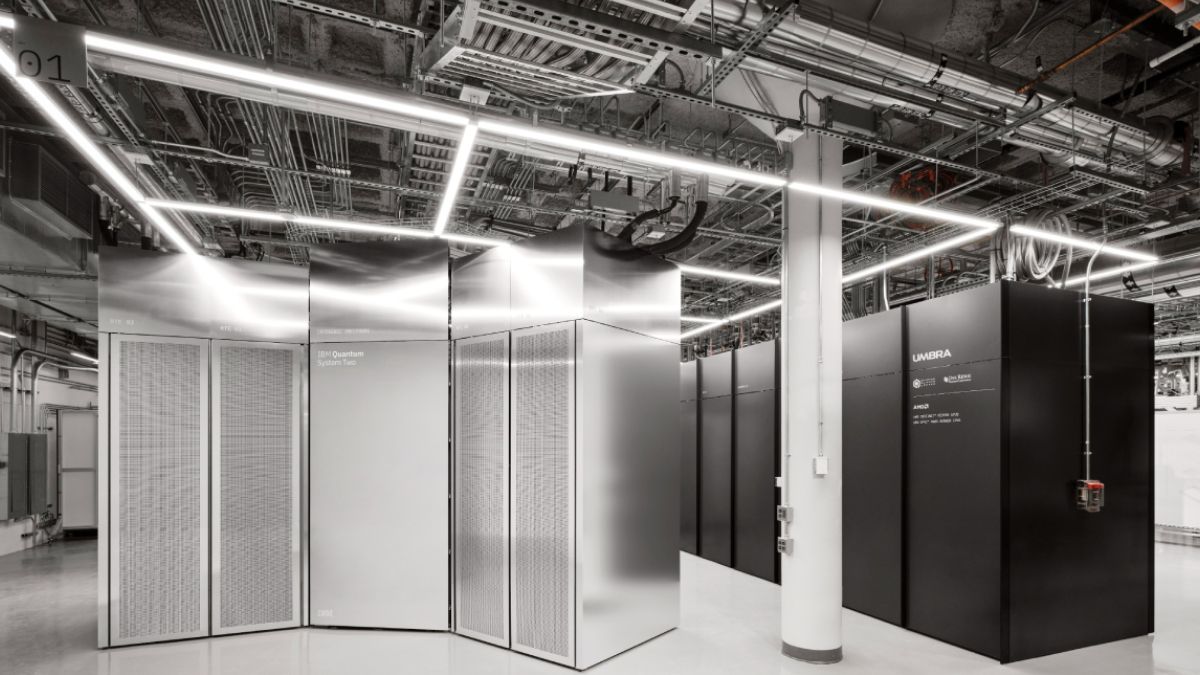
One of the challenges right now is actually connecting those systems, which is an area AMD is exploring with its recent collaboration with IBM and Oak Ridge National Laboratory to deploy AMD’s “classical” computing stack in the Umbra HPC system alongside IBM’s 129-qubit Quantum Nighthawk quantum computer. The systems will connect to the Oak Ridge Leadership Computing Facility, allowing researchers to “explore how integrated quantum, AI, and scientific computing can accelerate scientific discoveries and national security.”
If the HPC crowd felt slighted by AI, you can imagine how quantum researchers probably feel.
Regardless, Tease says the future of scientific computing looks like a unified fleet that brings together AI, HPC, and quantum. “There [are] going to be a lot of problems where quantum will not be the be-all, end-all. There are some problems like human health, chemistry, where quantum’s going to allow us to do things we really can’t do with classical computing today. So having those things coexist, having them in a single workload, is where we want to get to.”
Scheduling workloads for HPC is a solved game, with open-source schedulers like Slurm driving much of the TOP500 to properly schedule workloads on supercomputers. Tease described something that goes deeper to connect these systems. “What we want to be able to do is not only do those kinds of ‘where should it go, here or there’ for HPC, we want to figure out when AI could be applied to it, when [GPU acceleration is] appropriate… and also when is it best to go in a quantum environment?”
The Oak Ridge Leadership Computing Facility is a test bed for figuring out how to hook these systems together properly. The press release explicitly states that it’s a “shared environment to evaluate the architectures, software, and workflows that future hybrid quantum systems will require.” The system is a co-design initiative with IBM, bringing together quantum and classical computing into one system.
With the system, researchers are exploring how to accelerate quantum error correction with classical systems, a critical step in quantum computing to weed out environmental influences. The goal is ultimately to accelerate quantum systems in the Quantum Genesis Q competition, an initiative launched by the U.S. Department of Energy that will provide up to $215 million in funding for quantum research.
By late 2028, the competition calls for quantum computers “with at least 100 logical qubits that are capable of performing hundreds of millions [of] fault-tolerant operations.” IBM describes the error correction research that will be performed at Oak Ridge as a “key component” in driving toward that goal. Separately, AMD announced last week an investment in quantum outfit PsiQuantum to provide CPUs, GPUs, and FPGAs to drive the company’s first fault-tolerant quantum system.