AI & ML
SEROA: Stable Encrypted-Traffic Representation and Online Adaptation for Service-Aware Networks
arXiv cs.NI0 views
arXiv:2611.07550v1 Announce Type: new Abstract: Mobile networks are evolving toward service-aware operation to support heterogeneous applications with diverse quality-ofservice (QoS) and quality-of-experience (QoE) requirements. In practice, however, the widespread use of encryption makes service types difficult to observe directly, which limits the deployment of service-aware optimization in operational networks. Recent raw-byte representation learning methods have improved offline encrypted-traffic classification, but their robustness in realistic deployment remains limited due to temporal drift and the lack of explicit labels for online adaptation. This paper proposes Stable Encrypted-Traffic Representation and Online Adaptation (SEROA), a deployment-oriented framework for encryptedtraffic classification in service-aware mobile networks. In the offline stage, SEROA exploits protocol structure to learn temporally stable representations by applying masked modeling to stable fields, protocolaware transformations and contrastive learning to unstable fields, and time-adversarial learning to suppress time-specific cues. In the online stage, SEROA uses feedback records containing QoE measurements, wireless states, and allocation decisions to update the deployed classifier through contextual-bandit learning. Experiments show that SEROA consistently outperforms representative pretrained baselines under both random and time-based evaluation protocols, and remains effective under QoE-driven online adaptation. These results demonstrate the value of stable representation learning and online adaptation for practical service-aware mobile networks.
Source:https://arxiv.org/abs/2611.07550PreviousWhen Does Blockwise Additivity Break? Diagnosing and Repairing the Additive Assumption in Distillation-Based Architecture SearchNextInstantiating the Knowledge Plane
Related posts

Where an e-commerce explainer video belongs, and what to show in it
0dev.to

How to explain a crypto product on video without sounding like a pitch
0dev.to

Why Europe's Freezer Hacks Spread So Far, So Fast
0Dark Reading
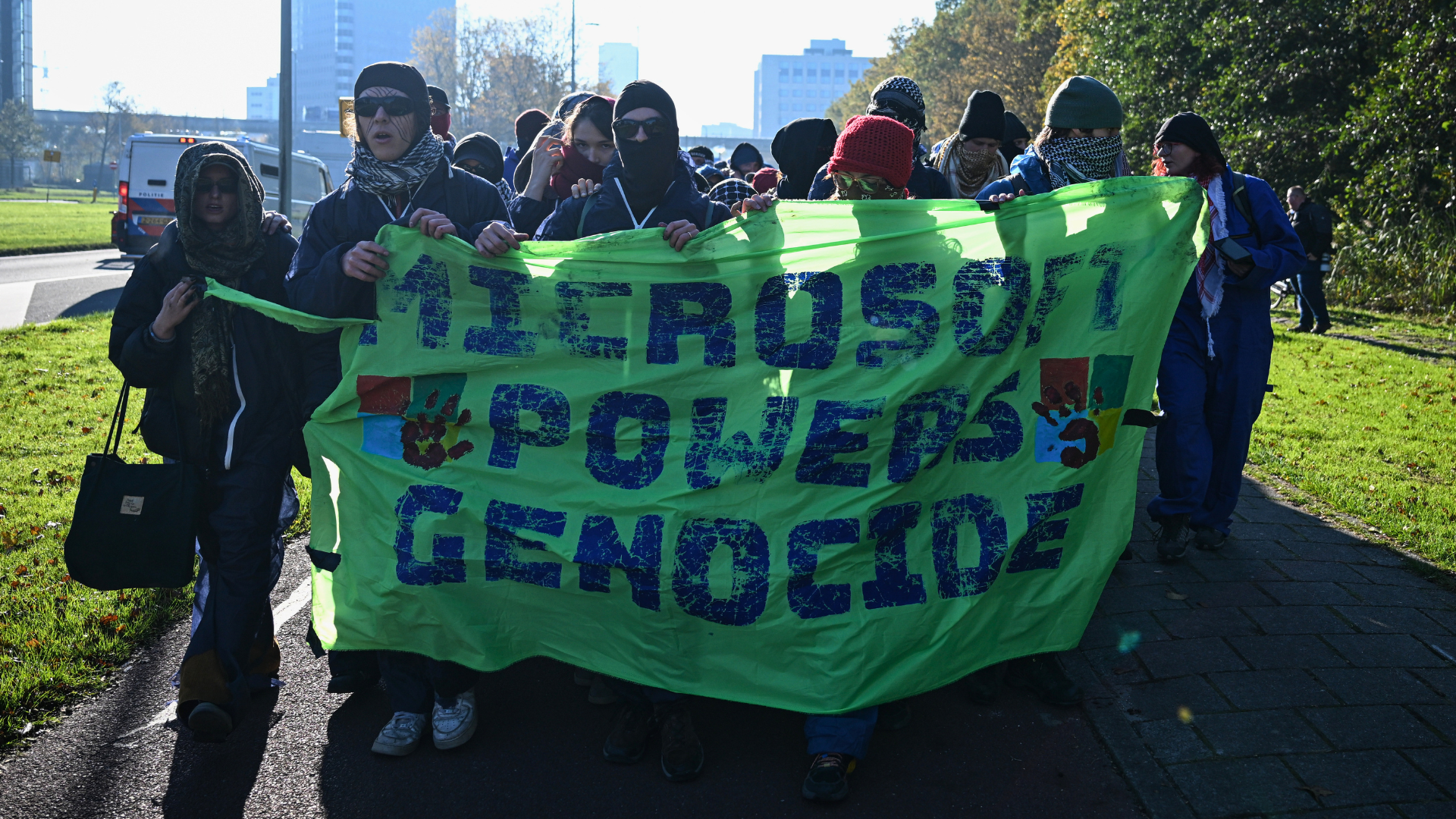
Protesters storm Microsoft AI data center construction site
0Tom's Hardware

The Download: a humanoid cleans house and Samsung builds for the AI boom
0MIT Technology Review

How Remedy designed Control Resonant’s wildest mission: ‘Anything kind of goes’
0The Verge