AI & ML
Symbolic Control for Stochastic Systems via Finite Parity Games
arXiv eess.SY0 views
arXiv:2101.00834v3 Announce Type: replace Abstract: We consider the problem of computing the maximal probability of satisfying an omega-regular specification for stochastic nonlinear systems evolving in discrete time. The problem reduces, after automata-theoretic constructions, to finding the maximal probability of satisfying a parity condition on a (possibly hybrid) state space. While characterizing the exact satisfaction probability is open, we show that a lower bound on this probability can be obtained by (I) computing an under-approximation of the qualitative winning region, i.e., states from which the parity condition can be enforced almost surely, and (II) computing the maximal probability of reaching this qualitative winning region. The heart of our approach is a technique to symbolically compute the under-approximation of the qualitative winning region in step (I) via a finite-state abstraction of the original system as a 2.5-player parity game. Our abstraction procedure uses only the support of the probabilistic evolution; it does not use precise numerical transition probabilities. We prove that the winning set in the abstract 2.5-player game induces an under-approximation of the qualitative winning region in the original synthesis problem, along with a policy to solve it. By combining these contributions with (a) a symbolic fixpoint algorithm to solve 2.5-player games and (b) existing techniques for reachability policy synthesis in stochastic nonlinear systems, we get an abstraction-based algorithm for finding a lower bound on the maximal satisfaction probability. We have implemented the abstraction-based algorithm in Mascot-SDS (Majumdar et al., 2020), where we combined the outlined abstraction step with our recent tool FairSyn. We evaluated our implementation on the nonlinear model of a perturbed bistable switch from the literature. We outperform a recently proposed tool for solving this problem by a large margin.
Source:https://arxiv.org/abs/2101.00834PreviousFrom AI-Enabled Remote Patient Monitoring Toward Agentic Robotics: Embodiment, Governance, and Care IntegrationNextAn iterative tangential interpolation algorithm for model reduction of MIMO systems
Related posts
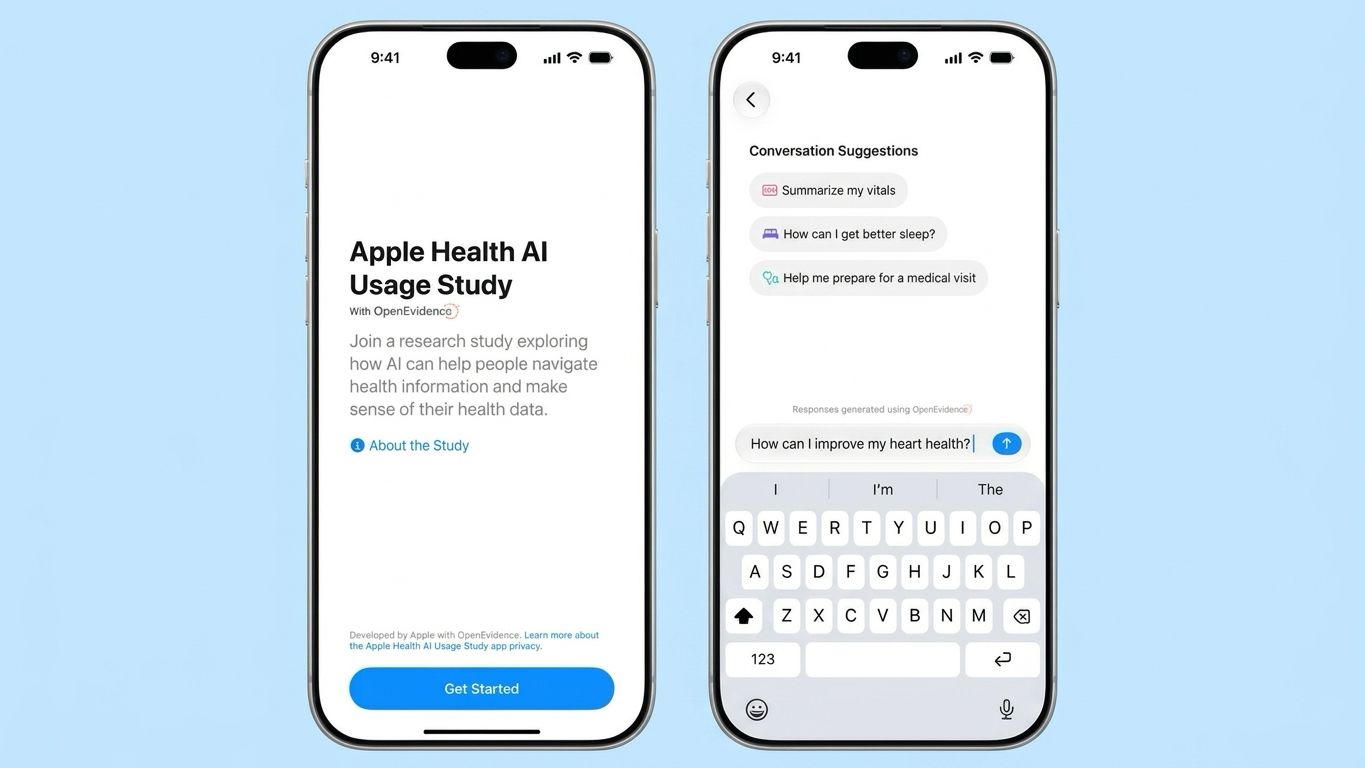
Apple launches AI health study app for research
0TechRadar

Amazon bemoans ULA rocket failure that lost 40 Leo satellites
0TechRadar

'Every organization has to invest in getting this right': Proofpoint CEO warns the agentic AI age will mean a whole new generation of cyber threats
0TechRadar

Jensen Huang could be plotting return as Nvidia CEO, report claims
0Tom's Hardware
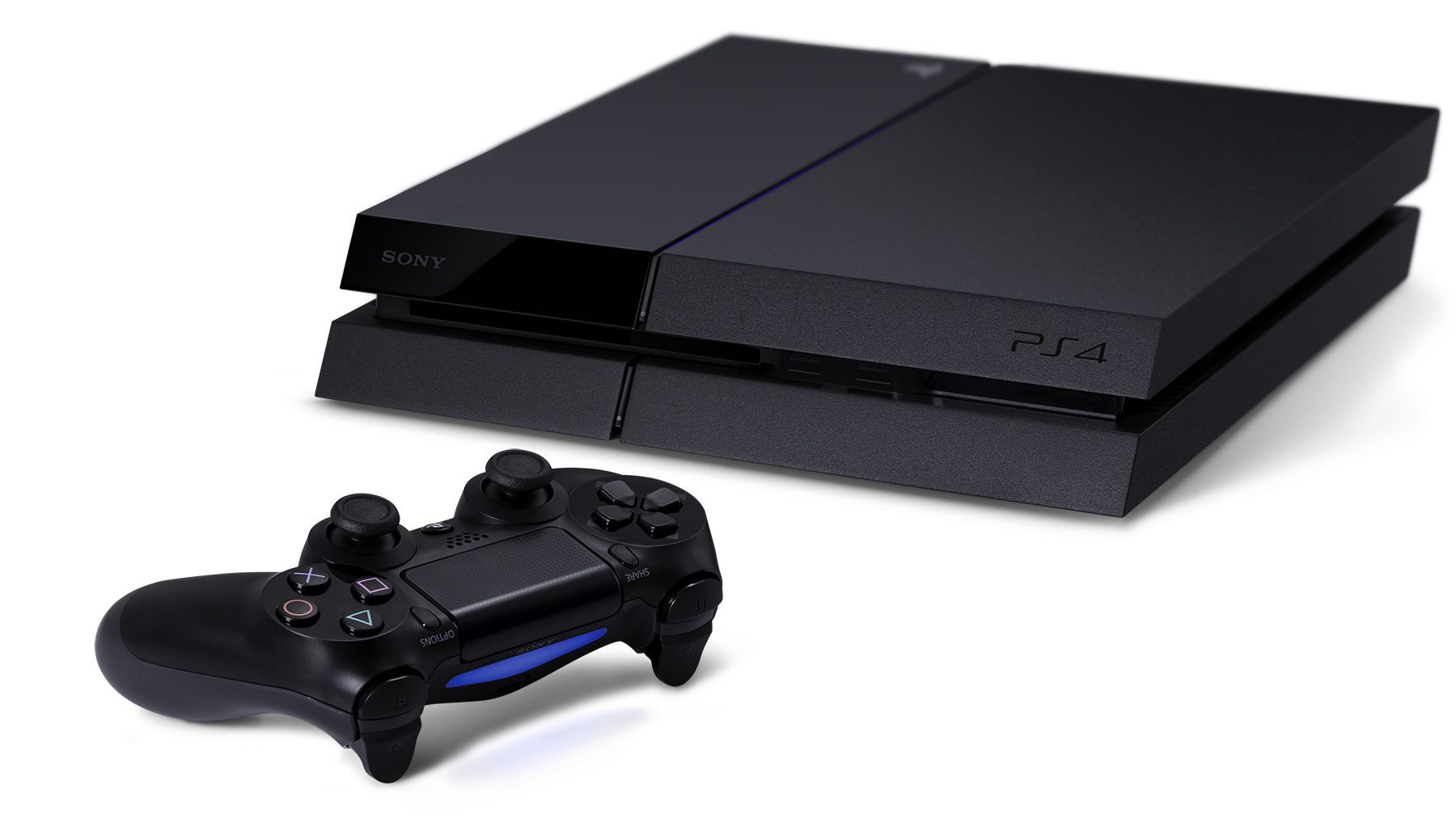
Jailbroken PS4 runs 9-billion-parameter AI model at up to 43 tokens per second
0Tom's Hardware

Video podcasts coming soon to Apple TV and other devices
09to5Mac