AI & ML
Training Reasoning Models in Simulation to Natively Use Real Robots
arXiv cs.RO0 views
arXiv:2611.18562v1 Announce Type: new Abstract: Robot-use agents (RUAs) have emerged as a promising approach to general-purpose robot control. However, strong performance has so far been achieved only by frontier proprietary models such as GPT-6 Astra and Claude Fable 5.2, whereas open-weight models remain substantially less capable. We show that an open-weight 27B reasoning model can be trained to use real robots natively through reinforcement learning, entirely in simulation and without demonstrations. Like a computer-use agent (CUA), the model observes the environment, reasons in a chain of thought, and generates the next end-effector pose, without any harness. We build a Post-training Engine for Agentic Robotics (PEAR) and use it to train the model on simulated robot tasks at scale with robot-use reinforcement learning (RURL), mirroring how frontier models acquire computer use. We find that the skills acquired in simulation generalize well beyond the training tasks: they transfer to an unseen robot, to the real world, and to novel instructions. After training on LIBERO and RoboDojo in simulation, the model succeeds in 60% of our trials on a real dual-arm robot, whereas the base model succeeds in none. On LIBERO, training raises the success rate from 1.6% to 74.4%, approaching GPT-6 Astra and GPT-6.1 Sol at maximum reasoning effort. Compared with $\pi_{0.5}$, a vision-language-action model fine-tuned on demonstrations, our model is substantially more robust to changes in the task itself. On LIBERO-Pro, $\pi_{0.5}$ succeeds in only 0.75% of episodes when assigned a new task in a familiar scene whereas our model succeeds in 57.4%. Finally, the model retains its general capabilities, with no measurable degradation on nine reasoning, coding and vision benchmarks. These results highlight robot-use reinforcement learning as a promising component of foundation-model post-training.
Source:https://arxiv.org/abs/2611.18562PreviousModeling the Frictional Contact of Continuum Robots with Environments through Linear Complementarity ProblemNextGrid-based Submap Joining: An Efficient Algorithm for Simultaneously Optimizing Global Occupancy Map and Local Submap Frames
Related posts
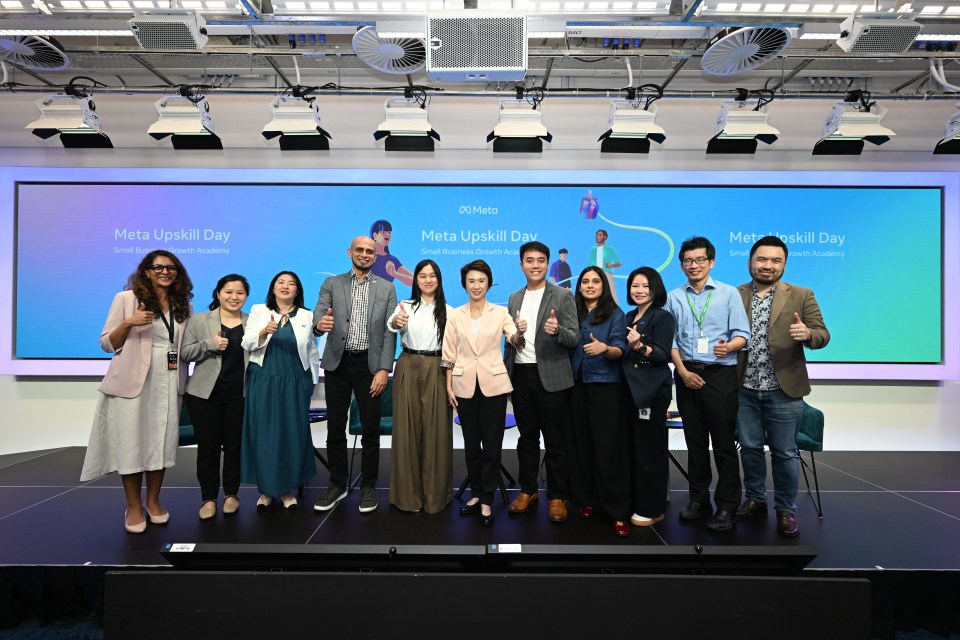
94% of Singapore Small Business Owners Surveyed Say More AI Guidance Is Needed
0Meta Newsroom

Nashville, Tennessee Real Estate Dataset: 7,436 Listings, Excel File (Nov 10, 2026)
0dev.to Data

A Hundred and Eighty Six Thousand Pounds of Stock Had Left One Branch and Never Arrived at Another
0dev.to Data

Đánh giá thông số 20 tiền đạo xuất sắc nhất bóng đá châu Âu thế kỷ 21 từ BBC Sport
0dev.to Data

Thống Kê SHB Đà Nẵng: Bài Toán Phòng Ngự Chờ HLV Lee Young-jin Hóa Giải
0dev.to Data

Alibaba's Qwen4-Max Is Here — and It's Gunning for Claude's Coding Crown
0dev.to News