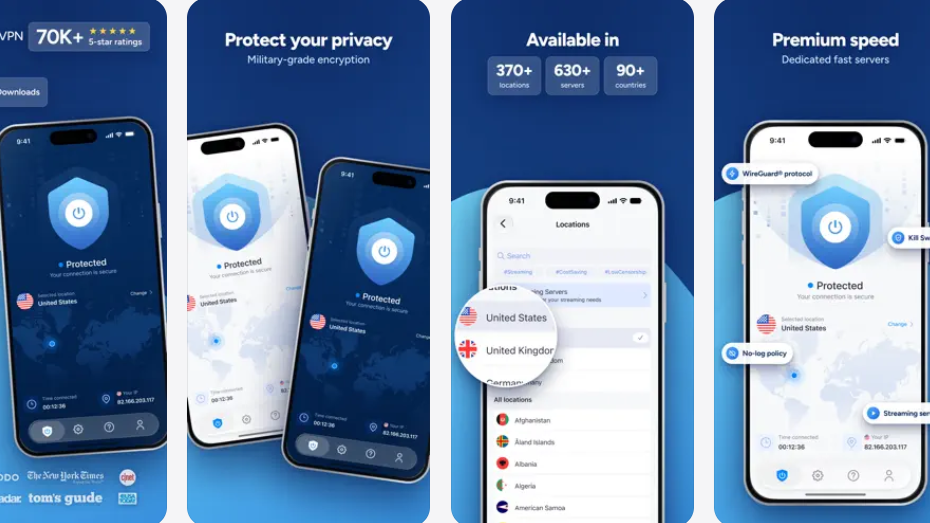
- Urban VPN is under legal scrutiny over alleged data privacy violations
- California Chrome, Edge users of one of its VPN extensions may qualify
- Over 8M users may have had their AI prompts harvested by Urban VPN
Users who relied on Urban VPN's free browser tools for privacy may have had their AI chatbot prompts quietly recorded and sold instead. Attorneys are now investigating those claims for a potential class action lawsuit.
As reported by Top Class Actions, lawyers are examining whether Urban VPN's extensions broke California privacy law by collecting and sharing AI chats — a potential violation first revealed by researchers in December last year.
No court has ruled on the allegations, and no settlement exists yet. As of November 2026, the law firm is reviewing claims from eligible users before taking further legal steps.
TechRadar has contacted Urban VPN for comment on the investigation and will update this story if the company responds.
The probe, however, highlights why users should turn to the best VPN services instead of unvetted browser add-ons.
NordVPN Basic: New and improved Black Friday deal
Was: $3.49/month
Now: $2.99/month
NordVPN's improved Black Friday deal is perfect for streamers looking for a cheap way to boost their binge-watching. Having spent hundreds of hours with NordVPN, it's by far the best streaming VPN I've used in 2026. At $2.99 per month, it's at its lowest price in months, too. Unsure? Try it risk-free with its 30-day money-back guarantee. View Deal
Who qualifies for the Urban VPN lawsuit investigation?
The inquiry targets California residents who installed Urban VPN Proxy, 1ClickVPN Proxy, or Urban Browser Guard on Google Chrome or Microsoft Edge.
Eligible users must have had one of those extensions installed between July 9, 2025, and December 15, 2025, and used an AI chatbot in the same browser during that window.
Affected platforms include ChatGPT, Claude, Gemini, Microsoft Copilot, Perplexity, DeepSeek, Grok, and Meta AI. As the Top Class Actions page states, "People who trusted Urban VPN to protect their online activity may instead have had their private AI chatbot conversations collected and sold without their knowledge."
Attorneys are assessing whether CIPA, which protects private communications from unauthorized recording or sharing, applies to these AI conversations. Readers outside California fall outside this specific inquiry, and submitting a form does not guarantee compensation.
NEW: Leave No Trace — A weekly newsletter on digital privacy and online surveillance.
Leave No Trace investigates the companies and governments putting our digital freedom at risk — and the people fighting back.
📩 Subscribe now to get every edition delivered to your inbox every Friday, launching this September.
How the AI snooping allegations emerged
This investigation follows December 2025 findings from cybersecurity firm Koi Security. As reported by TechRadar at the time, researchers discovered that version 5.5.0 of Urban VPN Proxy, pushed silently via browser auto-updates on July 9, 2025, added code that grabbed every prompt sent to supported AI chatbots.
That script compressed chats in real time and sent them to analytics.urban-vpn.com and stats.urban-vpn.com, where the data was aggregated before allegedly being passed to data broker BiScience. It kept running even when the VPN was off, or its "AI Protection" toggle was disabled, affecting over 8 million Chrome and Edge users.
Long before this incident, our Urban VPN review warned readers to avoid the service. It uses a peer-to-peer network, lacks any independent audit, and admitted in its own policy to logging IP addresses, search results, and visited pages
Does switching VPNs actually keep AI chats private?
Removing a compromised extension stops future interception, though it cannot claw back prompts already collected. Choosing a paid, audited virtual private network (VPN) also avoids the trap of free apps that monetize user traffic.
Top10VPN testing covered by TechRadar Pro found that 88% of 100 popular free Android VPNs leaked data and 71% shared it with third parties.
"The free VPN market is flooded with poor-quality apps whose only justification for their existence is to generate advertising revenue for their developers," Top10VPN Head of Research Simon Migliano told TechRadar.
Even a trusted VPN has limits, though. It encrypts traffic between your device and the VPN server, meaning the AI provider itself can still log whatever you type into your chat window.


