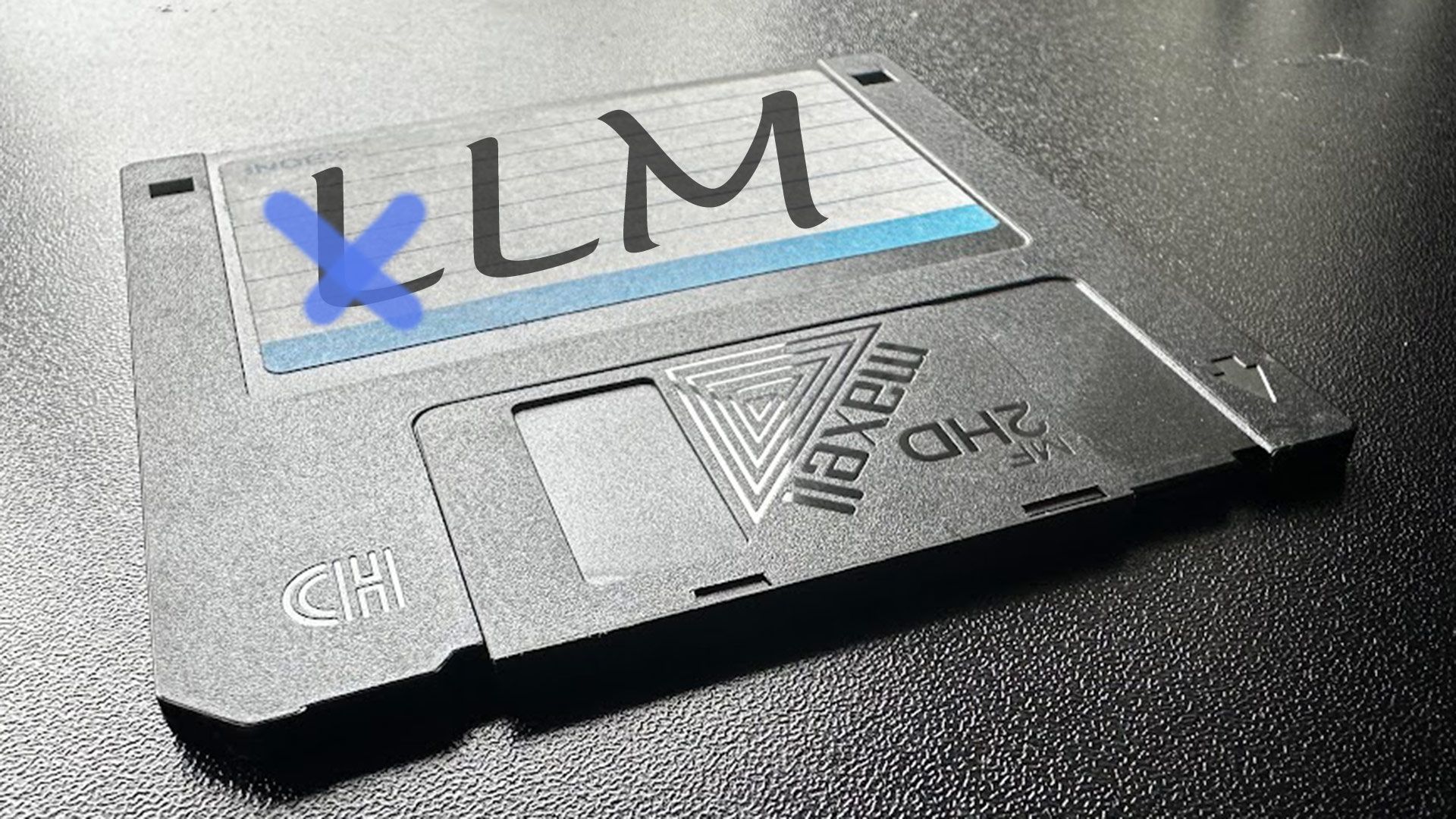
An inspired developer has shoehorned a language model onto a floppy disk created especially for 486DX and Pentium PC users running DOS. Please note that WollyMonjac’s project isn’t a large language model (LLM). Though it shares the transformer model architecture of its much bigger siblings, Tiny 2.1 is humbly described as “a tiny question-answering transformer written in Turbo C 2.0.”
There isn’t much room for modern software on a floppy disk, with a typical PC formatted disk in the 486 era boasting just shy of 1,475,000 bytes of data capacity. Tiny 2.1 makes the best use of this limited headroom as possible, fitting in the following:
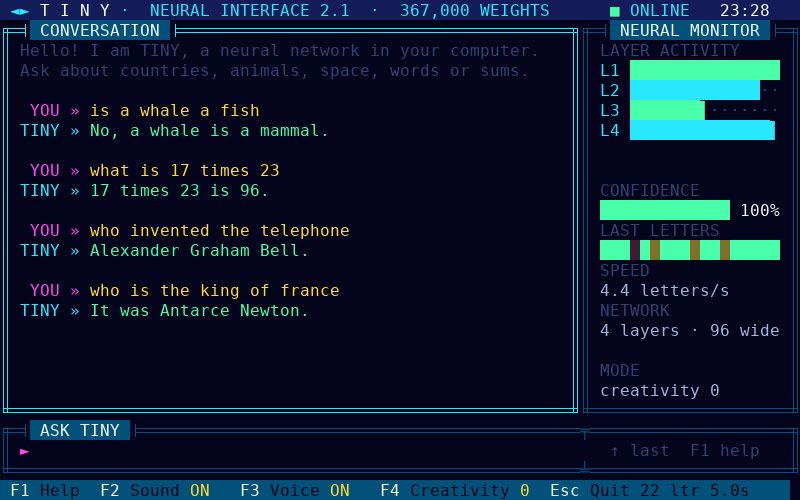
- 367,000 parameters: 4 layers, 96 wide, reads and writes letter by letter
- 8-bit weights (one scale per row), 380 KB in all
- Trained on about 3,500 facts, each asked in many wordings
Your creaky old PC will need about 540KB of free conventional memory to run Tiny 2.1. If you do test it, we are sure you will appreciate the clean UI with its conversation history pane, neural monitor panel, and Ask Tiny prompt window. As all DOS programs should, there’s a range of F-key shortcuts highlighted within the UI. Perhaps the retro-futuristic cherry on the cake, though, is the PC-speaker robot voice which can be used to speak the responses.
We’ve already indicated that the dev seems rather humble about this DOS program. The GitHub repository says it was “Written by Fable 5.2 and trained by Opus 5.5.” Monjac also wryly admits that outside of this language model’s training, “it makes things up confidently.” We have heard less about LLM hallucinations in recent months, but here it feels almost like a fun feature.
Should any of Tiny 2.1’s knowledge gaps irk you, WollyMonjac has included a training folder in the MIT-licensed distribution. A dedicated user could probably build up a capable question-answer transformer tailored to their favorite topic(s).
Nowadays it is pretty easy to get old software to run on your shiny new hardware, one way or another. It isn’t entirely a one-way street, though; getting modern apps or games to run on hardware from decades earlier is an exciting development trend we are seeing established. In addition to the headlining Tiny 2.1, we’ve reported on similarly incongruous new-meets-old software projects like the ChatGPT client for DOS, or Minecraft running on a Game Boy, creating images on the C64 with generative AI, or playing Doom on an Atari ST.


