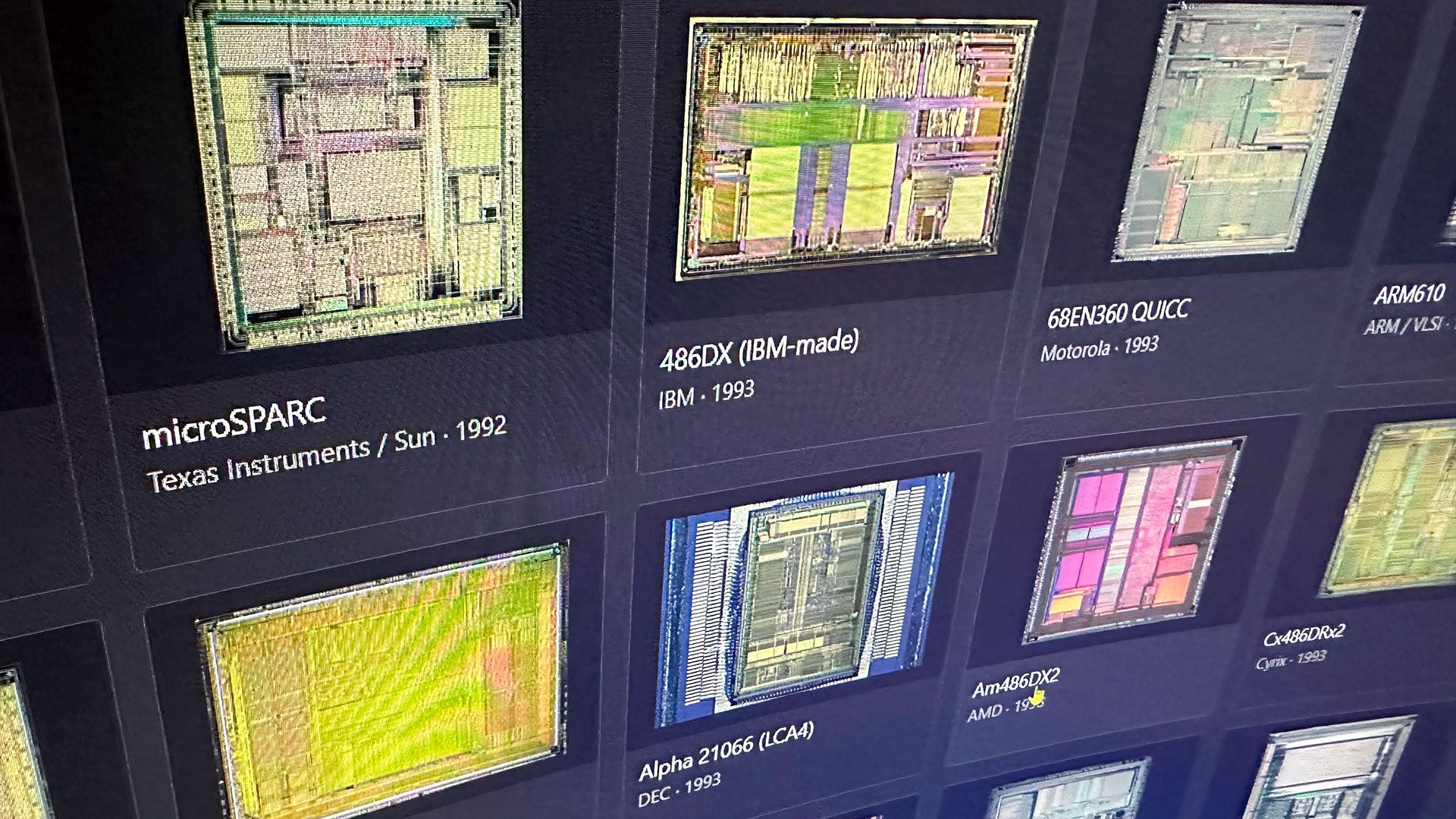
A CPU enthusiast has put together an eye-popping visual database containing crystal-clear, detailed die shots of 357 legendary and some lesser-known processors. At sheets.works/data-viz/cpu-dies, you will find a sortable, searchable, and filterable gallery featuring the outstanding, freely shared die shots from the likes of Pauli Rautakorpi, ZeptoBars, John McMaster, and Fritzchens Fritz. Find one or two of your favorites, and peer into the details to enjoy a nostalgic technological trip down memory lane. That’s what I did.
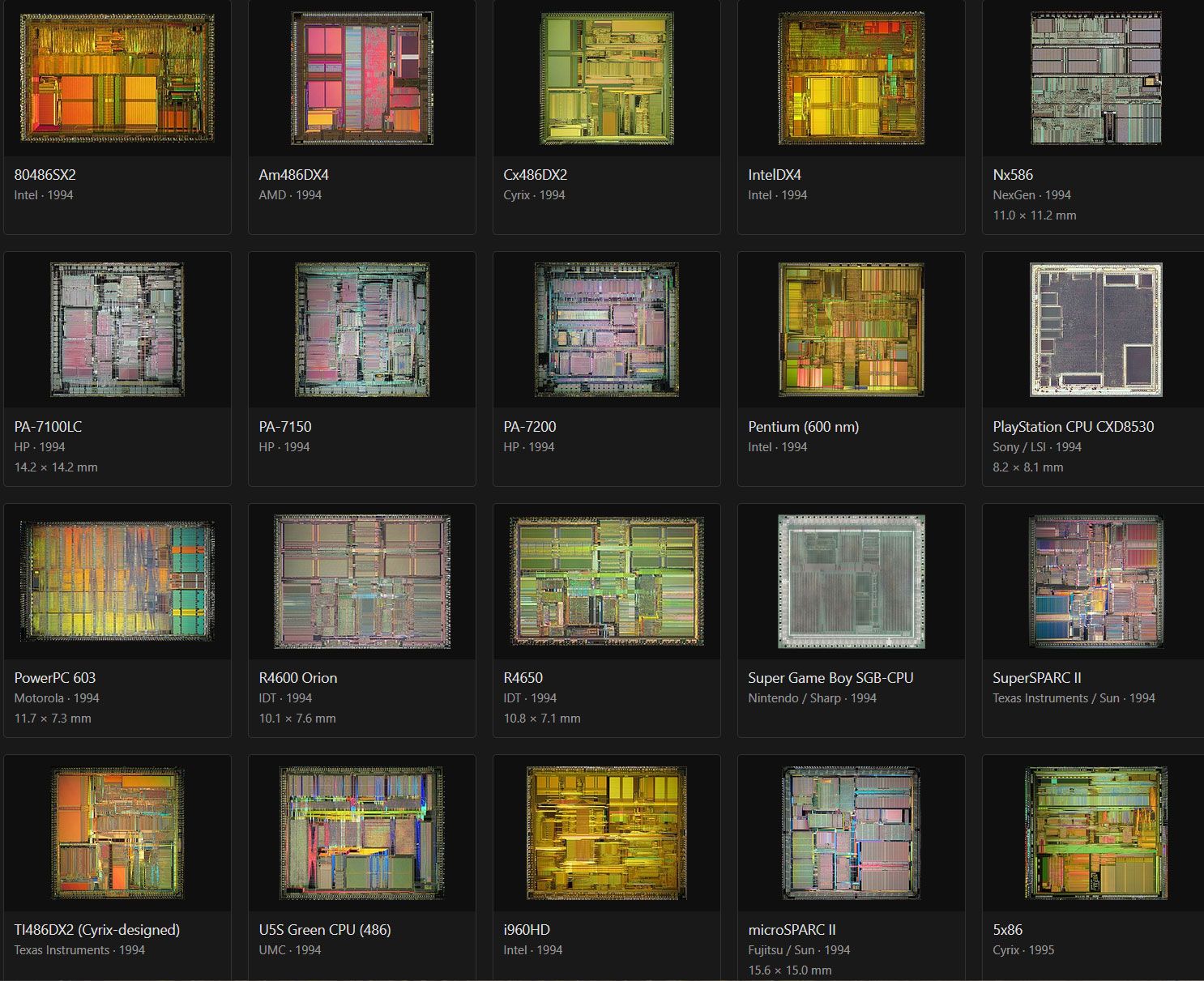
The unnamed collator of this gallery might not have contributed any die shots, but has still done an admirable job putting these macrographs and micrographs together in this way. Beneath a brief introduction that credits the skilled photographers who share these images for free, you can glide through the 357-photo collection.
By default, the die shot gallery gives you the gallery view, ordered by the oldest silicon first. Those browsing the gallery can instantly switch to a True Scale gallery view, too, which provides some physical sizing context. The next view option for the gallery is a table, where you can see processor maker, year, die dimensions, and photo license at a glance, but it sacrifices visual impact by showing just tiny thumbnails.
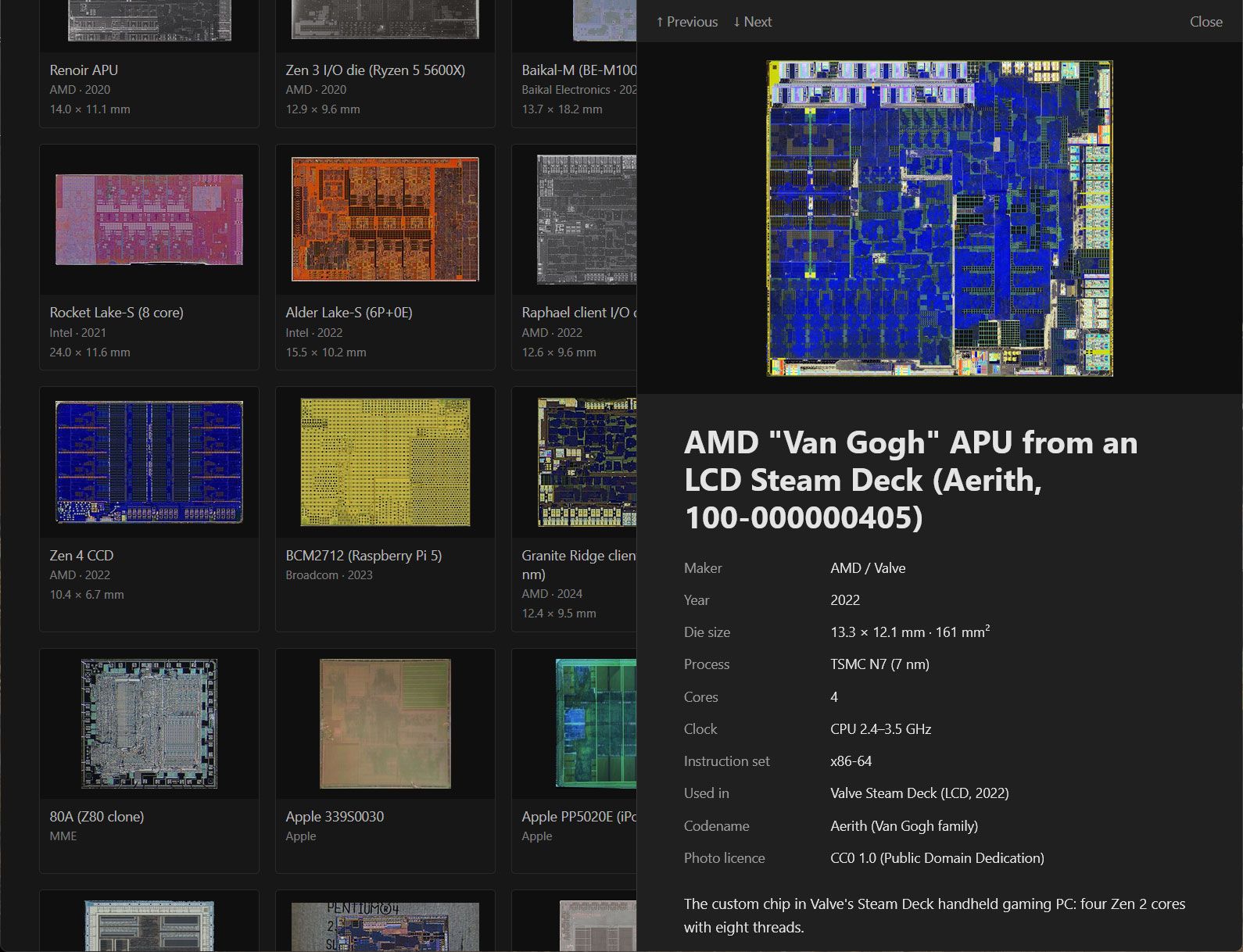
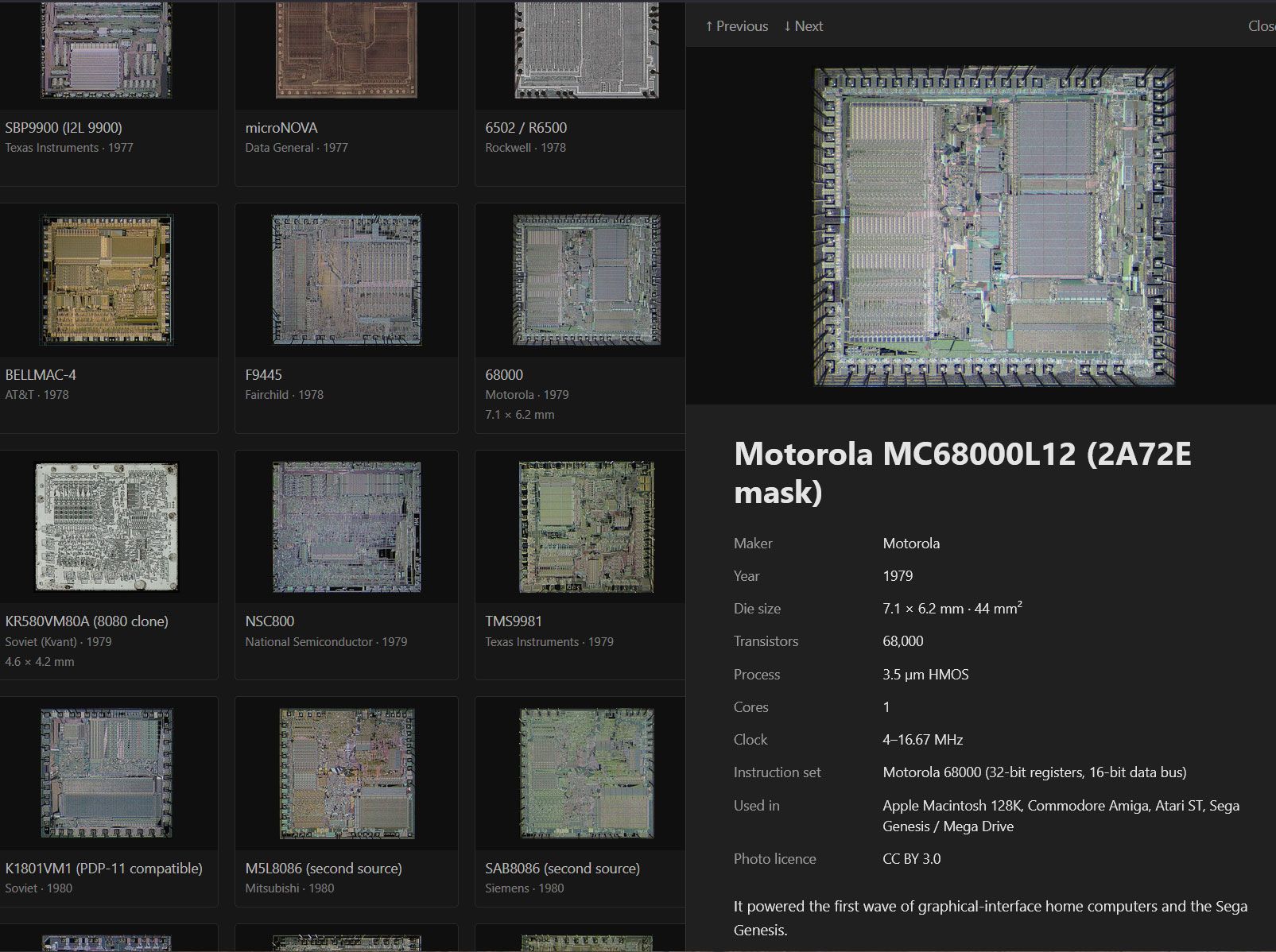
Navigating the gallery is also quick and intuitive thanks to a built-in search function. Using this, it was easy to display only 486 CPUs, for example. For your information, there are 17 486 CPU variants in this gallery with samples produced by AMD, Cyrix, IBM, TI, UMC, VLSI, and Intel of course. You can click any of the thumbnails to jump to a larger view with notes of the design, as well as photographer details/credits. Though that click zooms in the image considerably, I found that a right-click – open image in new tab - was needed to enjoy the die shot’s full visual splendor.
It would be great to see the database/gallery maintained with the latest shareable die shots from the various contributors. Also, it could be improved by fully populating details such as the die area, which is not always present. Some more searchable and sortable fields, such as transistor count, might also make this resource more satisfying.
For my personal nostalgia, I enjoyed seeing CPUs like the Motorola 68000 and the AMD Athlon XP up close. Surprisingly, some eras, including the Intel Ivy Bridge and Haswell generations, seemed underrepresented, though.


