AI & ML
Adaptable Watermarking: Transforming Image Watermarking Models via Lightweight Adapters
arXiv cs.CR0 views
arXiv:2611.18363v1 Announce Type: cross Abstract: We explore the adaptability of neural image watermarking models; the extent to which one watermarking method can be transformed into another through lightweight adaptation. We introduce a framework that enables encoder-decoder watermarking architectures to become modular and upgradable, supporting multiple watermarking styles without re-training full models. Adaptation is performed by attaching a compact parameter-efficient adapter and fine-tuning under a multi-domain residual alignment loss (spatial, gradient, and frequency) while preserving bit accuracy via a secret-loss term. We evaluate this approach across a suite of recent watermarking models, including TrustMark, InvisMark, RoSteALS, HiDDeN, and WAM, demonstrating that adapted encoders closely reproduce target residuals and that adapted decoders recover messages with near-optimal accuracy under standard augmentations and distortions. We show that cross-model adaptation, with applications in interoperable and upgradable watermarking, can be achieved with as few as 1-2M trainable parameters per component (e.g., the 2M decoder adapter used in our multi-decoder inference pipeline).
Source:https://arxiv.org/abs/2611.18363PreviousQuadratic APN Functions of $\mathbb{F}_2^{10}$ with a Self-Equivalence of Prime OrderNextEnumerating Posterior-Supported Priors: First-Order Error of Finite-Integral Cross-Categorical Measurement Morphisms
Related posts

They Found You Through a Photograph…
0dev.to

The Joy of Boring Code: Why Writing "Clever" Code is Overrated
0dev.to

From fMRI to images: what Brain-IT reconstructs—and what it does not
0dev.to

Vad ska vi automatisera först? En poängmodell för småföretag
0dev.to
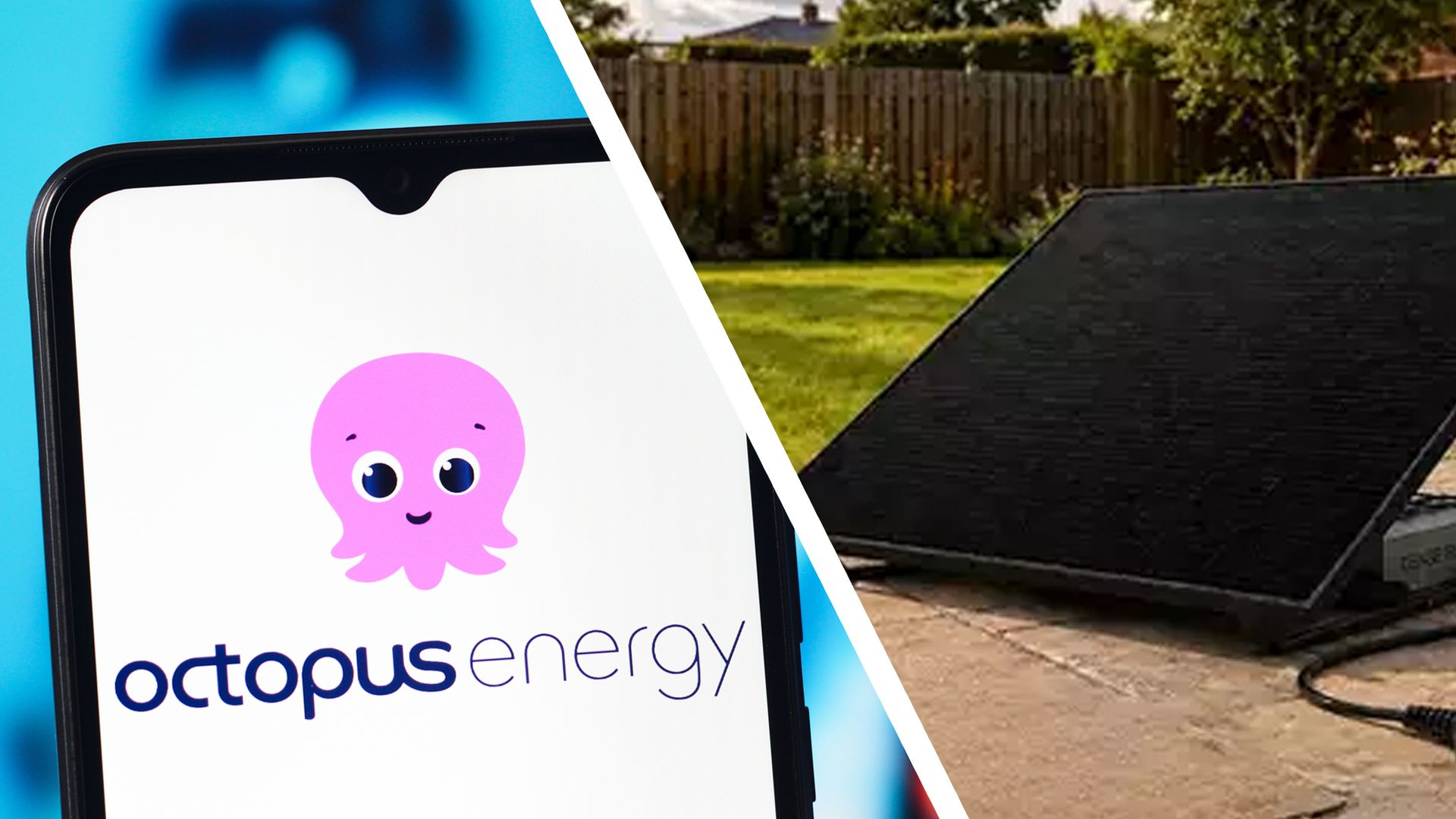
Octopus Energy is bringing its sold-out plug-in solar panels to UK small businesses, says move was a 'no-brainer' following huge demand
0TechRadar

LVMH’s Media Division announces strategic partnership with OpenAI
0OpenAI Blog