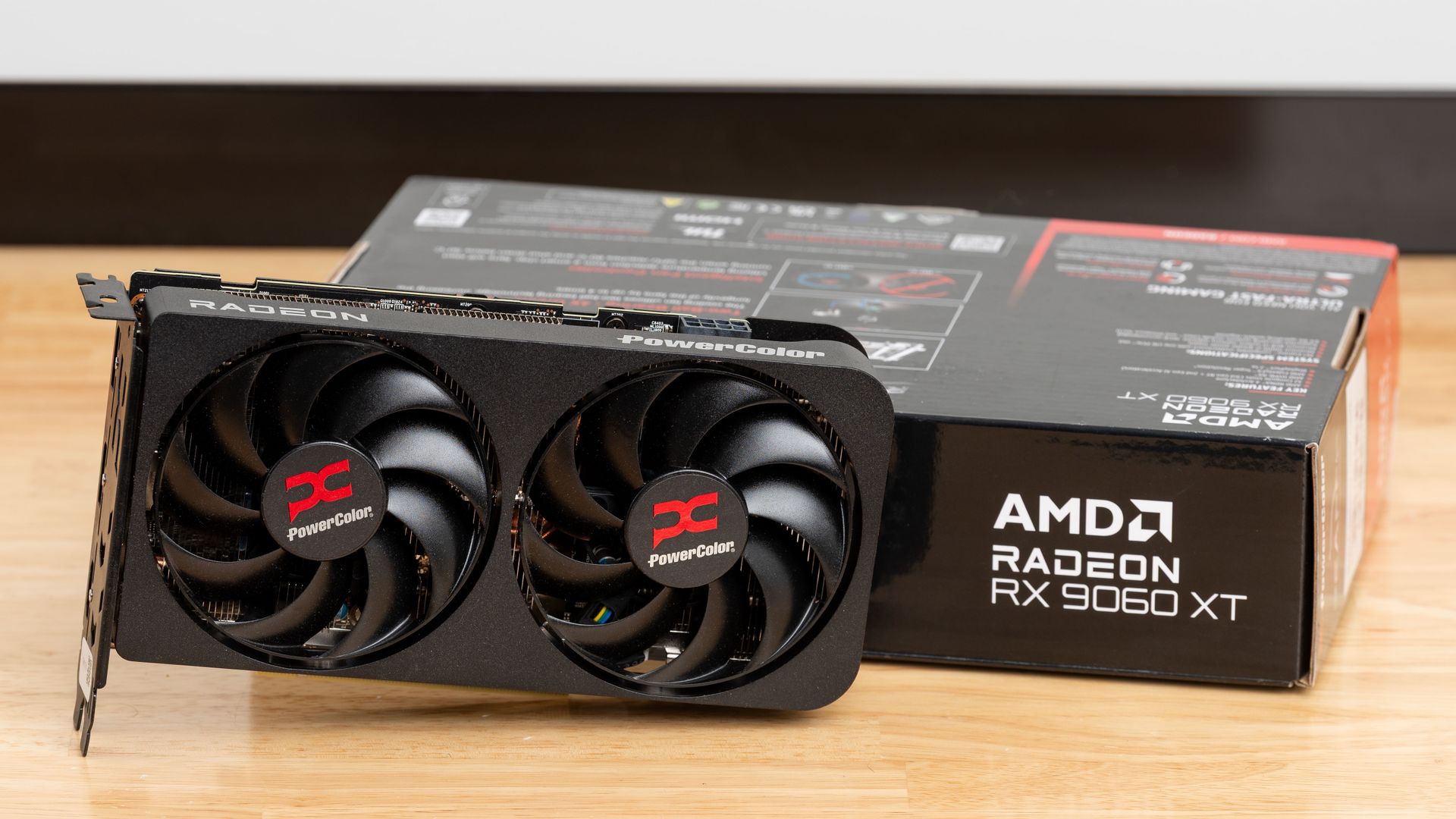
AMD has set a new GPU overclocking world record by pushing the Radeon RX 9060 XT to 4,837 MHz. Veteran overclocker Bill Alverson and AMD VP Jack Huynh found the limits of this particular chip as part of a celebration of the opening of a new Micro Center location in Austin, Texas. According to the OC World Record Museum database maintained by SkatterBencher, Huynh and Alverson set the new record on November 15.
If you were expecting to see this record from AMD's high-end RX 9070 XT, you're not crazy. The record was indeed achieved using the midrange RDNA 4 part rather than AMD’s flagship GPU. The RX 9060 XT uses a smaller Navi 44 GPU featuring 2,048 shading units (32 compute units), a 160W TDP, 16GB of GDDR6 memory on a 128-bit bus, and a stock boost clock speed of up to 3,130 MHz.
A NEW @microcenter in Austin. An INCREDIBLE community. And a GPU WORLD RECORD.I had an absolute blast celebrating with Austin's gamers, PC builders, and creators. From meeting fans and snapping photos to building PCs and sharing our passion for all things tech.And then came an even BIGGER moment...I joined forces with Bill Alverson and our @AMD overclocking team. Armed with liquid nitrogen and pushing frequencies to the absolute limit, we set our sights on something BIG: breaking the GPU FREQUENCY WORLD RECORD!And we did it! 4.837 GHz!And we captured the whole thing on camera, including the moment we broke the record!Epic energy. Epic builds. WORLD RECORDS!November 24, 2026
The new frequency record was achieved using liquid nitrogen cooling. At 4,837 MHz, the GPU was running approximately 54.5% faster than its advertised boost frequency. A GPU-Z screenshot confirms the record breaking frequency with the GPU temperature at -49°C, 62W power draw, and voltage at 1.434V.
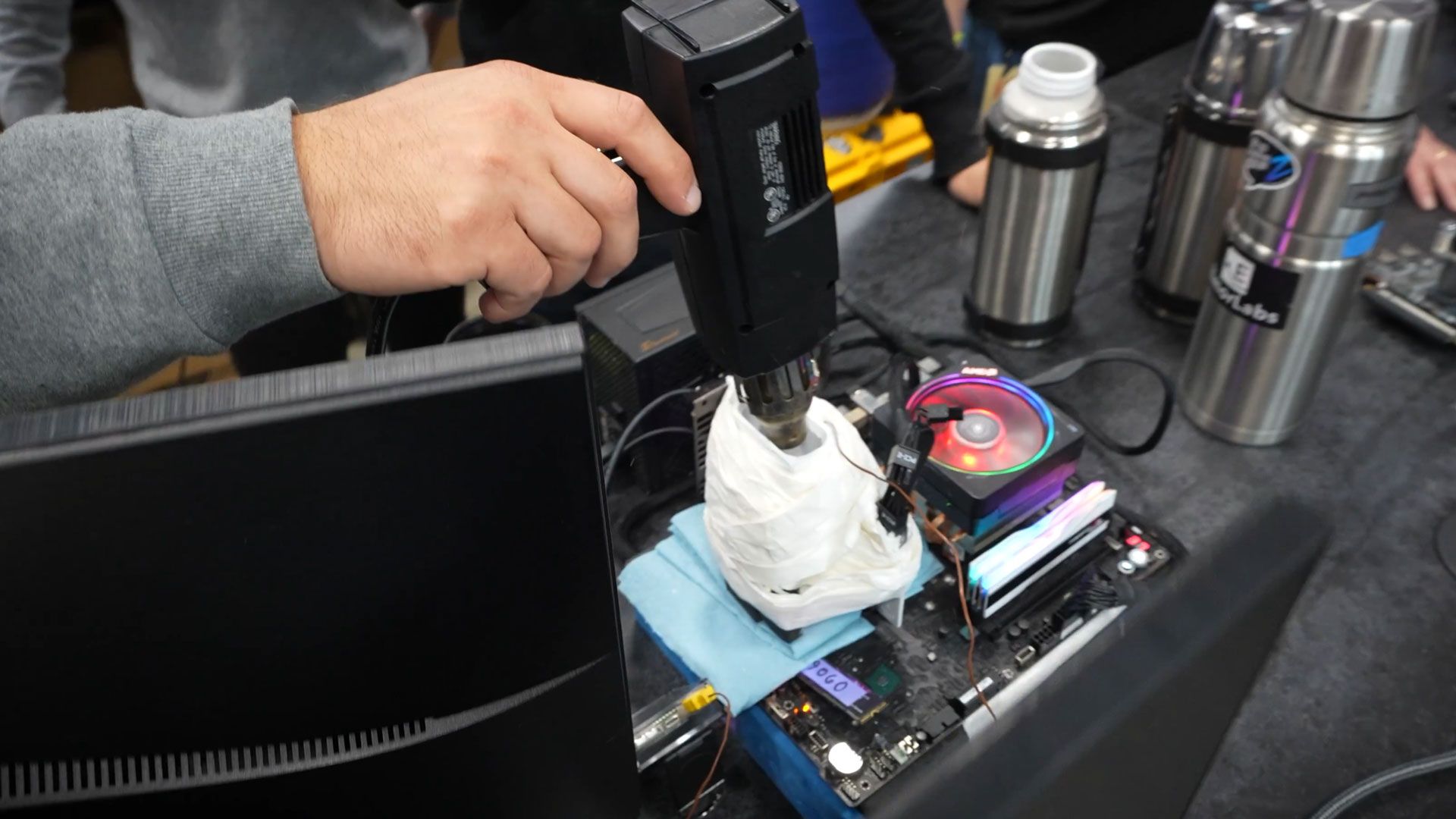
Of course, nobody should expect these numbers to bear any relationship to the clock speeds that can be achieved from any stock, air-cooled RX 9060 XT. Liquid nitrogen and liquid helium are commonly used in extreme overclocking, as they bring component temperatures well below what air and liquid cooling at ambient temperatures can achieve, essentially removing thermal limits from an overclocking attempt and enabling large amounts of power to be pushed into a chip for the highest clocks.
But these coolants require careful preparation of hardware, constant monitoring, and custom heatsinks to contain them while an extreme overclocking run is in progress, and they're only useful for short durations due to evaporation.
Such record-breaking frequencies are primarily intended to demonstrate the absolute limits of the hardware itself, rather than serve as an example of sustained performance for everyday use cases.
This isn’t the first time enthusiasts have pushed AMD’s RDNA 4 GPU to extreme frequencies. The RX 9060 XT previously reached 4,769 MHz in February 2026, followed by another attempt in June which reportedly reached 4,789 MHz. The latest attempt is 48 MHz higher compared to the previous record, bringing AMD’s latest GPU IP closer than ever to the elusive 5 GHz milestone.
For the average gamer, the biggest obstacle to getting the most out of an RX 9060 XT isn't its overclocking headroom, but its high price in late 2026. The RX 9060 XT 16GB had an MSRP of just $349, but these cards are currently selling for over $700, making this formerly budget-friendly enthusiast card a poor value today. Achieving a world-record GPU frequency on one of these chips is an impressive achievement in extreme overclocking, but it's unlikely to translate into more Radeon gamers any time soon.