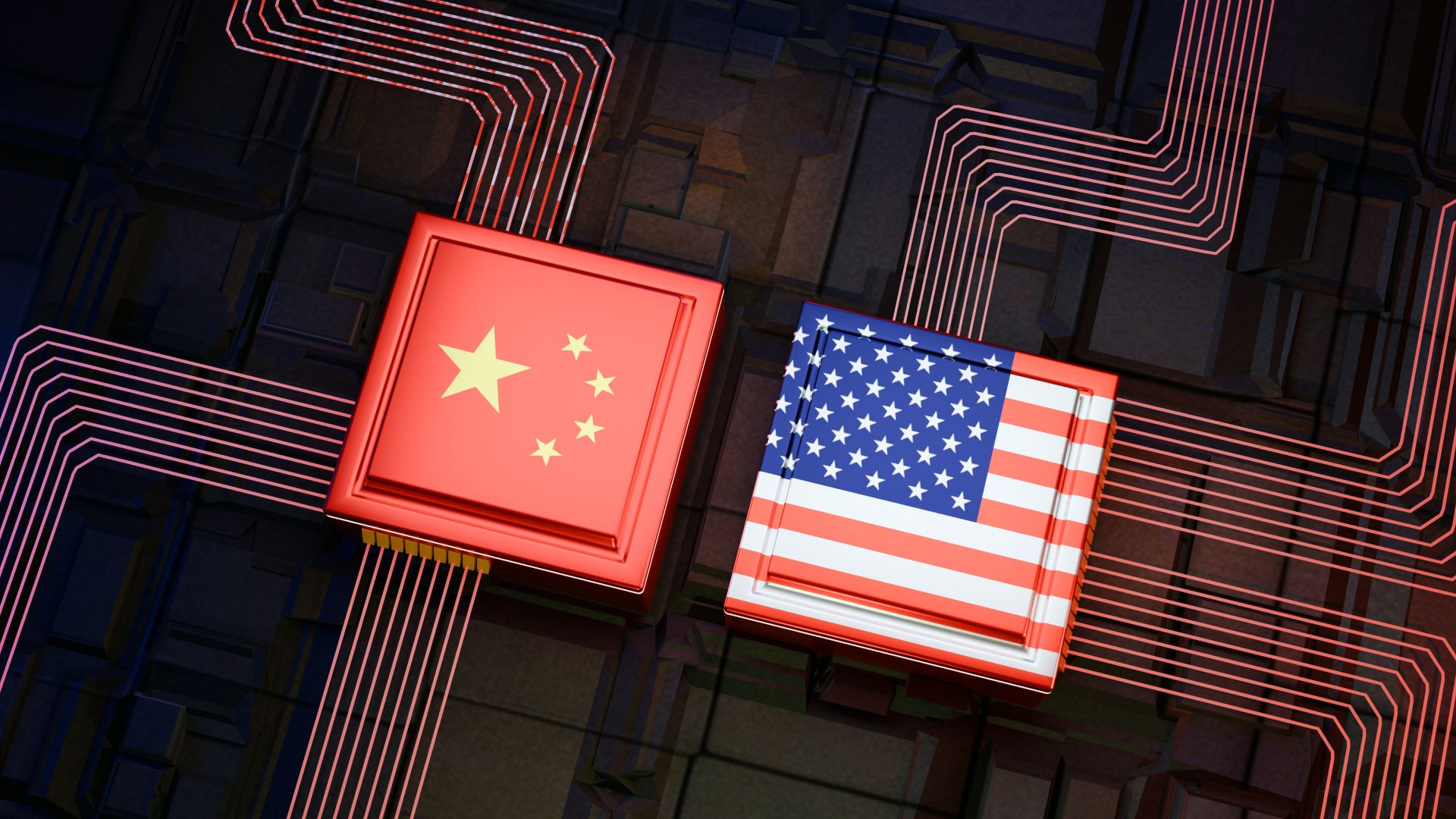
This week, several reports have detailed how closing GPU rental loopholes across Asia may have had an impact on the development of Chinese AI models. In September, Mozilla estimated that open-weight AI models were three to six months behind the frontier. Since then, developments in the AI industry and export control rules could mean that Chinese AI models, many of which are typically open-weight, might fall even further behind Western counterparts, by up to nine months.
Zhipu AI, the developer of the GLM series of models, has allegedly pushed its release calendar back as a result of reduced access to advanced AI accelerators, Reuters said. It's an open secret that data centers located in Asia have been renting compute capacity to Chinese entities for some time. In light of the recent Nvidia scandal involving Jensen Huang and Megaspeed, the U.S. Department of Commerce has since tightened its rules over how data centers lend their compute capacity to Chinese entities. This has created an environment where there is, in fact, an excess of compute capacity available in the region, Bloomberg reported.
These curbs have a knock-on effect on how companies train their AI models, with Nvidia's AI accelerators being the most coveted; not having access to them stifles the development of AI in the region. However, this isn't entirely true across the industry. DeepSeek is attempting to wean itself off foreign silicon and instead adopting Huawei's Ascend AI chips, and porting its libraries away from CUDA and onto the open-source CANN. However, this hasn't stopped Chinese AI labs from facing another issue: tightened security against the distillation of AI models.
Distillation is a practice wherein the way a model thinks can be extracted and then learned from. It is largely believed to be the method in which Chinese AI labs have made great leaps in intelligence over the past several years, though several of China's leading labs refute that claim. The Western frontier has become more obtuse: Anthropic in October detailed how it's leveled up its own defences against distillation attacks, and the obfuscation of an AI model's chain of thought adds another hurdle. According to The Information, this is an issue that DeepSeek is now reportedly reckoning with. If distillation curbs the development of Chinese AI models even further, the gap between Eastern and Western frontier intelligence grows from three to six months to an estimated nine months.
The current standings
If you look at Artificial Analysis' Intelligence Index, which ranks AI models across a wide range of benchmarks and scores them in numerical order, Anthropic currently has the leading public AI model: Claude Fable 5.2, at a total of 65 points. Meanwhile, the leading Chinese AI model, Kimi K3.1 Pro, sits at 47. Between the two contenders are practically every Western frontier lab: OpenAI, Google, and Meta are all outgunning Chinese competitors, which were, just a few short months ago, competing at the frontier across many tasks.
It's important to mention that Artificial Analysis also changed its methodology over recent weeks, with China's AI models falling slightly further behind in added benchmarks, such as the Omniscience score, which tracks how often an AI is likely to hallucinate. This is paired with a jump in capability among the Western labs: Right now, it's on the Chinese AI labs' shoulders to respond in kind, and if current releases are anything to go by, they are falling short of expectations, especially in domains such as cybersecurity. An Epoch AI report characterized the difference in capabilities between GLM 5.3 and Claude Opus 5.5 as a six-to-seven-month gap in intelligence. With the release of newer models like Claude Fable 5.2, it's likely that gap has only widened, and the same story is likely to play out over the next few months across additional domains.
With additional safeguards against distillation and powerful compute resources becoming more difficult to find, this poses a difficult question for the Chinese labs: How can they keep up the pace and stay competitive while the odds are stacked against them?
China still holds the overall top spot in the open-weight arena with Kimi K3.1 Pro, though Western companies are bringing more performant models out as the months pass. China's second tier of open-weight models, which can often be run locally, e.g Alibaba's Qwen 3.8-27B (20 on AA), is facing competition from the American-made Thinking Machines Labs' Inkling 2 Mini (20 on AA), which was recently released. With the release of the larger (closed-weight and API only) Qwen 4 model seemingly not landing quite as well with users, it remains to be seen whether Alibaba can maintain the advantage of time, as Inkling 2 Mini was released just this week, while Qwen 3.8-27B has been out for several months.
With devices like the RTX Spark, AMD's AI Halo, and more, users are increasingly getting their own choice of running an open-weight AI, and for all intents and purposes, that usually means using a Chinese model to get the most intelligence out of your machine. However, recent developments show that smaller Western labs are also beginning to bridge that gap.
This is yet another arena in which Chinese and Western labs will want to wrest control from one another. Notably, Google has not released another series of Gemma models following Gemma 4 back in April. If a fifth generation of Google's Gemma models arrives, they'd likely be close cousins to the Gemini Neon, Carbon, Argon, and Hydrogen family, though that remains speculation until Google confirms anything official.
The silicon transition
Against the backdrop of export controls and tightening restrictions on AI distillation, Chinese AI labs are in a tough spot, and all eyes are on frontier labs like Moonshot AI, Zhipu, Deepseek, Alibaba, and Xiaomi to see if they can scale the intelligence wall that their Western counterparts currently present. More compute for training resources may be an answer, but for comparison's sake, Huawei's upcoming Ascend 950DT accelerator offers 2 PFLOPS of FP4 compute and 1 PFLOPS of FP8, while an Nvidia Rubin R200 offers 50 PFLOPS in inference and 35 PFLOPS in dense workloads. In memory capacity and bandwidth, the Ascend 950DT can offer 144GB of HiZQ 2.0 with 4 TB/s of bandwidth across a 2 TB/s interconnect. Rubin, on the other hand, offers 288GB of HBM4, with bandwidth ranging from 19.2-22 TB/s, across an NvLink interconnect at 2.6 TB/s.
If China's AI ambitions are to compete with the West, its silicon needs to either scale so the country can produce more chips to outgun a Western AI deployment with sheer numbers, or it needs to develop more advanced accelerators, while also managing the CANN software stack. The chips are figuratively, and literally, stacked heavily against China. As the race to develop Artificial Intelligence marches on, the Department of Commerce's latest measures have undoubtedly made it incredibly difficult for the country to compete.