Backend
LLM Fine-Tuning Workloads: Characterization, Challenges, and Opportunities for Serverless AI
arXiv cs.DC0 views
arXiv:2610.40983v1 Announce Type: new Abstract: Serverless execution of Large Language Models (LLMs) is becoming important, reflecting their wide societal use. An increasingly present stage in LLM pipelines is fine-tuning, which specializes trained models and improves inference performance. Serverless operation of LLM fine-tuning workloads shifts operational concerns from the user to the provider. For these new workloads, providers face important operational complexities, such as performance issues, resource waste, and even service failure due to misconfiguration. However, optimizing such workloads is still at an early stage, and, relevant to this work, relatively little is currently known about how LLM fine-tuning workloads run in practice. In this work, we address the knowledge gap by characterizing the execution of LLM fine-tuning workloads on clusters equipped with different GPUs, running LLM models at various scales. We analyze IBM's LLMFineTuningBench, a large-scale, diverse profiling dataset of 30,920 fine-tuning experiments that records both successful and failing configurations. We provide quantitative insight into throughput (expressed in tokens/s), scaling, failure, and potential for performance optimization for four commonly used GPU types, in setups of 1 to 32 GPUs. We find that (1) job feasibility (run or fail) depends on workload properties, with failure ratios rising from 52% for small batch sizes (16-64) up to 95% for the largest (1,024); (2) throughput grows logarithmically with batch size; (3) scaling is near-linear when the workload is deployed intra-node, and optimizations such as RoCE substantially improves efficiency for inter-node deployment (e.g., 0.72 vs. 0.26 efficiency without RoCE); and (4) system-level optimizations can outweigh application-level ones (RoCE, up to 2.9$\times$, vs. Fast MoE, 1.7$\times$).
Source:https://arxiv.org/abs/2610.40983PreviousTamilEOT: A Dataset and Model for Semantic End-of-Turn Detection in Tamil Telephone SpeechNextResource Locks and Fast Unlock for Shared Balances in Certificate-Based Payment Systems
Related posts

Breaking a Rust actor cluster on purpose, and what it taught us
0Hacker News New

Cargo's cache can't be reused with or without --target <target>
0Rust Users Forum

Lawyer builds private AI server with eight used Nvidia V100 GPUs
0Tom's Hardware
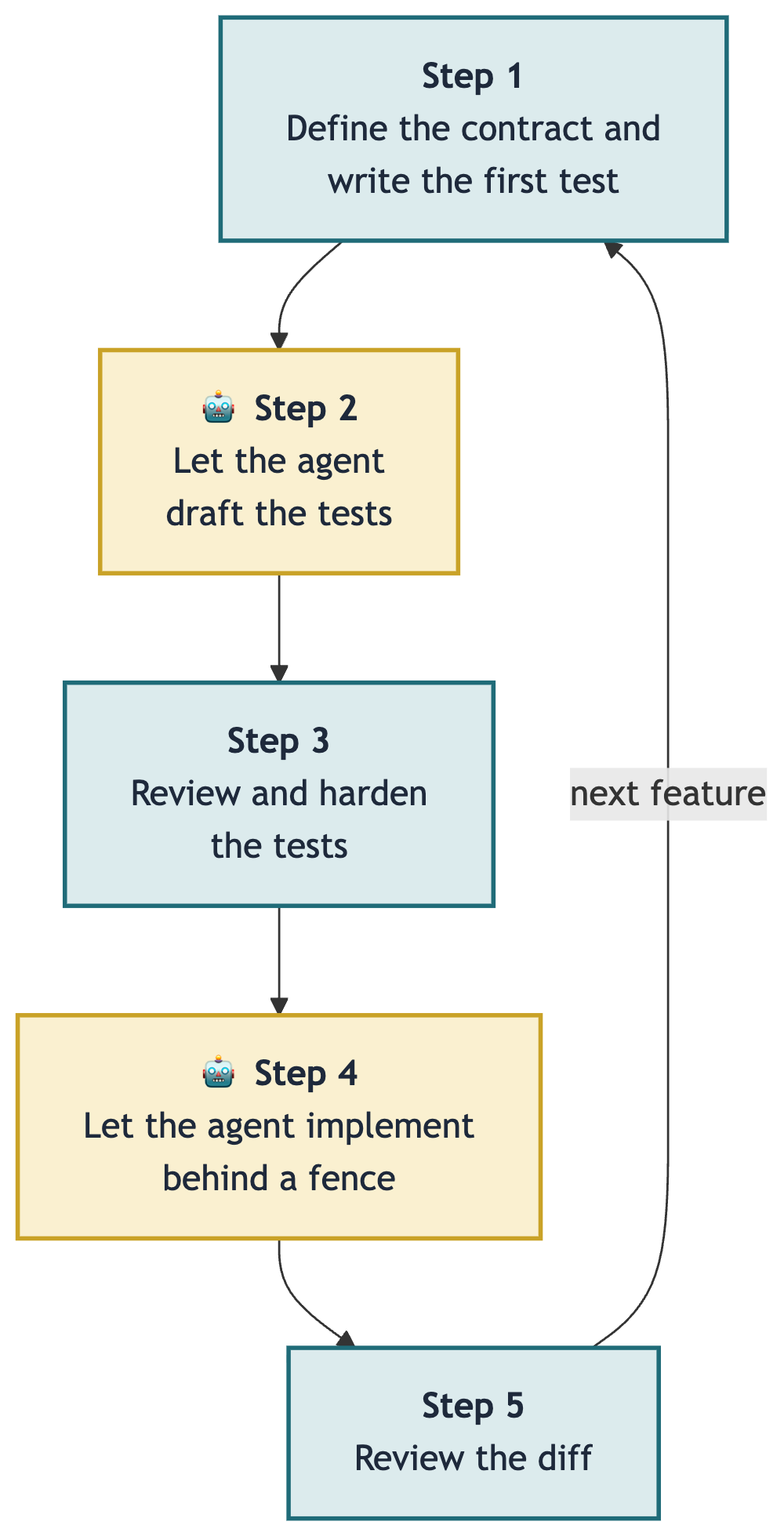
TDD With AI Agents: Design the Tests First, Let the Agent Implement
0Real Python

From One Sentence to a Working App: What Vibe Coding Gets Right — and Where It Still Needs You
0dev.to

A button people press 57 times per visit: building a no-backend tap counter that doesn't lose counts
0dev.to