Backend
Recovering the Euclidean Geometry of High-Dimensional Data Under Heterogeneous Noise
arXiv stat.ML0 views
arXiv:2507.18520v3 Announce Type: replace Abstract: Pairwise Euclidean distances provide a simple geometric representation of high-dimensional data and underlie many data analysis methods, including clustering, visualization, and manifold learning. However, in real-world applications, these distances can be severely corrupted by heterogeneous noise, where different data points are subject to different, and potentially large, noise levels. Such noise distorts the distances inhomogeneously, leading to a misrepresentation of the underlying data geometry. In this work, we ask whether the underlying clean Euclidean geometry can nevertheless be recovered from the corrupted pairwise distances. We answer this question affirmatively, showing that, perhaps surprisingly, such recovery is possible across a broad class of high-dimensional settings with underlying low-dimensional geometry, even when the noise magnitudes vary substantially across observations. We develop a principled approach for recovering the clean pairwise distances, without prior knowledge of either the clean data structure or the noise distribution, and establish probabilistic recovery guarantees. In particular, the recovery error converges to zero at polynomial rates as the feature dimension and dataset size increase simultaneously. Experiments on synthetic datasets demonstrate accurate recovery of the Euclidean geometry in challenging regimes and improved robustness of downstream methods that rely on pairwise distances. When applied to real single-cell RNA sequencing data, our method reliably recovers local neighborhood structure, enabling accurate nearest-neighbor identification used in many downstream analyses.
Source:https://arxiv.org/abs/2507.18520PreviousWhy Finite Intelligence Works in an Infinite World: A Mathematical TheoryNextOn sparsity, extremal structure, and monotonicity properties of Wasserstein and Gromov-Wasserstein optimal transport plans
Related posts

Overlocker uses vibecoded BIOS modification to target Intel's non-K overclocking restrictions
0Tom's Hardware

How to Set Up a Python Project for Agentic Coding
0Real Python

Microsoft outage saw 80% of servers fail – here’s what happened
09to5Mac

New Ask Maps features to help with holiday travel and prep
0Google AI Blog
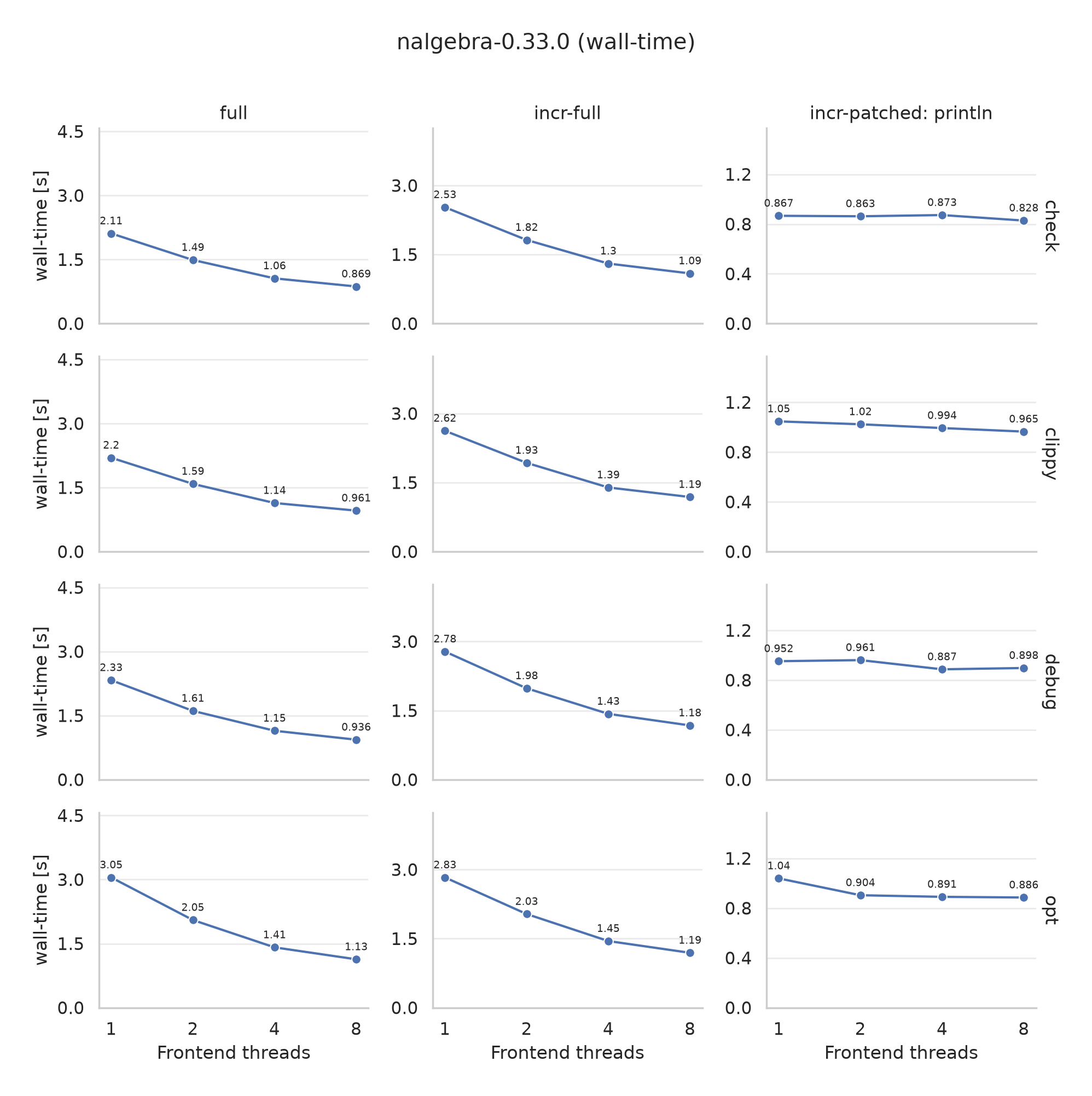
Enabling the parallel frontend on nightly
0Rust Blog

Build a members-only SaaS with real auth flows: email verification, password reset, GitHub and Google sign-in
0dev.to