AI & ML
RoomTokens: Masked Diffusion over Structured Tokens for Indoor Scene Synthesis
arXiv cs.GR0 views
arXiv:2611.30219v1 Announce Type: cross Abstract: Generating 3D indoor scenes requires a representation that captures object semantics, instance identity, height structure, and orientation while respecting room geometry. Methods that model scenes as sequences of object vectors learn spatial constraints implicitly, leaving collisions and boundary violations to losses or post-processing; semantic-map methods make occupancy explicit, but collapse instance and directional structure. We introduce RoomTokens, a sliced structured-token representation in which each token stores semantic class, instance-color identity, and facing field. This representation allows a scene to be generated as a discrete grid while preserving cues for instance grouping, orientation estimation, and 3D extent prediction. To learn the RoomToken distribution, we propose MDIRT (Masked Diffusion over RoomTokens), a masked discrete diffusion model that denoises semantic/instance-color/facing channels jointly with a shared cross-slice backbone. Architectural tokens are clamped as explicit floor- plan constraints, so the model samples furniture layouts that respect room geometry while retaining instance and object-attribute structure. Experiments on 3D-FRONT show that RoomTokens with MDIRT improve layout fidelity and physical consistency over sequence/vector- and map-based methods, suggesting structured spatial tokens as a practical choice for discrete 3D scene synthesis.
Source:https://arxiv.org/abs/2611.30219PreviousLMnOP: Pruning 3D Gaussian Splatting via Leave-Many-Out ImportanceNextTri-DNO: Trilateral Diffusion Noise Optimization for 3D Human Object Interaction
Related posts

I let an LLM keep fixing machine translation until it stopped. Accuracy went from 77% to 95%, mostly in the first pass.
0dev.to

Your five best sellers tell you what to reorder first
0dev.to

An ER doctor, a phone, and AI: building the things I couldn't find anywhere else
0dev.to

VMware vCenter: builds para corrigir CVE-2026-123890 e CVE-2026-123903
0dev.to
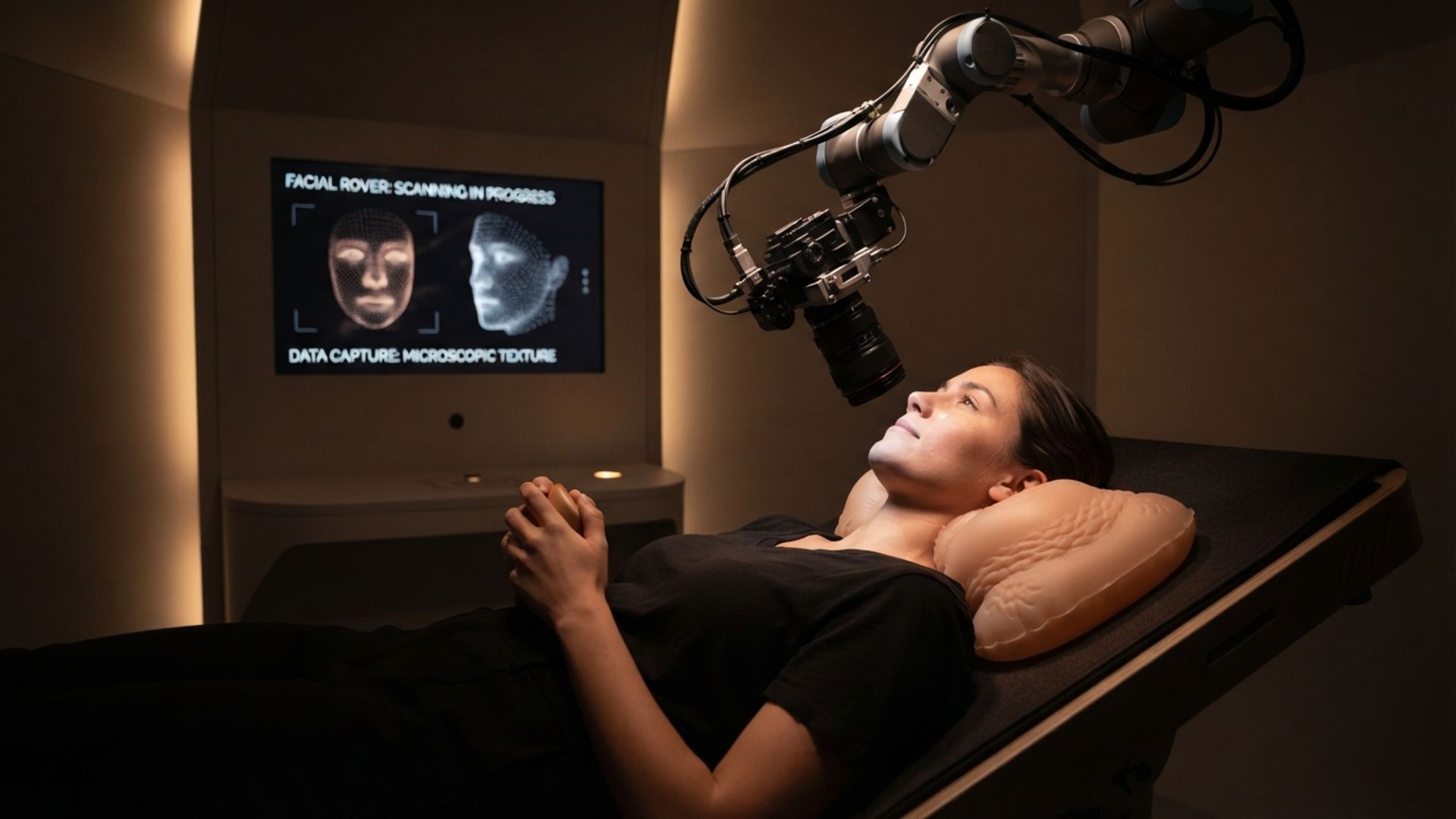
This reclining AI robot mimics human skin, breathes beside you, and scans your face to build a digital clone — and researchers just tested it in Dubai
0TechRadar

Airalo is our top pick for global eSIM plans — now all packages are 25% off for Black Friday
0TechRadar