AI & ML
Vision-Language-Action Models: A Life-Cycle Survey of Design, Training and Deployment
arXiv cs.RO0 views
arXiv:2611.18372v1 Announce Type: new Abstract: Vision-language-action (VLA) models adapt web-pretrained vision-language models to output robot actions, so that web knowledge carries over to physical control. In under 4 years the field has moved from RT-2, the first VLA, to open models that fine-tune on a single consumer GPU and to proprietary generalists that clean unseen homes. This survey reviews 88 works from December 2022 to October 2026, mainly on manipulation and navigation, plus humanoid control, world-action models and evaluation. We follow a VLA through its life cycle, from model design to training and deployment, along seven axes. Model design covers (a) inputs and memory, what the model observes; (b) architecture, how its pipeline is built; (c) action output, how it produces motor commands; and (d) intermediate predictions, what else it predicts, from reasoning steps to future observations. Training covers (e) pretraining data, the mix of robot, web, human and simulated data, and (f) post-training, adaptation to the target robot. Deployment covers (g) real-time execution, keeping pace with the robot. We analyse 22 models on these axes and report their training data, model size, inference speed and hardware. Three trends emerge: (i) training data has broadened, from about 10,000 hours of teleoperated robot data ($\pi_0$) to 23,000 community-collected episodes (SmolVLA) and 20,000 hours of egocentric human video (GR00T N1.7); (ii) model sizes have split: most recent models have 3-7 billion parameters, while a new group under one billion runs on consumer GPUs; and (iii) generalist VLAs are emerging that handle both manipulation and navigation, such as UniVLA and Qwen-VLA. We also compare VLAs with world-action models, which predict future observations as well as actions. We review evidence that some VLAs with near-perfect benchmark scores fail when objects or the camera move slightly, and open up further research questions.
Source:https://arxiv.org/abs/2611.18372PreviousHeavy Metal Acrobatics: Learning Dynamic Control for Skid-Steer LoadersNextThe State Is Not the Bottleneck: A Paged-State Gated-DeltaNet Tile on a Tri-Mode Multicast Mesh, Bit-Exact from RTL to Silicon
Related posts

An LLM confidence score isn’t correctness: the certainty trap
0dev.to

What a host-side layer for LLM agents is, in plain words (and what it is not)
0dev.to

OpenAI's Agents API Lets Any App Rent Codex, Here's How It Works
0dev.to
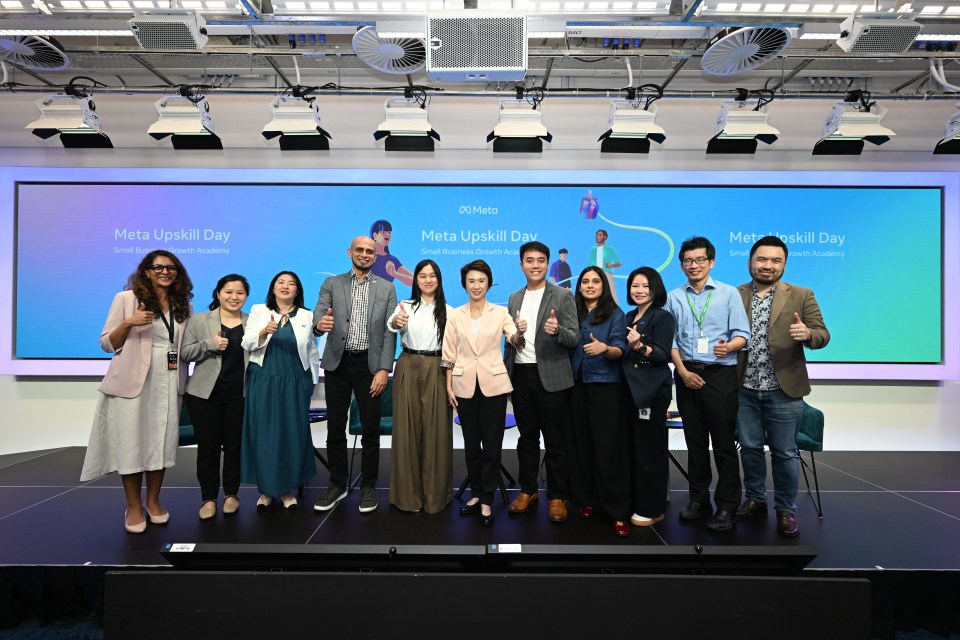
94% of Singapore Small Business Owners Surveyed Say More AI Guidance Is Needed
0Meta Newsroom

Nashville, Tennessee Real Estate Dataset: 7,436 Listings, Excel File (Nov 10, 2026)
0dev.to Data

A Hundred and Eighty Six Thousand Pounds of Stock Had Left One Branch and Never Arrived at Another
0dev.to Data