AI & ML
Auditory and Visual Virtualization in 6DoF XR: Effects on Plausibility and Dynamic Auditory Distance Perception
arXiv eess.AS0 views
arXiv:2611.07612v1 Announce Type: new Abstract: Extended reality (XR) enables controlled yet naturalistic multisensory experiments, but its validity depends on whether virtualized cues are perceptually plausible and lead to behavior comparable to the real world. To the best of our knowledge, this is the first study to perceptually evaluate a six-degree-of-freedom (6DoF) XR system that combines real-time room acoustic simulation, binaural rendering, and an audio-visually matched virtual replica of a large laboratory room in terms of both plausibility and behavior. In two experiments with 45 participants, we investigated how auditory and visual virtualization affect plausibility and dynamic auditory distance perception (ADP). A plausibility experiment compared real and virtual sound sources in audio-augmented reality (AAR) and virtual reality (VR), while a locomotion-based ADP experiment assessed distance-judgment accuracy, signed error, and task effort across four virtualization conditions. The system produced plausible binaural rendering in both AAR and VR, with higher plausibility in VR, indicating that perceptual requirements for XR audio depend on the visual reference frame. In the ADP task, any form of virtualization reduced accuracy and increased effort, although performance remained high overall. Virtual audio produced a bias toward nearer perceived source distances, whereas visual-only virtualization reduced accuracy without a significant directional bias. These effects did not add up in full VR. Overall, the findings demonstrate the strong potential of current 6DoF XR systems for interactive perceptual research, while revealing that task-specific behavioral validation may be necessary.
Source:https://arxiv.org/abs/2611.07612PreviousFUSEMOS: Perceptual Evaluation of Text-to-Music Generation with Dual-Encoder Fusion and Ranking-Aware Composite LossNextJoint Higher-Order Low-Rank Tensor Decompositions for Multichannel Acoustic System Compression
Related posts

Anthropic skips six-year waitlist with massive $3.4 billion gas turbine generator deal
0Tom's Hardware
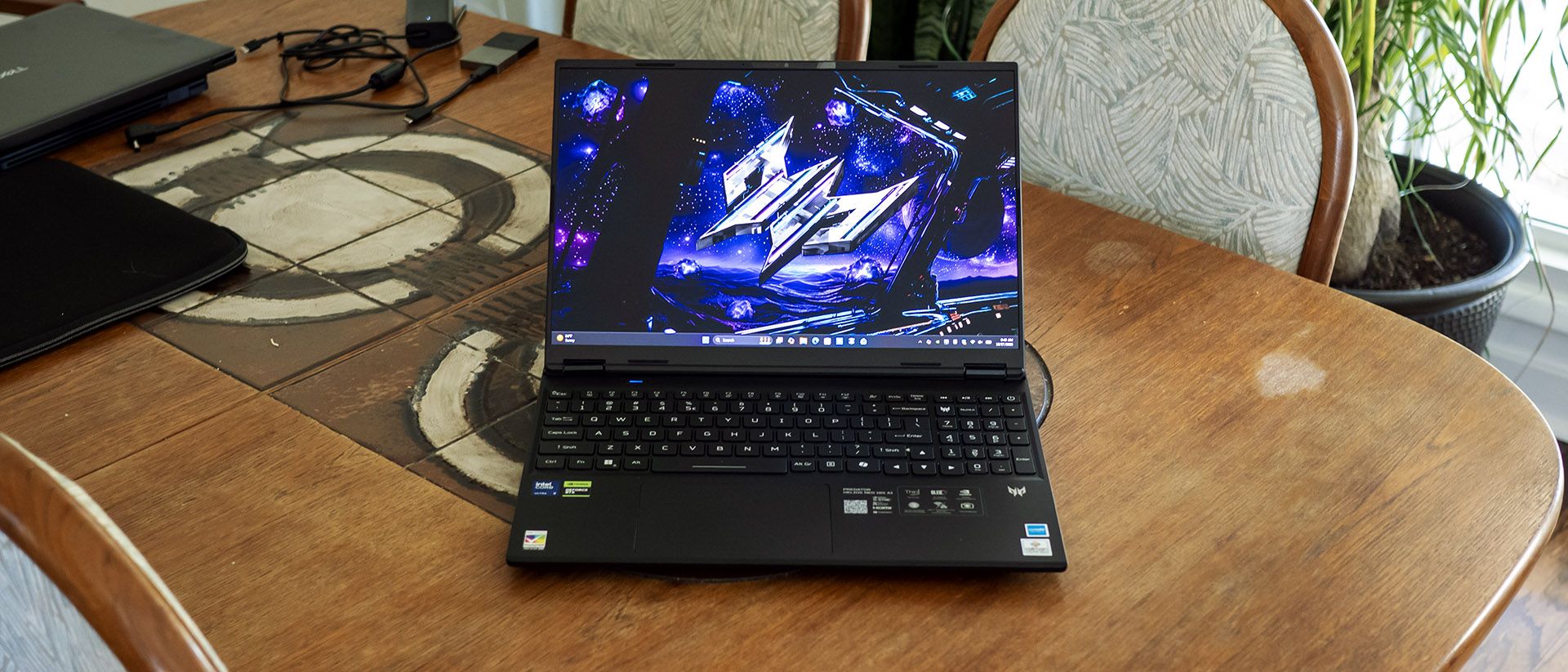
Acer Predator Helios Neo 16S AI Review: Slim OLED gaming that doesn't last long
0Tom's Hardware

Arcjet announced a family of custom-trained AI security models last week, and it's launching on Product Hunt today. https://www.producthunt.com/products/arcjet
0dev.to

Innovating with AI in the special chemicals industry
0MIT Technology Review

The Download: empty AI climate claims, and an Nvidia investigation
0MIT Technology Review

P1.95 or P2.6: the pitch your camera picks before your client does
0dev.to