AI & ML
DDA-Net: Accurate TDD Channel Estimation via Deep Unfolding the Doppler-Delay-Angle Representation of Channel Signals
arXiv eess.SP0 views
arXiv:2604.05389v3 Announce Type: replace Abstract: In TDD massive MIMO systems, channel estimation under sparse frequency-hopping pilots is challenging: each snapshot captures only one narrow pilot block that hops across frequency, with tens of milliseconds between adjacent snapshots. Finite-window leakage and off-grid effects weaken the ideal Doppler-delay-angle (DDA) sparsity, limiting both classical sparse recovery and purely data-driven approaches lacking an explicit structured transform-domain model. We propose DDA-Net, a model-driven 3D deep unfolding network for joint multi-snapshot channel state reconstruction. DDA-Net integrates an ADMM-based formulation with a closed-form data-consistency update that avoids tensor inversion, a lightweight Doppler-domain learned prior, and delay oversampling to mitigate basis mismatch. It consistently outperforms strong baselines across three channel settings from 3GPP TR 38.901: UMa-NLOS, UMi-NLOS, and CDL-B. Ablations confirm that window-level 3D processing and explicit Doppler modeling yield target-dependent improvements. With minimal target-domain fine-tuning, the UMa-pretrained model surpasses both its zero-shot version and counterparts trained from scratch with the same number of target-domain samples. The Doppler-domain design proves consistently superior to its time-domain equivalent, with a wider margin after fine-tuning. These results demonstrate that combining exact physical data consistency with a learned DDA-domain prior is an effective and sample-efficient approach to channel state acquisition under sparse frequency-hopping pilots.
Source:https://arxiv.org/abs/2604.05389Previous4D Point Splatting for mmWave Radar Micro-Doppler Differentiable RenderingNextOptimal symmetric low-rank BD-RIS configuration maximizing the determinant of a MIMO link
Related posts

Real-time state has a cost your memory bill won’t show
0The New Stack

Why semantic layers will be essential for enterprise AI
0The New Stack
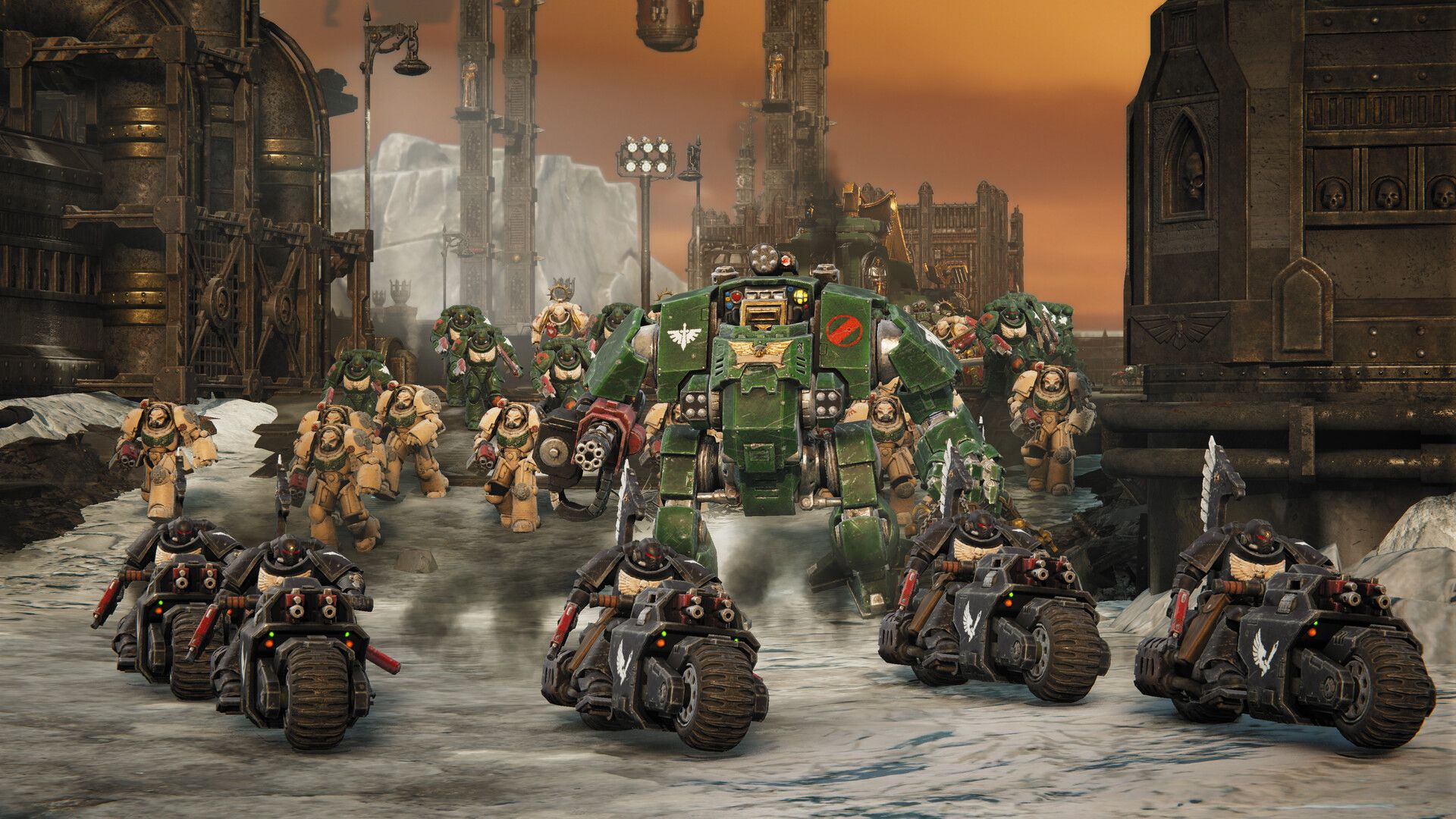
Why is Warhammer 40,000: Dawn of War 4 going back to Kronus? We asked the real-time strategy game’s creative director to explain why
0TechRadar

'This represents an important evolution in AI governance': Infosys lays out how your business can thrive with the new generation of autonomous AI agents
0TechRadar

AI slop is clogging court and complaint systems
0TechRadar

French bank Crédit Mutuel Arkéa hit in cyberattack — up to $133 million stolen and systems shut down
0TechRadar