AI & ML
Context as Infrastructure: Knowledge Compilation for Retrieval in Agentic Systems with Harnesses
arXiv cs.IR0 views
arXiv:2610.41172v1 Announce Type: new Abstract: Retrieval-augmented generation is becoming agentic. A search harness writes queries, reads results, reformulates, and decides when to stop. This largely solves accuracy: a harness with only BM25/grep and MiniMax M3 answers 85% of BrowseComp-Plus and 91% on multi-hop FRAMES in our runs, without compiled or vector indexes. It exposes a context problem: an undisciplined loop repeats queries, rereads documents, and fills the window with unused passages. The missing layer is knowledge compilation: a configurable ingestion pipeline where LLMs enrich documents with context no chunk contains alone--navigation hierarchies with claim-evidence leaves, entity graphs, timelines, mind maps, ontologies, wikis, and memory. Compilation is not a better retriever: under a competent harness, structural artifacts gave no detectable accuracy gain on FRAMES, and a PageIndex-style outline degraded at scale. It is a supply layer. A navigation tree whose leaves are claim-evidence pairs--the mechanism we measure--cuts query tokens by 91% when evidence suffices and adds 1.9% when it does not, a 38% average reduction; this implies a 2% break-even sufficiency rate and a measured rate near 43%. A decision gate cuts latency from 140 s to 30 s, though substitution's token saving is bought with retrieval rounds and carries its own latency cost. Other artifacts--ontology, graph, wiki, timeline, mind map, memory--pay off in deployment (governance, integration, onboarding, temporal orientation, continuity) where accuracy benchmarks cannot see them. We describe RAGFlow's pipeline and harness (open source at https://github.com/infiniflow/ragflow), which turns the loop into five disciplined stations and keeps the context entering the model the smallest sufficient set; together they form an agent-native database: a store that hands the agent compiled, governed context instead of a ranked list of passages.
Source:https://arxiv.org/abs/2610.41172PreviousProdCrawl: A Replayable Test Collection for Focused CrawlingNextMILES-Rec: Uncovering Implicit Intents from Mobility Behaviors for Cross-Domain POI Recommendation
Related posts

Running AI Models Locally in 2026: Ollama, vLLM & Quantization
0dev.to
Most companies don't think they could leave their main cloud provider quickly should the worst happen
0TechRadar
'Nothing will ever replace the emotional depth and creative inspiration of human beings as artists and creators' — Call of Duty: Modern Warfare 4 composer speaks out against AI in video games, says 'm
0TechRadar
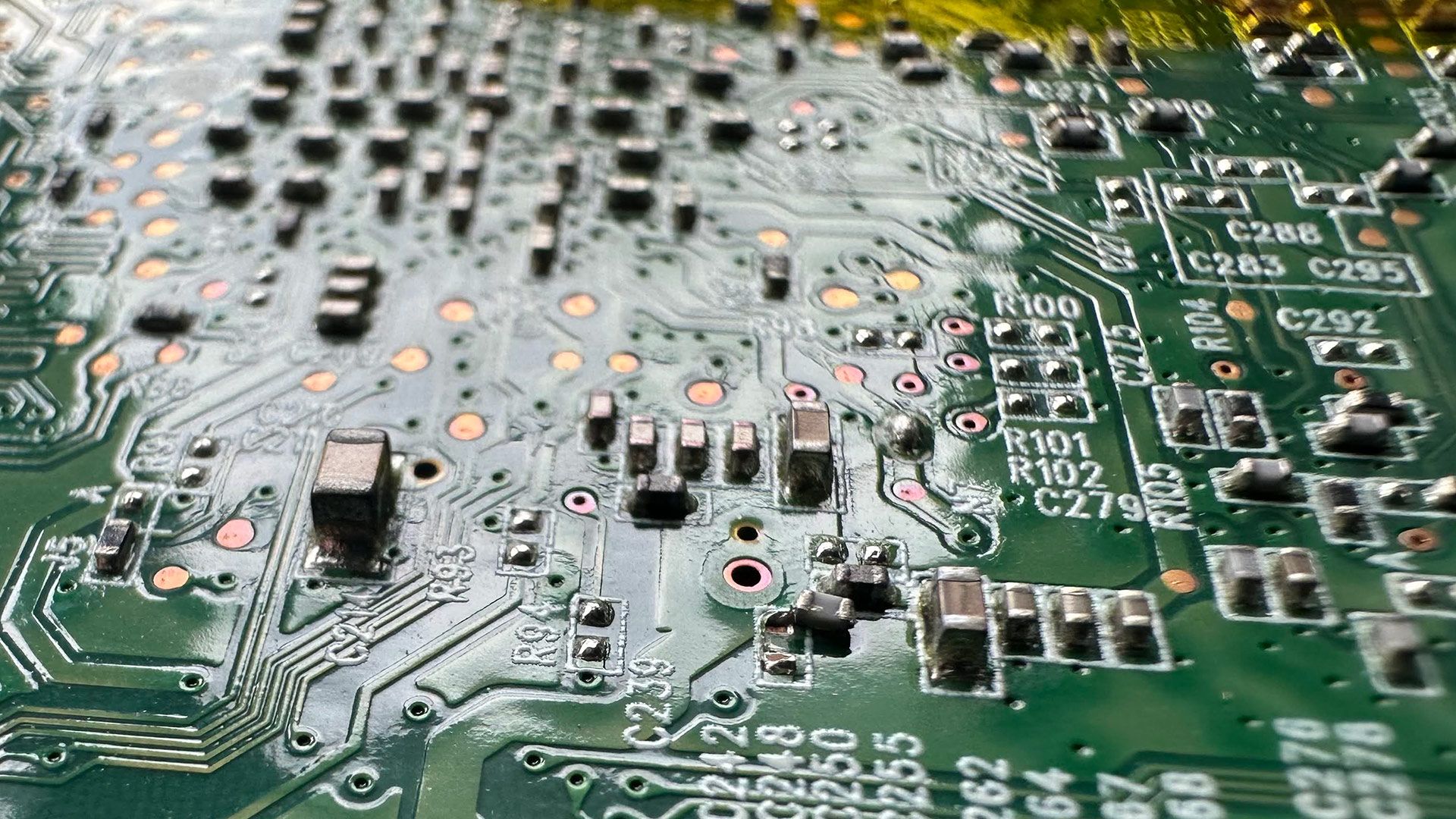
Two dead, five injured in Taiwan PCB factory explosion
0Tom's Hardware

HomeView will support third-party AI chatbots, suggests code
09to5Mac

Google’s AI search fumbles leave schools in the lurch
09to5Google