AI & ML
Market Efficiency and Capacity Investment under Flexible Price-Making Loads: A Computational Study
arXiv eess.SY0 views
arXiv:2610.41196v1 Announce Type: new Abstract: Large flexible loads such as data centers can shift consumption across locations and hours to lower their bills. We model a price-making consumer leading the system operator in a Stackelberg game and compare its shifts with a cost-minimizing planner's over a simulated RTS-GMLC year. Strategic temporal and spatial shifting capture 75% and 93% of the planner's savings, forgoing the rest mostly by withholding flexibility to protect favorable prices. Scarce capacity and abundant renewables raise this share for temporal shifting; scarce transmission lowers it for spatial shifting. Temporal and spatial flexibility substitute for thermal and transmission capacity, respectively, and complement renewables.
Source:https://arxiv.org/abs/2610.41196PreviousOptimal climate policy in incomplete electricity marketsNextEMT Assessment of SCR and X/R Effects on Current-Priority-Dependent LVRT Response of a Grid-Following BESS
Related posts

An Interview With Intuit CEO Sasan Goodarzi About Accounting and AI
0Stratechery

ISC Stormcast For Thursday, November 5th, 2026 https://isc.sans.edu/podcastdetail/10166, (Thu, Nov 5th)
0SANS ISC

kpt v1.0.0 is released
0CNCF Blog

How AI-assisted development helped us build the new Dropbox experience
0Dropbox Tech

WhatsApp Events Brings People Together Beyond the Group Chat
0Meta Newsroom
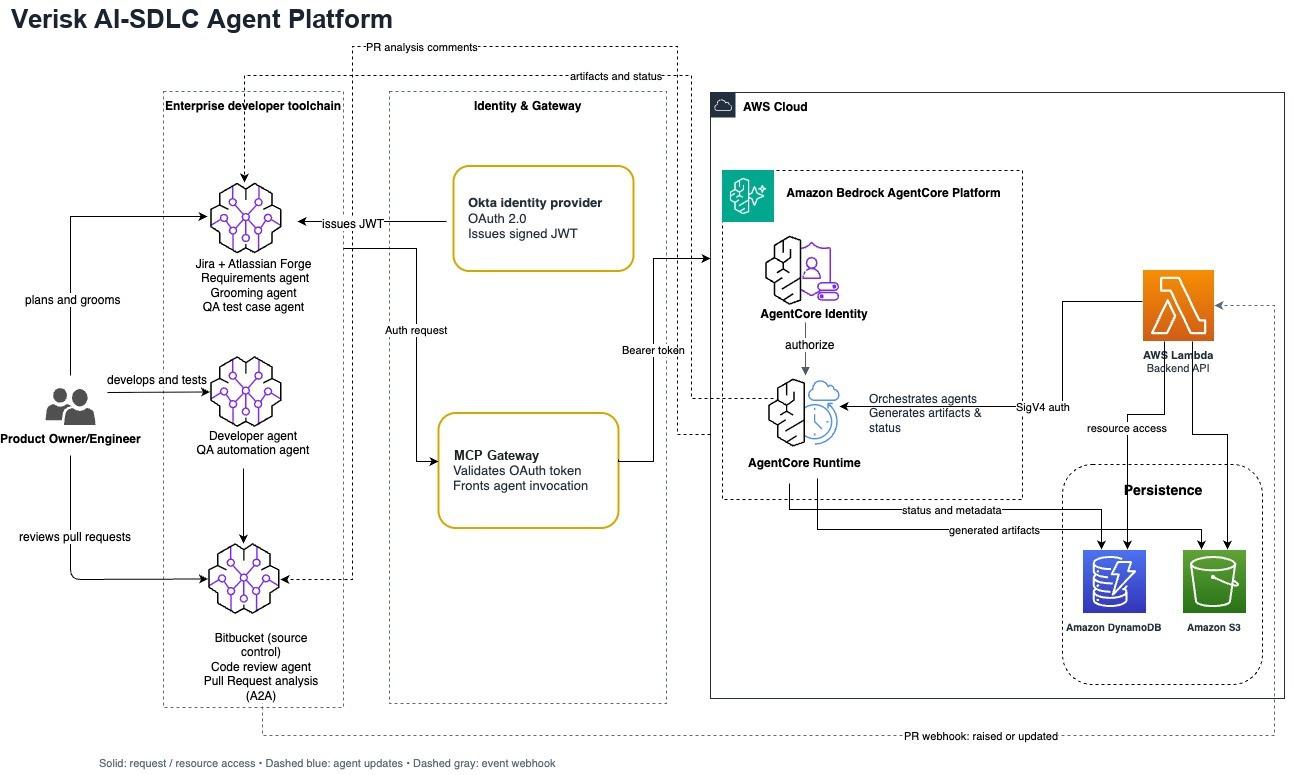
Reinventing software delivery with AI-SDLC on Amazon Bedrock AgentCore
0AWS for Industries