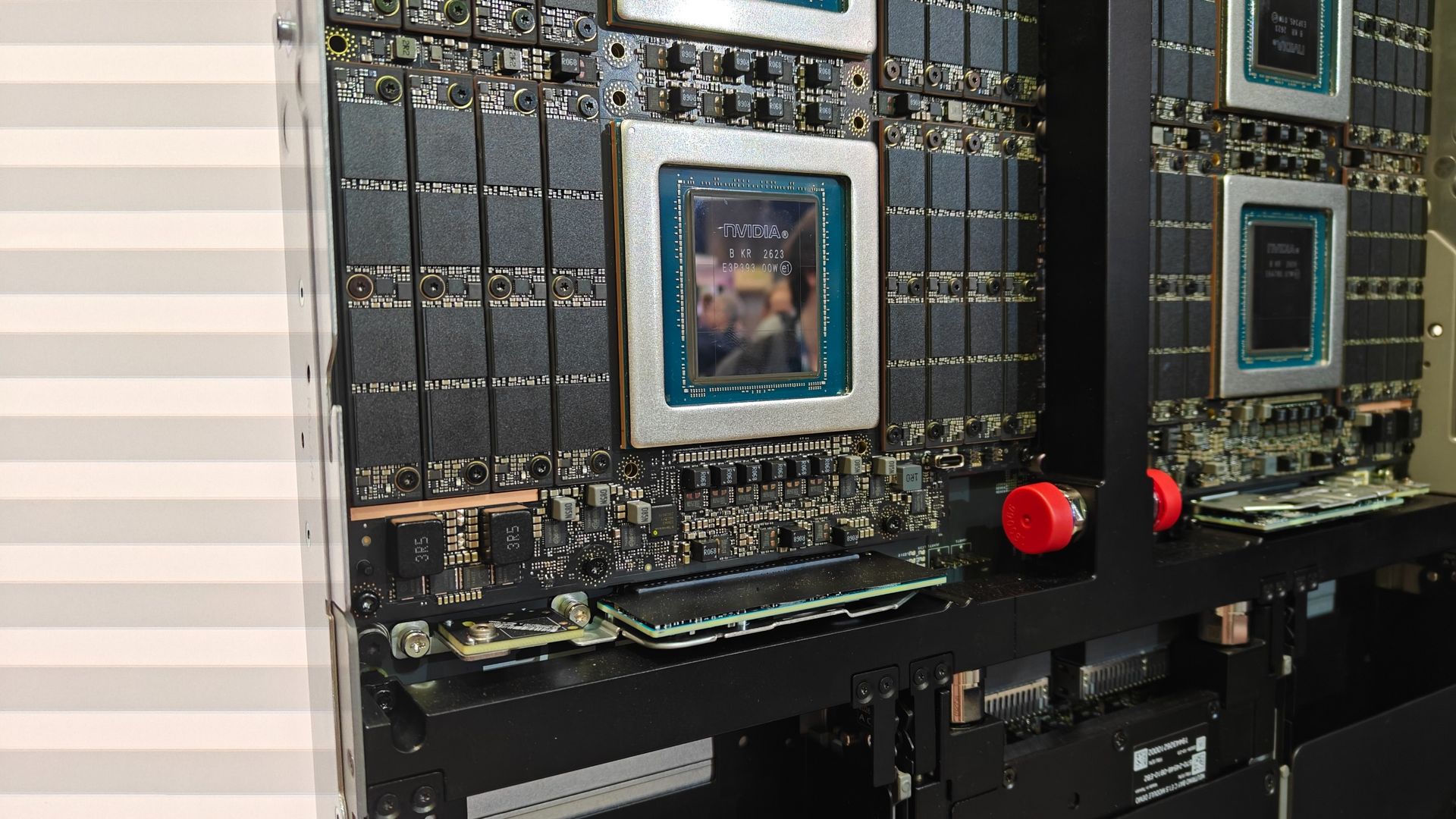
One criticism that has emerged of Nvidia’s Vera CPU, driven by AMD, is that Nvidia – and, to a lesser degree, Arm with its AGI CPU – couldn’t have developed an “agentic CPU,” as the chip is often characterized in Nvidia’s marketing materials. Ian Finder, the head of Nvidia’s data center CPU business, pushed back on that criticism in a recent conversation with Tom’s Hardware Premium at SC26, calling the notion that Nvidia somehow knew about the agentic wave four years ago when Vera development began "absurd."
“There's a conviction around the design philosophy of the part, right? Am I going to sit here and tell you that we have this magic crystal ball around the agentic moment? That would be absurd, right?” Finder said. “But what we do have as a company, and I think this has been proven out in our track record, is [that] we have design intuition.”
Instead of specifically designing Vera for agentic workloads, which would be impossible without a way to see several years into the future, Finder characterized the part by its codesign with Nvidia’s accelerators, something that the team has continued to work on since its first Grace data center CPU. Coming from the assumption that data centers and AI workloads are accelerated (and they largely are), Finder says the co-design approach on the CPU can start in a “conceptually simple space, like what kind of CPU do we need to keep the accelerator fed and happy?”
Although conceptually simple, Finder continually looped back to a particular word to describe aspects of Vera and, to a lesser extent, Grace. “Opinionated” is the word he used, which in the broader context of Vera’s design, shows up in two places. Grace, Finder says, introduced an opinionated memory system with Nvidia’s Scalable Coherency Fabric, while Vera extends that memory system while adding an opinionated microarchitecture, Nvidia’s Olympus core.
The picture Finder paints is one of Nvidia starting from scratch in this space, contrasting it with the “legacy constraints” of, presumably, Intel and AMD in particular, who have large pools of customers with specific needs. As we described in our original breakdown of the Olympus architecture in Vera, Nvidia’s goal doesn’t seem to be to steal market share from AMD and Intel, but rather to grab market share in a CPU space that’s vastly accelerating on the back of AI agents.
This “clean sheet of paper” approach, and Nvidia’s codesign, led to some natural assumptions about what the CPU should do. “If we have silicon that needs really, really great single-thread performance, [and] we also need concurrency, then we need to get there with IPC instead of frequency. We need to make sure we have good loaded memory latency. We need to make sure we have a lot of bandwidth, and you start to design something on a clean sheet of paper that's not encumbered by dollar-per-core economics.”
Although Finder was clear that Vera’s design didn’t explicitly center around the agents we see today, there were early indications of the workload. “To say that four years ago, when we started putting pen to paper on Vera, [that] we absolutely saw the agentic moment, would [not] be... something I would claim, but we were starting to see the beginnings of tool calling and things like that. We certainly knew what we needed from a head node, and we knew the overall shape of this problem.”
As you can see in our Vera CPU benchmarking, the chip doesn’t excel at every workload. And, from the data you can see in our recent AMD EPYC Venice benchmarking, the AMD camp has reclaimed some top spots in several benchmarks. Finder suggests that the superior memory bandwidth of Vera will play a much bigger role in the agentic future as these systems evolve to take better advantage of the compute available.
Taking full advantage of the CPU
We need to rewind for just a moment. When the agentic wave hit earlier this year, some characterized the demand as a shift away from GPUs and toward CPUs. That is incorrect. Rather, as is becoming increasingly clear as these agentic workloads progress, these loops can’t take full advantage of the GPUs in a GPU-centric environment, with GPUs often oversubscribed on host nodes. The solution isn’t to get rid of GPUs, of course, nor is it to stop buying them. Rather, it’s to also buy enough CPUs to properly leverage that compute.
A portion of the AI industry is focused on tackling the problem of fully utilizing the GPU, Nvidia included. GPUs shouldn’t sit idle for very long (if at all) with the demand today, and they don’t. The challenge today is spinning up these agent sandboxes quickly, within milliseconds, so that the CPU isn’t sitting idle, either.
Finder provided an example of using a coding agent. If you’ve used a coding agent before, you’re probably familiar with this process. After prompting, the model will make several small tool calls to read and locate files, passing back to the model in between. These are tiny calls, almost negligible, and the vast majority of the time is spent in the model on the GPU. Then, it may start compiling and testing the project, which is much more bound by the CPU. The GPU, Finder says, isn't sitting idle during that time. It’s being leveraged for another purpose. Finder suggests “that very same thing is going to happen on the CPU.”
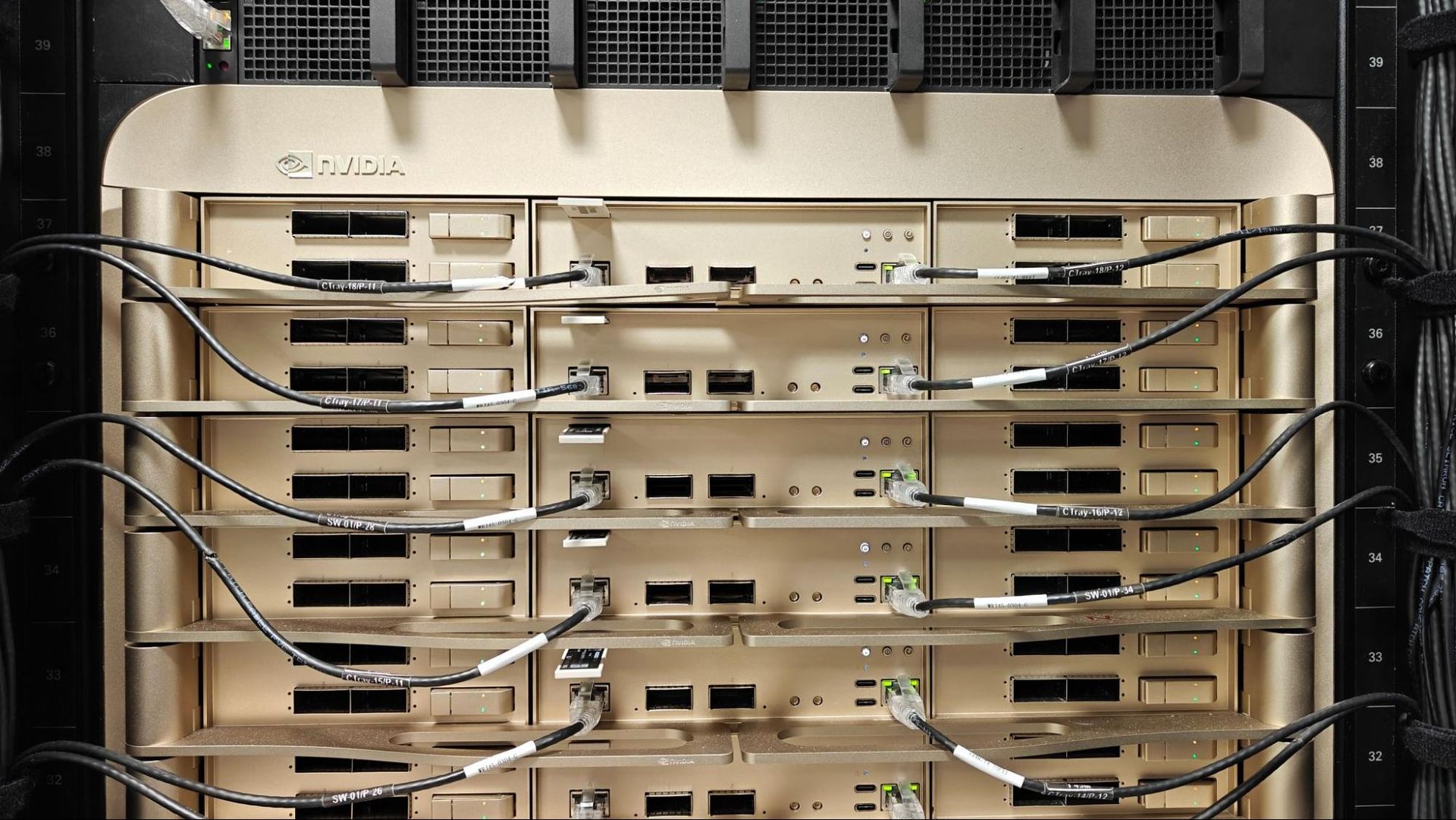
“The idea that we're just going to say, ‘OK, the CPU can just chill out here, and we're just going to wait,’ that's not going to happen,” Finder said. “What's going to happen is we're going to pack multiple environments together, and we're going to subscribe the socket.”
This “very interesting computer science problem,” as Finder described it, is being investigated by AI startups such as Daytona and E2B to spin up and close down agentic sandboxes in milliseconds. And serving more agents will naturally put pressure on the memory system, which is an area where Vera has an edge. “We built a product that does really, really well without such optimizations, but as a design point that really will lean into them when the industry starts to catch up to this,” Finder said.
Vera is a fascinating chip, regardless of what you think of it and how it’s presented in marketing materials (from Nvidia itself or elsewhere). Although Grace was the starting point internally, Vera has ridden the wave of agentic to become a much bigger player in the world of CPUs, and Nvidia has already announced that it will follow up with its Rosa CPU featuring the new Rigel microarchitecture. Vera is an opinionated CPU indeed, and time will tell if that opinion is correct.