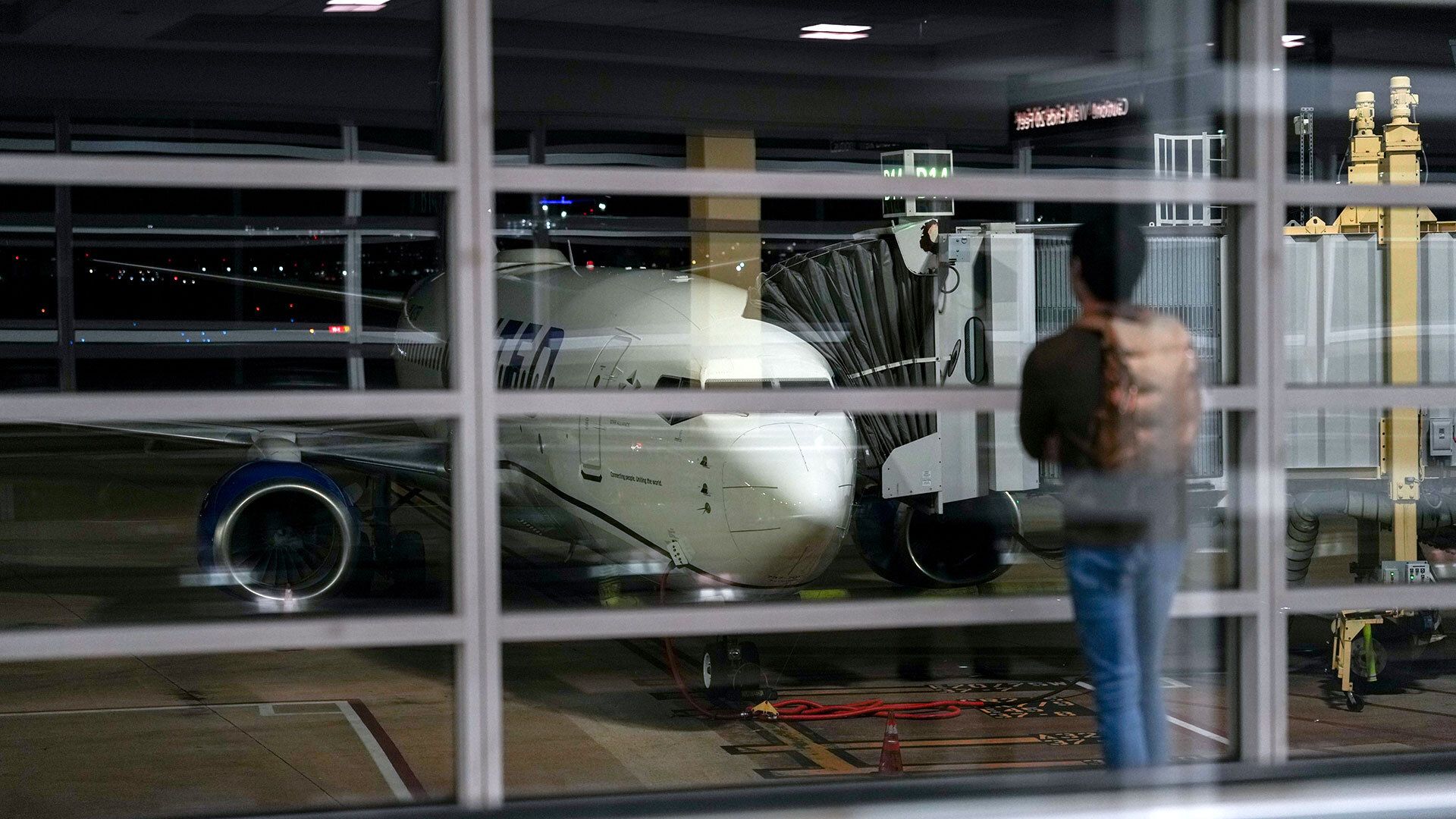
Air travelers in the U.S. were in for a nasty surprise last Friday night after the Federal Aviation Authority (FAA) called for a nationwide ground stop. According to the Wall Street Journal, the issue started after a newly installed Juniper router, built by HP Enterprise, started broadcasting to a wide part of the network. This, in turn, overloaded the established and antiquated system, resulting in communications glitches and interruptions between air traffic control and pilots.
Thankfully, this did not affect other safety services, like Traffic Collision Avoidance System (TCAS), which primarily relied on hardware in aircraft that communicated with other transponders to help prevent accidents. Still, air traffic’s inability to communicate with high-flying aircraft made it impossible to coordinate the thousands of airborne aircraft at any given time, forcing the agency to call for an emergency ground stop. A nationwide ground stop order is quite a drastic move, and it has only been invoked twice before. The first such event was on September 11, 2001, when terrorists infamously used hijacked airliners as weapons. The second was on January 11, 2023, when the agency’s Notice to Air Missions (NOTAM) system, which sends warnings to pilots and air crews of important information crucial to flight safety, suffered from an outage for about a couple of hours.
The problem first became apparent at Indianapolis Center, which monitors the airspace in northern Kentucky, southern Indiana, southern Ohio, and parts of West Virginia, when the personnel working at the site had trouble communicating with flight crews. The agency then went on a nationwide hunt for the glitch, and it soon found two possible sources — an FAA radio site in El Dorado, Arkansas and a radar site in Amarillo, Texas. Upon deeper inspection, the agency discovered that new routers recently installed in both places have begun sending out a high volume of data across the entire FAA communications network.
“We saw two places that were actually pinging our network at a very high rate, a thousand connections over every four to five seconds,” FAA technology chief Rebecca Guy said in a press conference. This might seem like a minor hiccup for any modern network, which could typically handle connections in the hundreds of thousands, or even millions, per second. For example, one of the largest recorded DDoS attacks for 2026 saw traffic spike to 31.4 TB/s, which is enough to takedown an entire country’s web infrastructure.
However, the FAA still uses an antiquated copper network, which was easily overwhelmed by the amount of data that the routers sent. This network is already several decades old, so the agency is currently in the process of upgrading everything to fiber, which is costing taxpayers billions of dollars. Even as the agency is in this period of transition, FAA Administrator Bryan Bedford has raised several questions. “Was it a faulty installation? Was it a faulty configuration? Or was it just a bad piece of router technology that we put into this system that propagated these errors?” Bedford said in statement on Saturday. He also added that the agency is investigating the incident. As for the Juniper router, an HPE spokesperson said that they appear to be working as intended and that “They did not fail.” It was eventually discovered that a specific feature on the router caused the system overload, with FAA employees turning it off across the entire network on all Juniper routers.
It took about four hours for the FAA to return its communications network to normal, but repercussions go way beyond that. Passengers aboard all those canceled and diverted flights needed to be served, even as new passengers kept on arriving for their scheduled flights. It’s been estimated that airlines needed a few days to recover after the CrowdStrike crash of 2024 forced United, Delta, and American Airlines to cancel flights (except for Southwest, which avoided the chaos because it used an antiquated OS from the 1990s), so we expect passengers unlucky enough to be in transit during this incident to suffer waits between a few hours to a day or two before their journeys could continue.