AI & ML
A Temporal Cellular Sheaf Framework for Multi-Agent Systems with Switching Communication Topologies
arXiv eess.SY0 views
arXiv:2610.40991v1 Announce Type: new Abstract: Cellular sheaves serve as a natural modeling framework for encoding heterogeneity in the state and interaction spaces of multi-agent systems. This work examines switching communication graphs with the use of temporal cellular sheaves, which we construct to represent heterogeneous agent state spaces, the maps that relate them, and their respective communication constraints. We then develop sufficient conditions under which a multi-agent system defined on a temporal cellular sheaf can solve the target tracking problem by generalizing the existing concept of joint connectivity. Using a Lyapunov-based stability analysis, we demonstrate that the target tracking error of the network converges to a neighborhood of the origin.
Source:https://arxiv.org/abs/2610.40991PreviousLearning the Omega-Limit Partition from Approximate Koopman InvariantsNextOptimal climate policy in incomplete electricity markets
Related posts

An Interview With Intuit CEO Sasan Goodarzi About Accounting and AI
0Stratechery

ISC Stormcast For Thursday, November 5th, 2026 https://isc.sans.edu/podcastdetail/10166, (Thu, Nov 5th)
0SANS ISC

kpt v1.0.0 is released
0CNCF Blog

How AI-assisted development helped us build the new Dropbox experience
0Dropbox Tech

WhatsApp Events Brings People Together Beyond the Group Chat
0Meta Newsroom
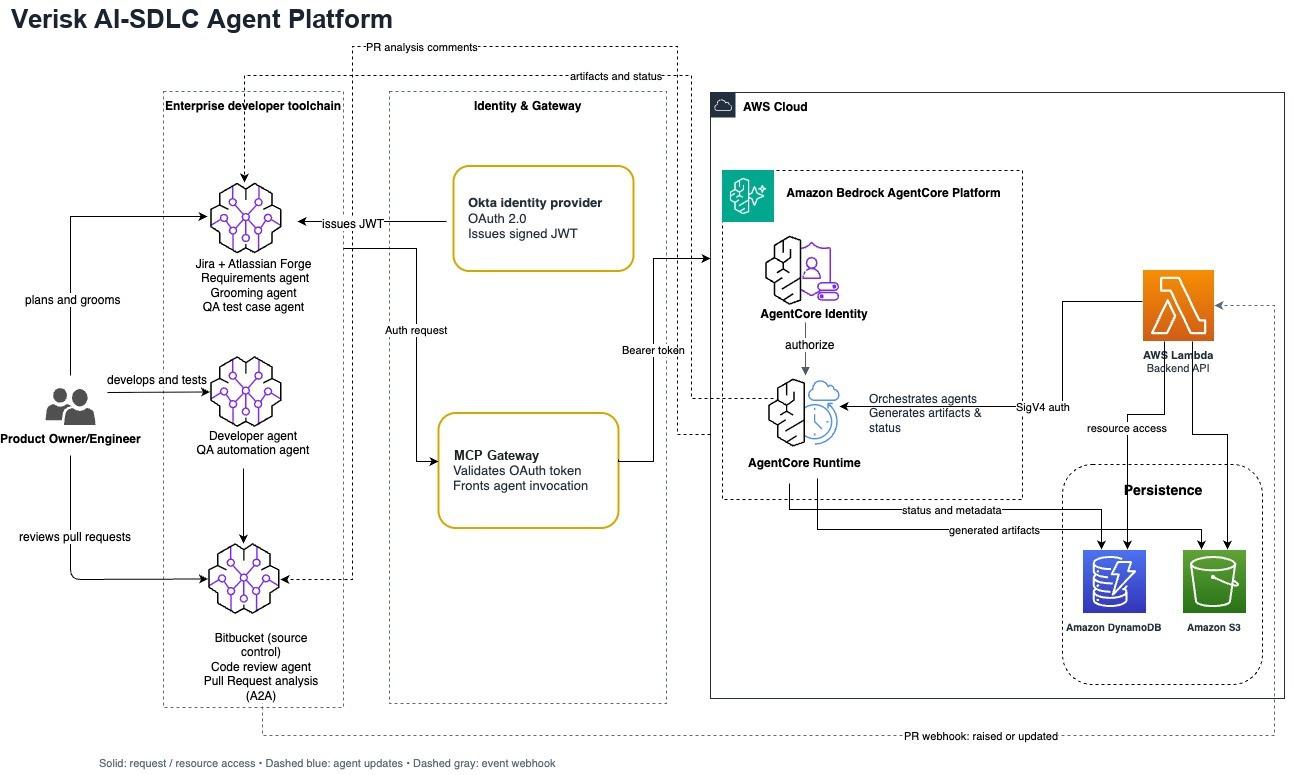
Reinventing software delivery with AI-SDLC on Amazon Bedrock AgentCore
0AWS for Industries