General
Learning the Omega-Limit Partition from Approximate Koopman Invariants
arXiv eess.SY0 views
arXiv:2610.40977v1 Announce Type: new Abstract: Nonlinear dynamical systems with multiple omega-limit sets pose a fundamental challenge for global finite-dimensional Koopman modeling with continuous observables. A natural way to address this challenge is to decompose the state space into forward-invariant regions associated with distinct asymptotic behaviors and to learn a separate Koopman model for each region. This paper studies how to compute such partitions from data. We establish conditions under which Koopman-invariant observables, namely eigenfunctions associated with the unit eigenvalue, characterize the stationary partition induced by omega-limit sets. Building on this characterization, we develop OPAL (Omega-limit Partitions from Approximate invariants Learned from data), an algorithm that extracts partitions from approximate invariant observables. Numerical examples show that the recovered partitions capture the relevant asymptotic regions and support multiple regional linear Koopman models with significantly improved long-horizon prediction capabilities.
Source:https://arxiv.org/abs/2610.40977PreviousA Mixed $H_{\infty}$--Passivity Approach for Leveraging Heat-Pump-Connected District Heating Systems as Frequency Support in Electric Power SystemsNextA Temporal Cellular Sheaf Framework for Multi-Agent Systems with Switching Communication Topologies
Related posts

Which Data Collaboration Tool: OpenSharing, Clean Rooms, Marketplace
0Databricks Blog

How two engineer side projects became the agent taking action inside Dropbox
0Dropbox Tech
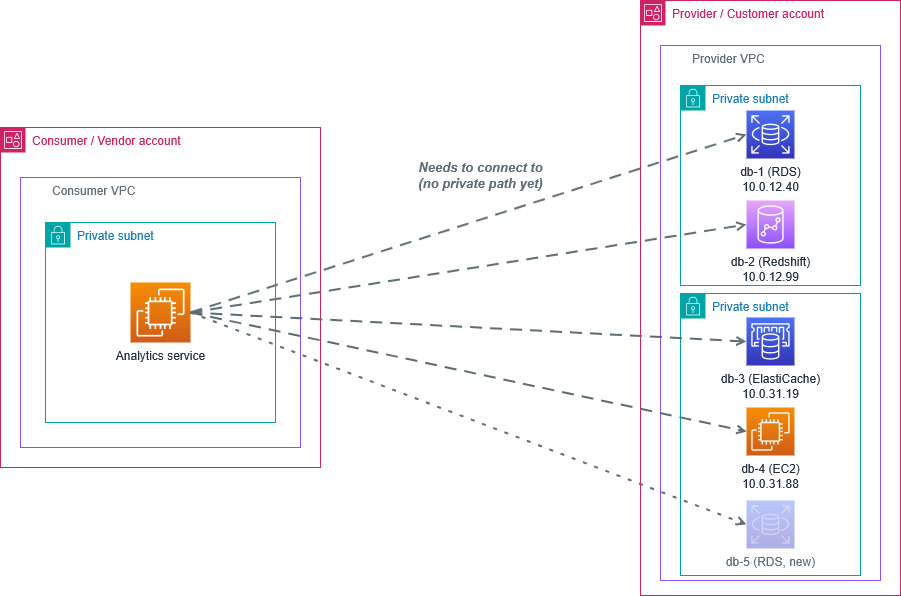
Introducing tunnel endpoints for private access to network segments
0AWS Networking Blog

Project Hub Tools
0dev.to WebDev

The Afterlives of Literary Reputation
0Hacker News New

Software Analysis Lectures (Georgia Tech.)
0Hacker News New