AI & ML
Sparse Array-Inspired Frame Structure Design for 5G NR ISAC
arXiv eess.SP0 views
arXiv:2611.09544v1 Announce Type: new Abstract: Integrated sensing and communication (ISAC) has emerged as a promising paradigm for future wireless networks. However, the extensive occupation of time-frequency resources for sensing limits the communication capacity. To address the resource conflict, this paper proposes a novel sparse sensing frame structure aligned with the 5G new radio (5G NR) resource grid at the slot and physical resource block (PRB) levels through a predefined sensing-pattern block. Specifically, inspired by the design of two-dimensional (2D) sparse antenna arrays, we map the sparse spatial geometries onto the time-frequency resource grid. By leveraging the hole-free property of the difference coarray, we eliminate the range-velocity ambiguity and cast the sensing signals into a reconstructed higher-order tensor representation. For efficient parameter estimation, we propose a novel binary-tree-based tensor train decomposition (BT-TTD) algorithm that extracts lower-dimensional tensor train cores (TT-cores) and executes a Vandermonde-prior-guided rectified alternating least squares (RecALS) algorithm. Simulation results validate that the proposed scheme achieves competitive estimation accuracy with reduced complexity. Furthermore, we investigate the topological properties of various sparse patterns, revealing the inherent trade-off among sensing accuracy, resource occupancy, and computational complexity.
Source:https://arxiv.org/abs/2611.09544PreviousA Hybrid Digital/Analog Polyphase Filtering Approach for High-Speed RF-DACsNextExpert Spindles in the Wild: Enriched Supervision for a Dense Detector
Related posts

Nvidia investigating reports that CEO Jensen Huang was targeted by Chinese intelligence
0Phys.org Tech

Under fire over AI, effective altruism wants to tell its own story
0Phys.org Tech
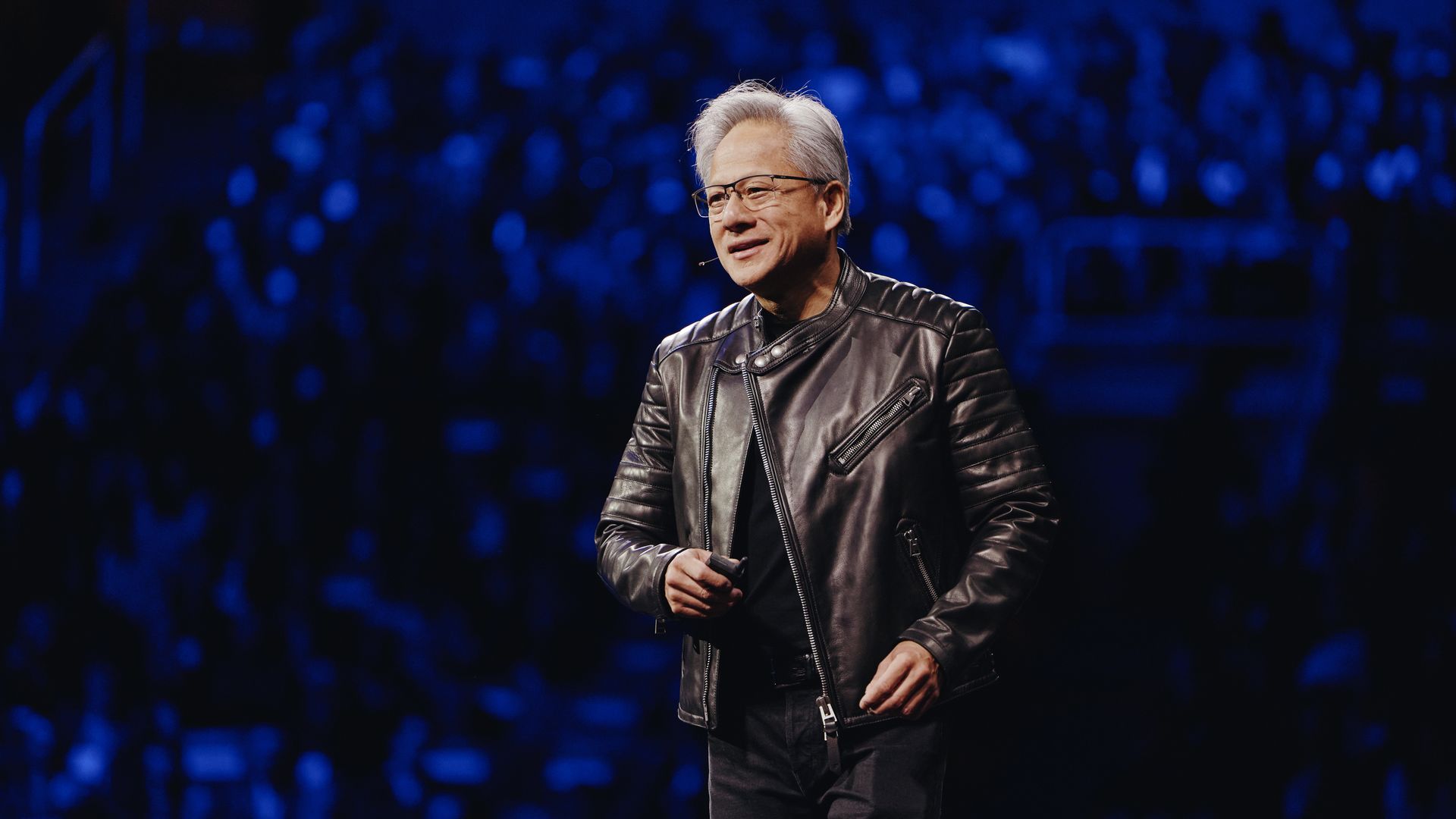
'I am deeply sorry': Jensen Huang affair with suspected Chinese spy sees Nvidia open investigation into its CEO — but what happens next?
0TechRadar

What free AI training in Nepal can teach you before you pay for a class
0dev.to

Agents draft. People decide.
0dev.to UX

โค้ดเพิ่ม 400% แต่คุณไม่ได้เร็วขึ้น 400%: GitHub ชี้คอขวดใหม่อยู่ที่การรีวิว
0dev.to GitHub